
City Streets vs. Highway Driving: Adapting Your Habits to the Road
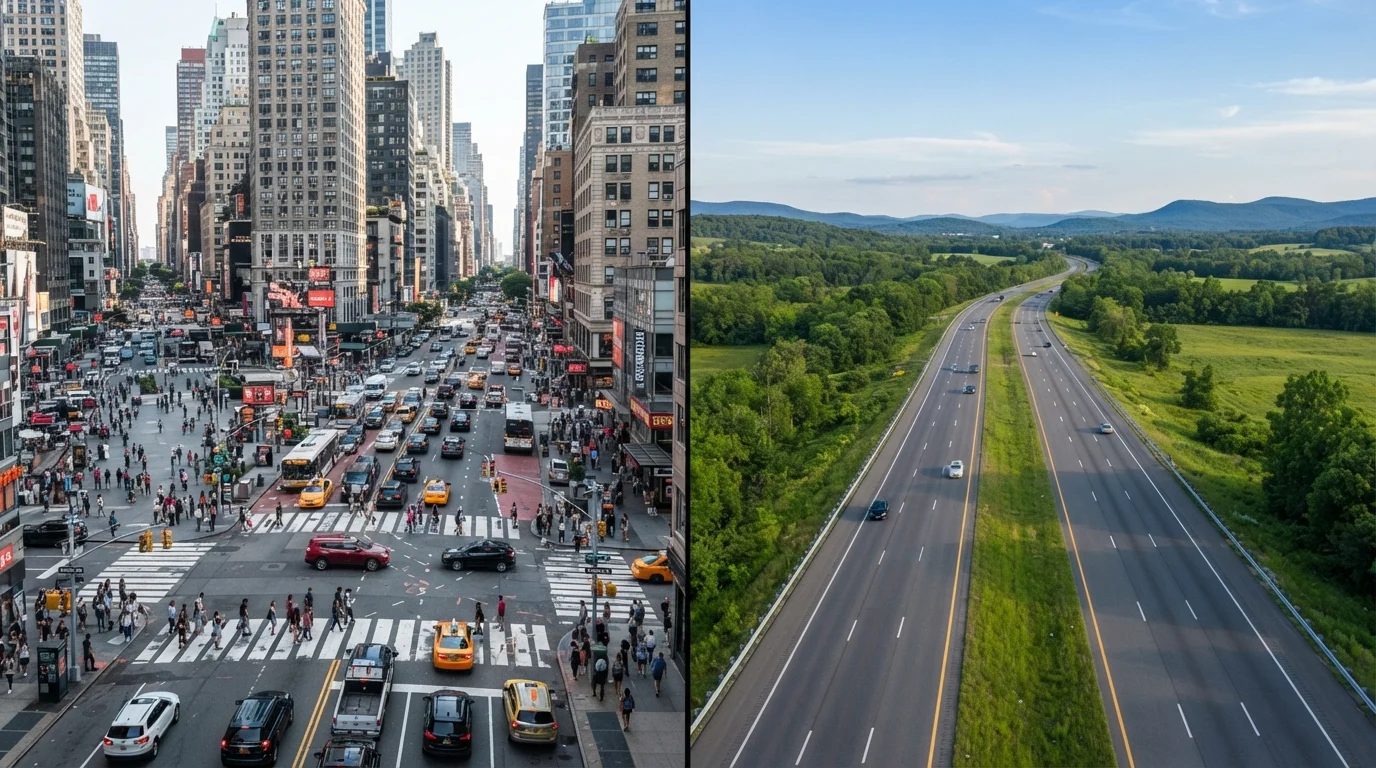
Photo credit: FindersGroove.com | Discover Important Information
In this article
Urban traffic and open highways demand very different skills. Here's how to shift your approach depending on where you're driving.
Key Takeaways
- City driving demands frequent scanning and anticipation of pedestrians, cyclists, and sudden stops.
- Highway driving requires managing speed, following distance, and sustained concentration over longer periods.
- Switching between environments means actively resetting your mental approach, not just adjusting your speed.
- Both environments carry unique wear patterns for your vehicle, especially brakes and tires.
- Defensive driving habits apply on every road type, but the specific risks differ significantly.
Two Roads, Two Mindsets
Driving is rarely one single skill - it's a set of adaptable habits you deploy depending on where you are. City streets and highways sit at opposite ends of the demand spectrum, and treating them identically is one of the most common mistakes drivers make.
Urban roads are dense, unpredictable environments. A parked delivery truck, a cyclist crossing mid-block, or a pedestrian stepping off the curb can appear with almost no warning. Your eyes need to work in short, overlapping arcs - scanning the intersection ahead, checking your mirrors, noting the sidewalk activity. Speed is low, but the mental workload is surprisingly high.
Highways flip that equation. The road ahead is wide, the variables are fewer, and the speeds are much higher. The challenge shifts from reaction time to sustained focus. Drivers often underestimate how quickly complacency sets in at 65 mph. Understanding what defensive driving actually requires is just as critical on an empty interstate as it is in downtown traffic.
| Criterion | City Street Driving | Highway Driving |
|---|---|---|
| Typical speed range | 15-35 mph | 55-75 mph |
| Primary hazards | Pedestrians, cyclists, sudden stops | High-speed merges, tailgating, fatigue |
| Scanning focus | Short-range, frequent, multi-directional | Long-range, sustained, lane-aware |
| Following distance | See rear tires of vehicle ahead | 3+ second gap at speed |
| Vehicle wear impact | High brake and tire wear from stop-go | Engine and tire wear from sustained speed |
| Key skill to develop | Anticipatory scanning and patience | Speed management and alertness |
| Mental workload | High frequency, short bursts | Lower frequency, sustained concentration |
City Driving: Managing Complexity at Close Range
The defining challenge of city driving is the sheer number of moving parts competing for your attention simultaneously. Traffic signals, stop signs, bus lanes, one-way streets, double-parked vehicles, and pedestrians all operate on overlapping timelines. The key skill is anticipatory scanning - looking beyond the car immediately in front of you to read what's developing a block or two ahead.
Following distance matters even at low speeds. If you're 10 feet behind the vehicle in front of you and it stops suddenly, you have almost no margin. A general rule: even in stop-and-go city traffic, leave enough space to see the rear tires of the car ahead touching the road.
City driving is also where your vehicle takes its biggest mechanical toll. Frequent braking, constant acceleration, and idle time in traffic add up fast. If you want to understand exactly which habits are costing you money at the repair shop, everyday driving habits that quietly wear down your vehicle breaks it down clearly.
Low-speed control is another overlooked city skill. Maneuvering into tight parking spots, navigating narrow side streets, and reading lane markings at intersections all require spatial confidence. Parking in unfamiliar places is a natural extension of the same skill set.
~40%
Urban share of all traffic fatalities
According to NHTSA data, a significant share of fatal crashes occur on urban roads despite generally lower speeds, reflecting the density of hazards.
3 sec
Minimum recommended highway following distance
Traffic safety educators widely recommend at least a three-second gap at highway speeds, extending to four or more seconds in adverse conditions.
300+ ft
Approximate stopping distance at 65 mph
This combines reaction distance and braking distance in dry conditions; wet roads and heavier vehicles increase this figure considerably.
Highway Driving: Managing Speed, Space, and Stamina
On the highway, your biggest enemies aren't unexpected obstacles - they're complacency, following too closely, and fatigue. At 65 mph, your stopping distance in dry conditions is roughly 300 feet or more depending on vehicle weight and reaction time. That's about the length of a football field. The three-second rule - maintaining at least three seconds of following distance from the vehicle ahead - gives you a usable baseline, though experienced drivers often extend this on highways.
Merging and lane changes are the moments where highway risk concentrates. Misjudging a merge or drifting lanes without signaling creates dangerous gaps in traffic flow. If roundabouts and merge lanes still feel stressful, getting comfortable with multi-lane roads offers a structured breakdown.
Fatigue is a serious highway hazard. Long, monotonous stretches dull alertness faster than most drivers expect. Plan stops every 90 to 120 minutes on extended trips. For anyone planning a longer solo journey, the long drive survival playbook covers fatigue management and comfort strategies in detail.
Highway lane discipline - staying right except to pass, signaling early, and avoiding the middle lane as a cruising lane - isn't just courtesy. It reduces the frequency of unpredictable lane changes around you. Motorway etiquette explains these conventions and why they matter for everyone's safety.
Your Transmission Affects Both Environments
Manual and automatic transmissions handle differently in city stop-and-go versus highway cruising. Manual drivers often find city driving more physically demanding due to constant clutch work, while highway driving becomes more relaxed once a gear is set. If you're weighing transmission types or want to understand how each shapes your driving experience, manual vs. automatic transmission is worth reading alongside this guide.
Switching Environments: The Mental Reset
Moving between city streets and highways within the same drive requires an intentional shift in approach. A common error: drivers who've been in slow city traffic for 30 minutes jump onto a highway ramp and immediately underestimate how fast 65 mph actually is. Conversely, drivers exiting the highway into a city sometimes carry highway-speed habits into a 25 mph zone before their brain catches up.
When you transition from highway to city, give yourself a conscious moment to recalibrate. Check your speedometer, increase your scanning frequency, and expect the unexpected. When moving from city to highway, use the on-ramp to match traffic speed before merging - don't enter at 35 mph into 65 mph flow.
Weather amplifies these challenges significantly. Rain, fog, or snow changes the calculus on both road types, but in different ways. City puddles hide potholes; highway conditions can trigger hydroplaning at highway speeds. Driving in adverse weather is a natural next read once you have the baseline environments down. Night driving adds another layer of complexity worth building separately - night driving skills covers that distinct challenge.
Ultimately, adaptable driving is the hallmark of a confident driver. The road you're on should dictate your habits - not the other way around.

Author
Autos & Driving Editorial Team
Autos & Driving Editorial Team is the collective byline for our editorial team and contributor network. Articles published under this byline or an editorial pen name are researched, written, and reviewed according to our editorial standards for clarity, consistency, and independence before publication.
View all articles →