
Everyday Movement for People Who Sit at a Desk All Day
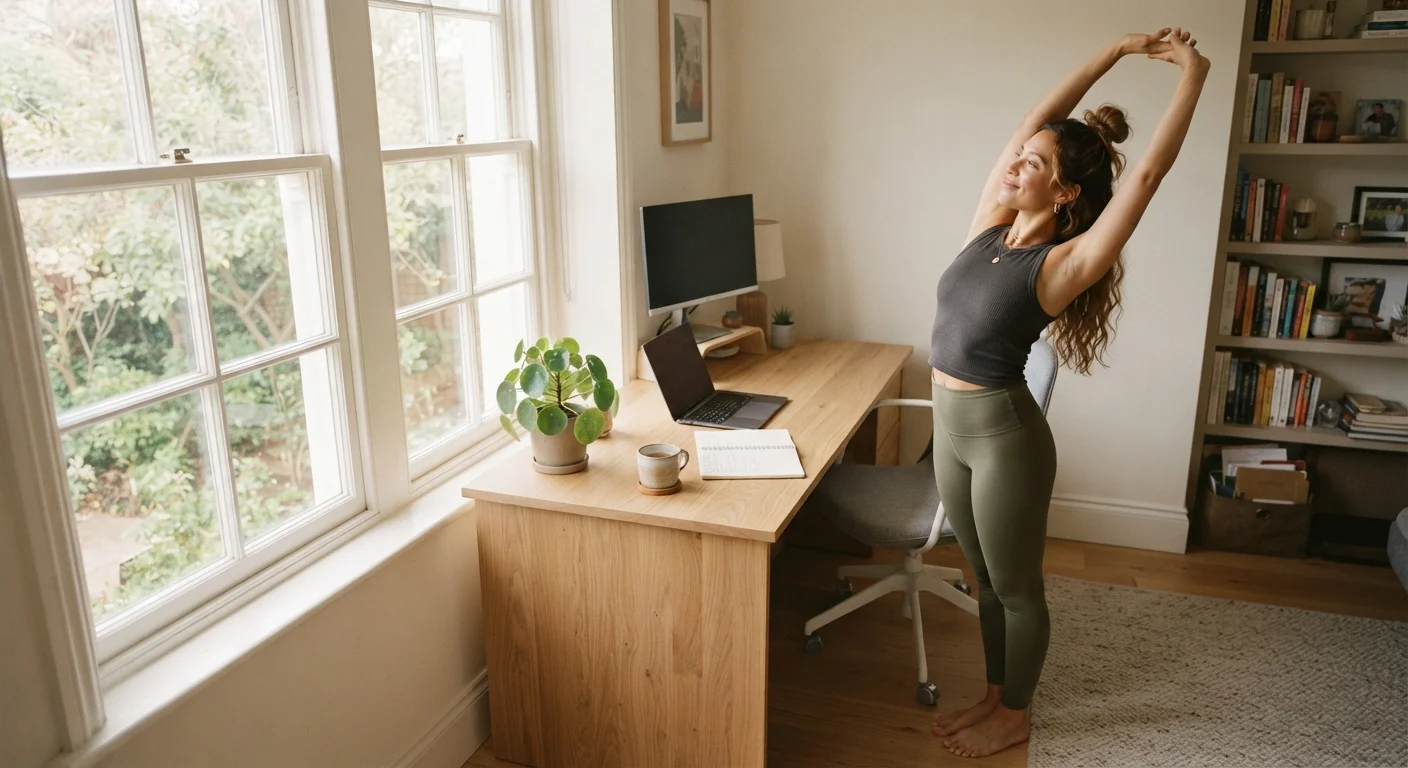
Photo credit: FindersGroove.com | Discover Important Information
In this article
Prolonged sitting has real consequences, but the fix doesn't have to be complicated. Practical movement ideas for desk-bound routines.
Key Takeaways
- Prolonged sitting is linked to real health risks, but frequent short movement breaks help counteract them.
- You don't need a gym or dedicated workout time to meaningfully increase daily movement.
- Simple habit anchors - like standing during calls - make movement automatic rather than effortful.
- Even two to five minutes of movement every hour adds up to significant activity over a workday.
- Consistency with small movements matters more than occasional intense exercise sessions.
Why Desk Workers Need to Think About Movement Differently
If your workday involves sitting at a screen for six or more hours, you're in the majority - and you're probably familiar with the stiff neck, heavy legs, and afternoon fog that come with it. Research consistently links prolonged uninterrupted sitting to increased risks for cardiovascular issues, metabolic changes, and musculoskeletal discomfort. That's not meant to alarm you - it's meant to reframe the goal.
The target isn't one big workout that "cancels out" hours of stillness. Evidence suggests that breaking up sitting time frequently throughout the day is independently beneficial, even for people who also exercise regularly. Think of it less as fitness and more as keeping your body's basic systems ticking along.
If the idea of structured exercise feels like one more overwhelming commitment, you're not alone. The strategies below are designed to fit inside a real desk-bound day - no gym required, no willpower heroics needed. For a deeper look at why short bursts count, see what the research says about movement snacks.
Start With One Change, Not Six
It's tempting to adopt every strategy at once, but research on habit formation suggests that adding one new behaviour at a time leads to much better long-term success. Pick the single idea from this list that fits most naturally into your existing day and practise it consistently for two to three weeks before adding another. Sustainable change compounds over time.
Simple Ways to Add Movement to a Desk-Bound Day
Use transitions as movement triggers
The most reliable way to build a new behaviour is to attach it to something you already do. Every time you finish a meeting, get up for water, or head to the bathroom, treat the transition itself as a movement prompt. Add a short walk around your floor or a quick set of calf raises before sitting back down.
This is sometimes called habit stacking - pairing a new action with an existing routine so it becomes automatic rather than a separate decision. The key is consistency, not intensity. Two minutes of walking per transition, done six times a day, adds twelve minutes of accumulated movement without any dedicated workout time.
Habit stacking turns every transition into a low-effort movement opportunity.
Take phone and video calls standing or walking
Most people sit on calls out of habit, not necessity. If you're listening rather than typing, standing is just as functional - and standing activates your postural muscles in ways that sitting doesn't. If the call is audio-only, walking while you talk is even better.
Walking meetings have been studied in workplace contexts and show benefits for both physical activity and creative thinking. Even pacing a small area adds meaningful steps and interrupts the pattern of sustained stillness. For people concerned about appearing unprofessional, a stable background and decent microphone mean no one will know you're moving.
Standing or walking on calls is one of the easiest zero-cost movement upgrades available.
Set a repeating break reminder - and actually use it
Most people intend to take breaks but lose track of time when focused work pulls them in. A simple hourly alert - whether from your phone, computer, or a browser extension - creates an external prompt that doesn't rely on you remembering. When it goes off, the goal is simple: stand up and move for two to five minutes.
What you do in that window matters less than the fact that you do something. Walk to a window, do a few shoulder rolls, step outside for fresh air. The physiological benefit comes primarily from interrupting sitting, not from any particular movement style. Over an eight-hour workday, even two-minute breaks add up to a meaningful baseline of activity.
Hourly reminders remove the mental load of remembering to move - the system does it for you.
Incorporate desk-friendly mobility moves
You don't need floor space or workout clothes to address the tension that builds from hours at a keyboard. Seated hip flexor stretches, chest openers, neck rolls, and thoracic rotations can all be done in or beside your chair and target the areas most affected by desk posture.
Tight hip flexors, a rounded upper back, and neck tension are among the most common complaints among desk workers - and regular gentle mobility work is widely recommended by physical therapists as a preventive measure. If you're unsure which movements are appropriate for your body, a session with a physical therapist or certified movement professional can provide personalised guidance.
Targeted mobility moves at your desk directly address the postural patterns that desk work creates.
Reframe your commute and lunch break as movement time
If you commute by car, consider parking further away or getting off public transit one stop early. If you work from home, a short "commute walk" before and after work can create a structured boundary between work and rest while adding steps. These aren't hacks - they're low-stakes opportunities that are genuinely sustainable long-term.
Lunch breaks are similarly underused. Even a ten-minute walk after eating supports digestion and provides a mental reset that research associates with improved afternoon focus and mood. Walking doesn't need to be brisk to be beneficial - see a clear-eyed look at what walking can actually do for your health for a realistic picture of its benefits and limits.
A ten-minute post-lunch walk supports both digestion and afternoon mental clarity.
Build an end-of-day wind-down that includes movement
Evening movement doesn't have to mean a workout. A fifteen-minute walk, a gentle stretching routine, or even an active household task counts as movement that helps your body shift gears after a sedentary day. Consistent light activity in the evening is also associated with better sleep quality in general population research - though individual responses vary.
If you're looking to build this into a broader routine, a realistic weekly movement plan can help you structure these habits in a way that accounts for your actual energy levels across the week. And if movement and mental well-being feel intertwined for you, it's worth exploring building a daily mental wellness routine alongside your physical habits.
Consistent light evening movement helps your body decompress and may support better sleep.
What About a Standing Desk?
Standing desks are often marketed as a solution to sedentary work, but standing all day comes with its own risks - including lower back strain and circulatory discomfort. Current guidance from occupational health researchers generally recommends alternating between sitting and standing rather than replacing one static posture with another. If you have access to a sit-stand desk, use it as a tool for variety, not a replacement for movement breaks.
This article provides general health information for educational purposes and is not a substitute for personalised medical or fitness advice. If you have an existing health condition or injury, consult a qualified healthcare professional before changing your activity levels.

Author
Health & Wellness Editorial Team
Health & Wellness Editorial Team is the collective byline for our editorial team and contributor network. Articles published under this byline or an editorial pen name are researched, written, and reviewed according to our editorial standards for clarity, consistency, and independence before publication.
View all articles →