
E-Readers in Daily Life: The Honest Pros and Cons
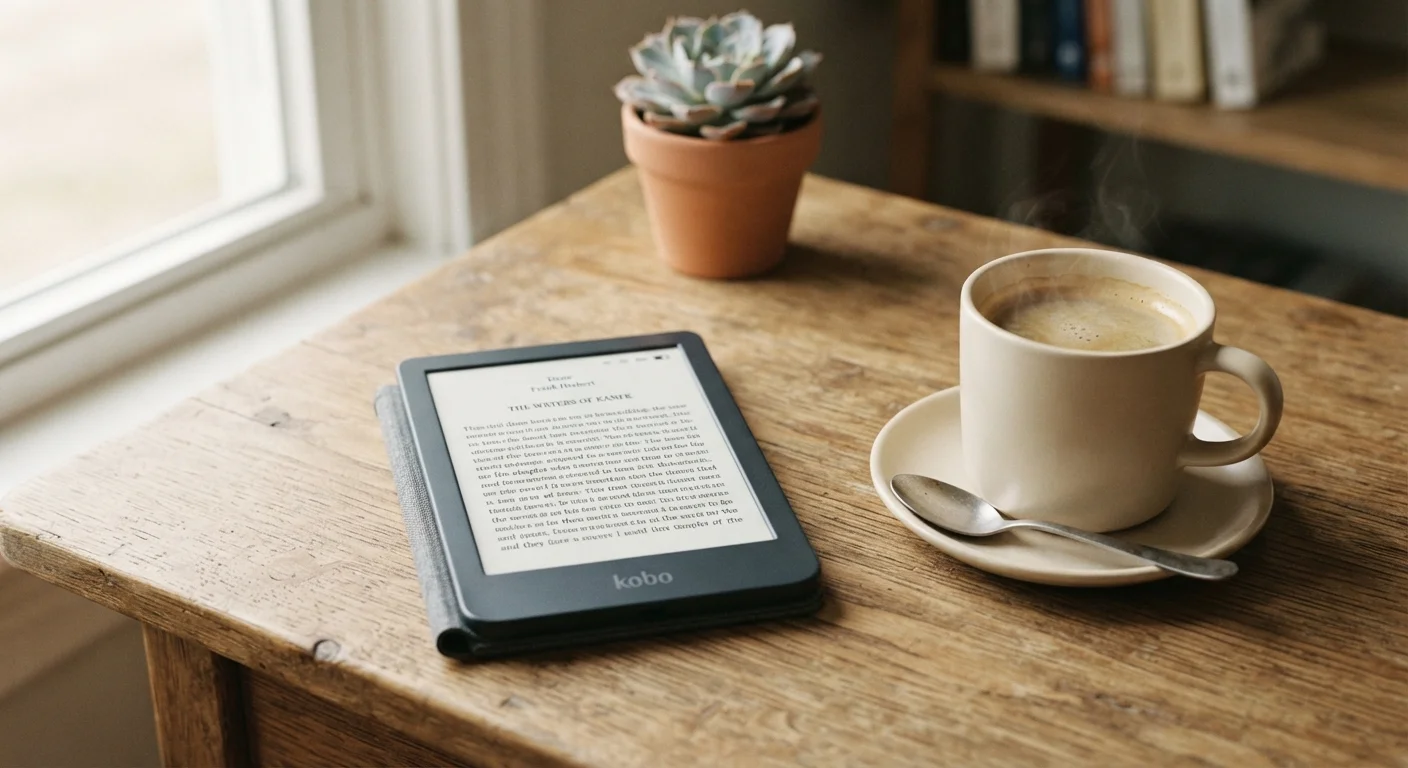
Photo credit: FindersGroove.com | Discover Important Information
In this article
E-readers excel in some areas and genuinely disappoint in others. A balanced look at eye comfort, format support, library access, and durability.
Key Takeaways
- E-ink screens reduce eye strain compared to backlit LCD or OLED displays used in tablets and phones.
- Most e-readers support only a limited range of file formats, which can frustrate users with large personal libraries.
- Battery life on e-readers typically lasts weeks, not hours, making them reliable travel companions.
- Library integration varies widely by device and region - check your local library's app compatibility first.
- E-readers do one thing well; if you need multitasking or color content, a tablet may serve you better.
E-ink screens are easier on the eyes
Reflected-light displays don't flicker or emit the high-intensity blue light common in backlit screens, which many readers report as more comfortable for extended sessions. This is general user experience data, not a medical claim - individual sensitivity varies.
Battery lasts weeks, not hours
E-ink draws power only when the page changes, enabling typical battery life of four to eight weeks. This makes e-readers among the most reliable portable devices for travel or off-grid use.
Lightweight and one-handed readable
Most e-readers weigh under 215 grams and are thin enough to hold comfortably for extended periods, reducing hand fatigue compared to holding a tablet or hardcover book.
Distraction-free reading environment
No notifications, apps, or social media compete for your attention. The single-purpose design actively supports focused, uninterrupted reading sessions.
Water resistance for everyday situations
Many current e-readers carry IPX8 water resistance ratings, allowing use near pools, in bathtubs, or in light rain without significant risk of damage.
Stores thousands of books in one device
Even entry-level storage options hold several thousand titles, eliminating the physical weight and shelf space of a large personal library.
Limited file format support causes real friction
Most e-readers handle EPUB and proprietary formats well but struggle with complex PDFs, fixed-layout files, and comic book archives. Users with diverse libraries frequently need workarounds or conversion tools.
Color content looks flat or unreadable
Standard e-ink displays are grayscale. Color e-ink panels exist but refresh slowly and remain expensive, making e-readers a poor fit for illustrated books, magazines, or comics.
Library access isn't guaranteed
Digital library services like OverDrive and Libby are compatible with some e-readers but not all, and catalog availability depends on local library agreements. Compatibility should be confirmed before purchase.
No multitasking capability
E-readers cannot run multiple apps, handle email, or serve as a productivity device. Users who want one device for reading and other tasks will find the functionality limiting.
Page refresh lag can be noticeable
E-ink screens have a visible refresh delay when turning pages or navigating menus. Most readers adjust quickly, but users coming from tablets may find it jarring initially.
What Makes E-Readers Different From Other Screens
E-readers use e-ink technology - a display type that reflects ambient light rather than emitting it directly at your eyes. Unlike the LCD or OLED panels in smartphones and tablets, e-ink screens update slowly and draw power only when the display changes. This fundamental difference drives almost every advantage and disadvantage e-readers carry into daily life.
Most current e-readers weigh between 150 and 215 grams, fit easily in one hand, and include adjustable front lighting that works in the dark without the blue-light intensity associated with phone screens. They are single-purpose devices - designed to display text and basic images, nothing else. If you're weighing whether a dedicated reader fits your lifestyle alongside or instead of a tablet, our guide on getting more from a tablet you already own is a useful reference point.
E-ink screens are easier on the eyes
Reflected-light displays don't flicker or emit the high-intensity blue light common in backlit screens, which many readers report as more comfortable for extended sessions. This is general user experience data, not a medical claim - individual sensitivity varies.
Battery lasts weeks, not hours
E-ink draws power only when the page changes, enabling typical battery life of four to eight weeks. This makes e-readers among the most reliable portable devices for travel or off-grid use.
Lightweight and one-handed readable
Most e-readers weigh under 215 grams and are thin enough to hold comfortably for extended periods, reducing hand fatigue compared to holding a tablet or hardcover book.
Distraction-free reading environment
No notifications, apps, or social media compete for your attention. The single-purpose design actively supports focused, uninterrupted reading sessions.
Water resistance for everyday situations
Many current e-readers carry IPX8 water resistance ratings, allowing use near pools, in bathtubs, or in light rain without significant risk of damage.
Stores thousands of books in one device
Even entry-level storage options hold several thousand titles, eliminating the physical weight and shelf space of a large personal library.
Where E-Readers Genuinely Fall Short
The same single-purpose design that makes e-readers focused also makes them inflexible. Format support is a persistent frustration: most devices handle EPUB and their own proprietary formats well, but struggle with reflowable PDFs, CBZ comic archives, and fixed-layout files. Documents with complex tables or images often render poorly, making e-readers a weak choice for academic papers or illustrated non-fiction.
Color e-ink panels exist but remain expensive and noticeably slower to refresh than grayscale screens - not yet a mainstream solution. If your reading leans toward graphic novels, travel guides with heavy photography, or children's picture books, a standard e-reader will disappoint.
Library access is another variable to check before purchasing. Services like OverDrive and Libby work well with some devices but not all, and availability depends heavily on your local library's digital catalog agreements. Don't assume compatibility - verify it.
Limited file format support causes real friction
Most e-readers handle EPUB and proprietary formats well but struggle with complex PDFs, fixed-layout files, and comic book archives. Users with diverse libraries frequently need workarounds or conversion tools.
Color content looks flat or unreadable
Standard e-ink displays are grayscale. Color e-ink panels exist but refresh slowly and remain expensive, making e-readers a poor fit for illustrated books, magazines, or comics.
Library access isn't guaranteed
Digital library services like OverDrive and Libby are compatible with some e-readers but not all, and catalog availability depends on local library agreements. Compatibility should be confirmed before purchase.
No multitasking capability
E-readers cannot run multiple apps, handle email, or serve as a productivity device. Users who want one device for reading and other tasks will find the functionality limiting.
Page refresh lag can be noticeable
E-ink screens have a visible refresh delay when turning pages or navigating menus. Most readers adjust quickly, but users coming from tablets may find it jarring initially.
Battery Life, Durability, and Real-World Use
The battery performance gap between e-readers and tablets is not marginal - it's dramatic. A fully charged e-reader routinely lasts four to eight weeks under typical daily use. Tablets and phones, by contrast, typically require daily or every-other-day charging. For travel, commuting, or any situation where charging access is unpredictable, this matters significantly.
4-8 weeks
Typical e-reader battery life per charge
E-ink technology draws power only on page turns, enabling multi-week battery performance that far exceeds tablets and smartphones under comparable use conditions.
~175g
Average weight of a current e-reader
Most mainstream e-readers weigh between 150 and 215 grams, making them lighter than the majority of paperback novels and significantly lighter than standard tablets.
Durability is generally solid. Most e-readers carry an IPX8 water-resistance rating, meaning they can survive brief submersion - a genuinely useful feature for poolside or bathtub reading. The screens are protected by glass or plastic covers, though gorilla-glass-level scratch resistance varies by model. Cases are widely available and add meaningful drop protection without much bulk.
One real-world caveat: e-ink displays have a finite number of refresh cycles, though in practice most readers will replace a device before that limit becomes relevant. The technology is mature enough that longevity is rarely a concern for ordinary users.
E-Readers and Your Attention Habits
One underrated advantage of e-readers is what they don't do. There are no notification badges, no social feeds, no video autoplay. For readers who find themselves reaching for their phone instead of finishing a chapter, the single-purpose nature of an e-reader removes that friction entirely.
This connects to broader questions about how device design shapes attention and mood - something worth examining honestly if you're trying to build more intentional screen habits. Our digital wellness self-audit can help you assess whether your current device mix is working for or against you. If you're curious about how different types of screen use affect energy and focus differently, passive scrolling versus active engagement breaks that down usefully.
E-Readers Are a Tool, Not a Habit Fix
Buying an e-reader won't automatically make you read more - that depends on your habits and routines, not your hardware. What the device does do is remove many of the environmental barriers and digital interruptions that compete with reading time. Think of it as reducing friction, not creating motivation. If you want to examine your broader device habits more honestly, the Digital Wellness hub covers that territory in depth.
In short, an e-reader won't fix reading habits on its own, but its design removes many of the environmental cues that interrupt them.

Author
Tech & Gadgets Editorial Team
Tech & Gadgets Editorial Team is the collective byline for our editorial team and contributor network. Articles published under this byline or an editorial pen name are researched, written, and reviewed according to our editorial standards for clarity, consistency, and independence before publication.
View all articles →