
Passive Scrolling vs. Active Engagement: Which Digital Habits Deplete You?
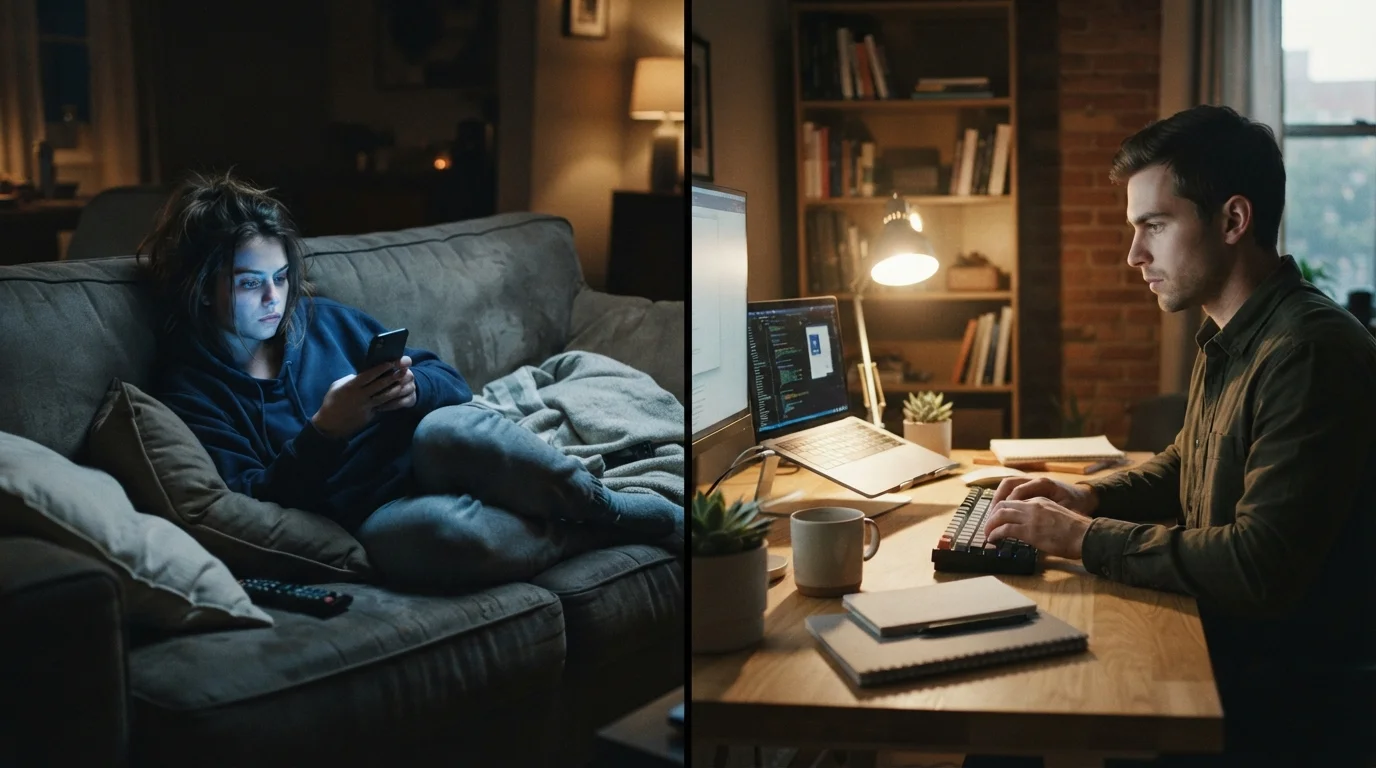
Photo credit: FindersGroove.com | Discover Important Information
In this article
Not all screen time feels the same afterward. Compare how passive consumption and interactive use affect mood, energy, and focus differently.
Key Takeaways
- Passive scrolling and active engagement trigger measurably different psychological and physiological responses.
- Depleted energy after phone use is often tied to content type and interaction mode, not just time spent.
- Active, goal-directed device use tends to preserve or restore a sense of agency and focus.
- Small, deliberate shifts in how you interact with devices can meaningfully change how you feel afterward.
- Screen-time totals alone don't predict wellbeing - the quality of engagement is the more useful metric.
What Do We Actually Mean by Passive vs. Active?
The distinction isn't about whether you're sitting still. Passive scrolling means consuming an algorithmically curated stream of content without a clear goal - social media feeds, short-form video loops, news aggregators. You didn't choose what comes next; the platform did. Active engagement, by contrast, means using a device with directed intent: writing, researching a specific question, creating something, messaging a specific person, or reading a chosen article.
The line can blur. Watching a documentary you deliberately selected is more active than getting sucked into an autoplay queue you never chose. That nuance matters because it's not the device or even the app - it's the mode of use that shapes the experience. As researchers studying device habits have noted, raw screen-time numbers consistently miss this distinction.
How Each Mode Affects Your Brain and Mood
Passive scrolling keeps your attention in a shallow, reactive loop. Studies on social comparison and social media use - including work published in journals like Computers in Human Behavior - suggest that prolonged passive consumption is associated with lower mood, higher social anxiety, and reduced feelings of self-worth. The mechanism isn't mysterious: you're exposed to a relentless stream of curated highlights, negative news, and engagement-optimized content, with no natural stopping cue.
Active engagement tends to involve what psychologists call autonomy - a sense that you're directing the experience rather than reacting to it. Tasks with a clear endpoint (finishing a task list, sending a message, completing a chapter) create small but real feelings of accomplishment. This is consistent with self-determination theory, which links perceived autonomy to wellbeing. The psychological loops behind doom-scrolling work in the opposite direction - removing autonomy cues and replacing them with variable-reward patterns similar to slot machines.
| Passive Scrolling | Active Engagement | |
|---|---|---|
| User control | Algorithm-driven, low agency | User-directed, high agency |
| Typical mood effect | Associated with lower mood over time | Tends to preserve or improve mood |
| Cognitive load type | High context-switching, shallow | Focused or purposeful load |
| Energy after use | Often depleted or restless | Often neutral to satisfied |
| Sleep impact | Linked to delayed sleep onset | Lower disruption when bounded |
| Sense of accomplishment | Rarely produced | Frequently produced |
This article is for general informational purposes and does not constitute medical or mental health advice. If you're experiencing significant mood or attention difficulties, consult a qualified professional.
The Energy Cost: Why You Feel Drained
Mental fatigue after scrolling isn't imaginary. Cognitive load research suggests that context-switching - jumping between memes, news, ads, and personal updates - imposes a real processing cost. Each context shift requires your brain to re-orient. Passive feeds are optimized to maximize this switching, keeping you in a state of low-level alertness that is tiring over time without feeling productive.
Active use, even mentally demanding active use like writing or problem-solving, tends to produce fatigue that feels different - more like satisfaction than depletion. The difference is often described in terms of restorative versus depleting attention demands. This also intersects with sleep: passive scrolling near bedtime has been linked to delayed sleep onset and poorer sleep quality, a pattern explored in more depth in research on device habits and sleep.
Try the '10-Second Intent Check'
Before unlocking your phone, pause and ask: what am I actually trying to do right now? If you can't name a specific goal, that's a reliable signal you're about to enter passive mode. Setting that brief moment of friction doesn't require willpower - it just requires the habit of pausing. Over time, this single check can dramatically shift your daily ratio of active to passive use.
Building More Intentional Device Habits
Shifting from passive to active use doesn't require dramatic digital detoxes. It requires friction - small barriers that interrupt the autopilot habit of reaching for a feed. Practical approaches include:
- Session intent: Before opening an app, name what you want to accomplish. "Check if my friend replied" is active. "See what's happening" is passive by design.
- Feed design: Curate subscriptions to reduce algorithmic control. Choosing what you see in advance is a form of active engagement.
- Time containers: Defined start and end points for scrolling sessions prevent the open-ended drift that leads to depletion.
- Substitute activities: Replace low-intent scrolling with directed reading - e-readers offer a screen-based alternative that removes algorithmic feeds entirely.
For a more systematic look at your own patterns, a digital wellness self-audit is a useful next step. And if your goal extends beyond screens, even brief movement breaks have been shown to interrupt rumination cycles that passive scrolling tends to reinforce.
2×
Higher passive use linked to lower wellbeing
A University of Pennsylvania study found that limiting passive social media use to 30 minutes daily was associated with significant reductions in loneliness and depression measures.
70%
Users underestimate their scroll time
Research on self-reported vs. device-logged usage consistently shows people underestimate passive scrolling duration by 50-70%, according to digital behavior studies.

Author
Tech & Gadgets Editorial Team
Tech & Gadgets Editorial Team is the collective byline for our editorial team and contributor network. Articles published under this byline or an editorial pen name are researched, written, and reviewed according to our editorial standards for clarity, consistency, and independence before publication.
View all articles →