
Parking in Unfamiliar Places: Spatial Awareness and Low-Speed Control
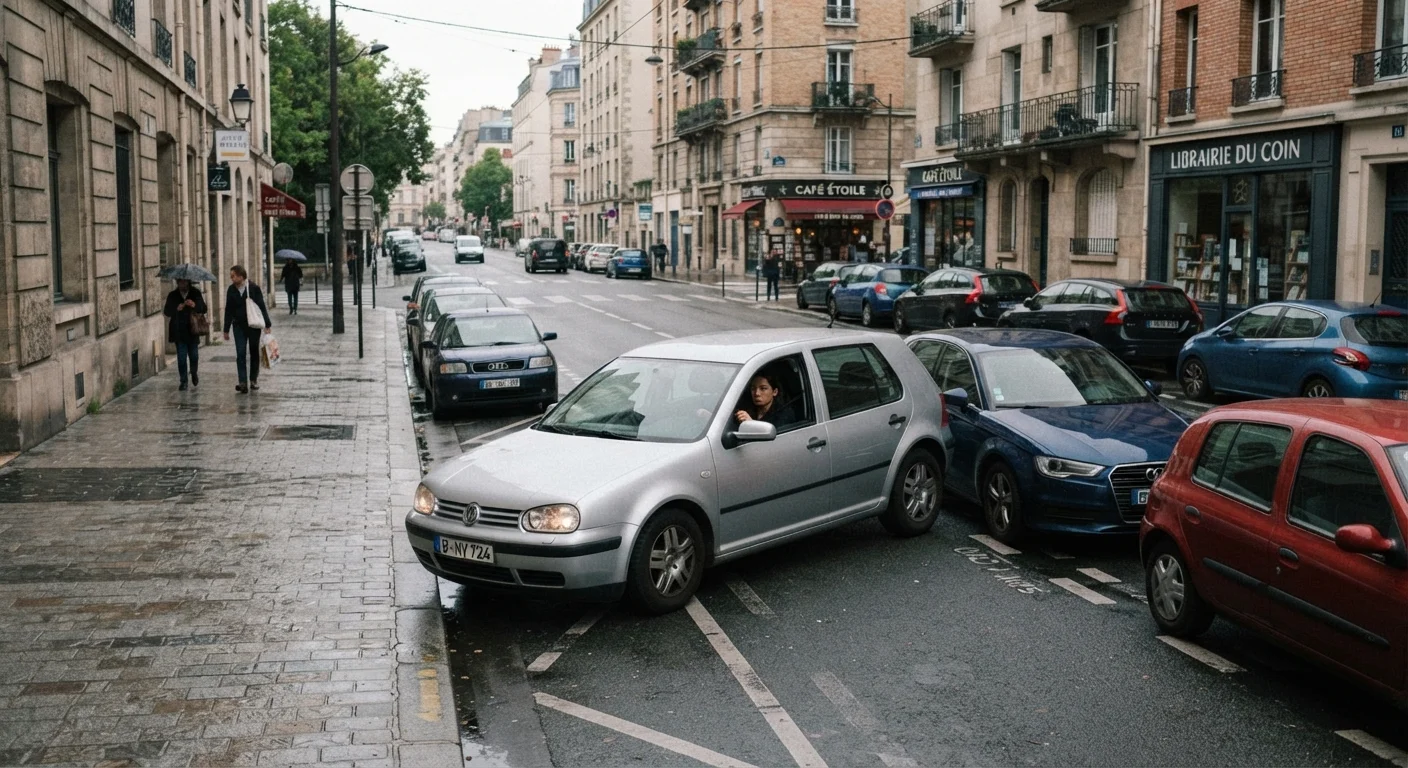
Photo credit: FindersGroove.com | Discover Important Information
In this article
Parallel parking, tight bays, and sloped driveways all test a different set of skills. Build the spatial confidence to park anywhere.
Key Takeaways
- Spatial awareness - knowing where your car's edges are - is a learnable skill that improves with practice.
- Slow speed gives you more control; most parking errors happen because drivers move too fast.
- Visual reference points on your vehicle - mirrors, hood line, door pillars - are your most reliable guides.
- Sloped driveways and multi-story garages require extra attention to clearance and wheel position.
- Consistent mirror use and small steering corrections prevent large errors that are hard to recover from.
Why Parking Feels Harder Than It Should
Parking sits at the intersection of low-speed vehicle control and spatial reasoning - two skills that most drivers develop inconsistently. At highway speed, your path of travel is relatively predictable; at 2 mph in a tight bay, every small steering input has an outsized effect, and the consequences of misjudgment are immediate and visible. The anxiety that often accompanies unfamiliar parking situations is a natural response to that compressed margin for error.
The good news is that spatial awareness is genuinely learnable. It is not an innate talent. Experienced drivers have simply built a mental model of their vehicle's footprint - roughly where the corners are, how far the rear swings during a turn, how much clearance the mirrors indicate. Building that same model is a matter of deliberate exposure, not years of experience. This guide is designed to accelerate that process with concrete reference techniques and low-speed habits that hold up under real-world pressure.
Parking anxiety often compounds when drivers are already managing cognitive load from other sources - fatigue, unfamiliar roads, or time pressure. Understanding how driver fatigue affects control and judgment is worth reading alongside this material.
What you will need
Tools and Setup That Make Parking Easier
Modern driver assistance features - rear cameras, proximity sensors, and even automatic parking systems - are genuinely useful, but they work best as supplements to spatial awareness rather than replacements for it. Sensors have blind spots. Cameras distort perceived distance at the edges of their wide-angle lens. Understanding what these tools show - and don't show - helps you use them accurately.
Properly Adjusted Side Mirrors
Provide the primary sightlines for judging clearance when reversing and aligning in narrow bays.
Rear-View Camera
Shows obstacles directly behind the vehicle that mirrors cannot capture, particularly at low speeds.
Parking Sensors (Front and Rear)
Audible proximity alerts that signal how close you are to surrounding objects without requiring visual checks.
Traffic Cones or Water Bottles
Used as stand-in markers during practice sessions in empty car parks to simulate parking boundaries.
Always Check Blind Spots on Foot First
Before reversing into any unfamiliar space - particularly in parking structures or tight driveways - exit the vehicle and walk the area. Low walls, concrete pillars, bollards, and shopping carts are invisible from the driver's seat. A 30-second walk-around can prevent costly panel damage and, more importantly, protects pedestrians who may not be visible through your mirrors.
Step-by-Step: Parking in Unfamiliar Spaces
The following steps apply to the most common real-world parking challenges: reverse bay parking, parallel parking, and sloped or multi-story environments. Work through them in sequence, especially in a new location.
Adjust Your Mirrors Before You Move
Before entering any parking area, confirm your side mirrors are angled to show a sliver of your vehicle's rear quarter panels. This gives you a frame of reference - you can judge the gap between your car and an obstacle relative to how much of your own vehicle you can see. Adjust your rear-view mirror so the full rear window is visible. If your car has a rear camera, glance at it briefly to verify the feed is clear.
Scout the Space Before Committing
Drive or walk past the space before attempting to park. Note whether it's a pull-in bay or a reverse-in bay, how much clearance exists at the front and rear, whether the surface is level, and whether any fixed obstacles (pillars, bollards, shopping trolleys) are present. In a multi-story garage, pay attention to low-clearance warnings - these are usually posted in feet and inches at the entry ramp.
Position Your Vehicle Correctly Before Turning In
For a reverse bay park, pull forward until your rear bumper is roughly level with the edge of the target space - about one car's width past the bay opening. For parallel parking, pull alongside the vehicle in front of the gap, aligning your rear bumper with theirs. Your positioning before you begin steering is the most important variable; a poor starting position forces you to overcorrect repeatedly.
Move Slowly and Use Small Steering Inputs
Creeping speed - barely above idle in a petrol car, or the slowest crawl on an electric vehicle - gives you time to process mirror information and make small corrections before they become large problems. Apply full steering lock only when the vehicle is nearly stopped or moving at walking pace. Rapid steering at even slow speeds causes the rear of the vehicle to swing wide unexpectedly. If things go wrong, stop completely before correcting, rather than steering while still moving.
Use Visual Reference Points on Your Car
Learn two or three fixed reference points specific to your vehicle. Common ones include: when the rear door handle lines up with the bay marking, you're roughly centered; when the wing mirror tip appears to touch a wall in the mirror image, you still have about 12-18 inches of actual clearance. These points vary by car model, so spend time in a quiet area identifying yours. Consistency in using them removes guesswork under pressure.
Straighten Up and Check All Clearances
Once roughly in position, straighten your wheels and check all four corners relative to the bay lines, surrounding vehicles, and any fixed structures. If you're in a parallel spot, make sure your front and rear bumpers aren't protruding into traffic. Apply the parking brake if you're on any incline - even a gentle one. Before walking away, take a quick walk around the vehicle; what looks fine from inside can look very different from outside.
Practice in an Empty Lot First
If parallel parking or tight-bay reversal feels stressful, spend 20 minutes in a quiet, empty car park using traffic cones or water bottles as stand-ins for other vehicles. Repetition in a zero-stakes environment builds the muscle memory and spatial confidence you'll draw on in real traffic. City driving demands a different skillset - see our guide to city vs. highway driving habits for the broader picture.
Handling Specific Situations: Slopes, Garages, and Narrow Streets
Sloped driveways and hills: In addition to the parking brake guidance in the warning above, be aware that entering a steep driveway at the wrong angle can cause your front bumper or undercarriage to scrape. Approach at a slight angle rather than straight on - this raises the effective ground clearance on the leading edge. Go slowly enough that you can feel (or hear) before contact happens.
Multi-story car parks: These combine tight turning radii on ramps with low overhead clearance and narrow bays. Check posted height restrictions before entry - these are non-negotiable for SUVs and vans. On the ramps, hug the inside line through turns to give your rear end more room. Expect the steering to feel heavy at very low speeds without power assistance doing much work.
Narrow residential streets: On tight urban streets, parallel parking often requires reversing between two vehicles with less than a car's length of gap. The standard technique - align rear bumpers, reverse and steer toward the curb, then straighten - becomes more difficult with oversized vehicles. If your car is longer or wider than average, be realistic about which gaps are too small. Forcing a large vehicle into an undersized space isn't a skill gap; it's a judgment call. For more on adapting your habits to city environments, see our city streets vs. highway driving guide.
Parking on a Slope: Engage the Brake Before You Shift
On any inclined surface, always apply your parking brake before shifting into Park - especially on steeper grades. Shifting into Park first can place the full weight of the vehicle on the transmission's parking pawl, which is a small metal pin not designed to hold the car indefinitely on a hill. Wheel direction (turned toward the curb when facing downhill, away when facing uphill) provides a secondary safeguard.
Building Long-Term Spatial Confidence
The drivers who park confidently in unfamiliar places aren't guessing less - they're using a more reliable system. They know their reference points. They move slowly enough that their system works. And they've practiced enough that the system is automatic rather than effortful.
That level of confidence is available to any driver willing to spend a few sessions in a low-stakes environment. An empty car park with improvised markers teaches more in 30 minutes than months of passive commuting. Combine that with defensive driving habits - which include anticipating the behavior of pedestrians and other drivers in busy parking areas - and parking transforms from a source of stress into a routine task.
Spatial awareness also carries over to other challenging driving scenarios. The same attentiveness that helps you judge a tight bay translates directly to navigating roundabouts and merge lanes - skills covered in our guide to roundabouts and multi-lane roads.

Author
Autos & Driving Editorial Team
Autos & Driving Editorial Team is the collective byline for our editorial team and contributor network. Articles published under this byline or an editorial pen name are researched, written, and reviewed according to our editorial standards for clarity, consistency, and independence before publication.
View all articles →