
Getting Comfortable on Roundabouts, Merge Lanes, and Multi-Lane Roads
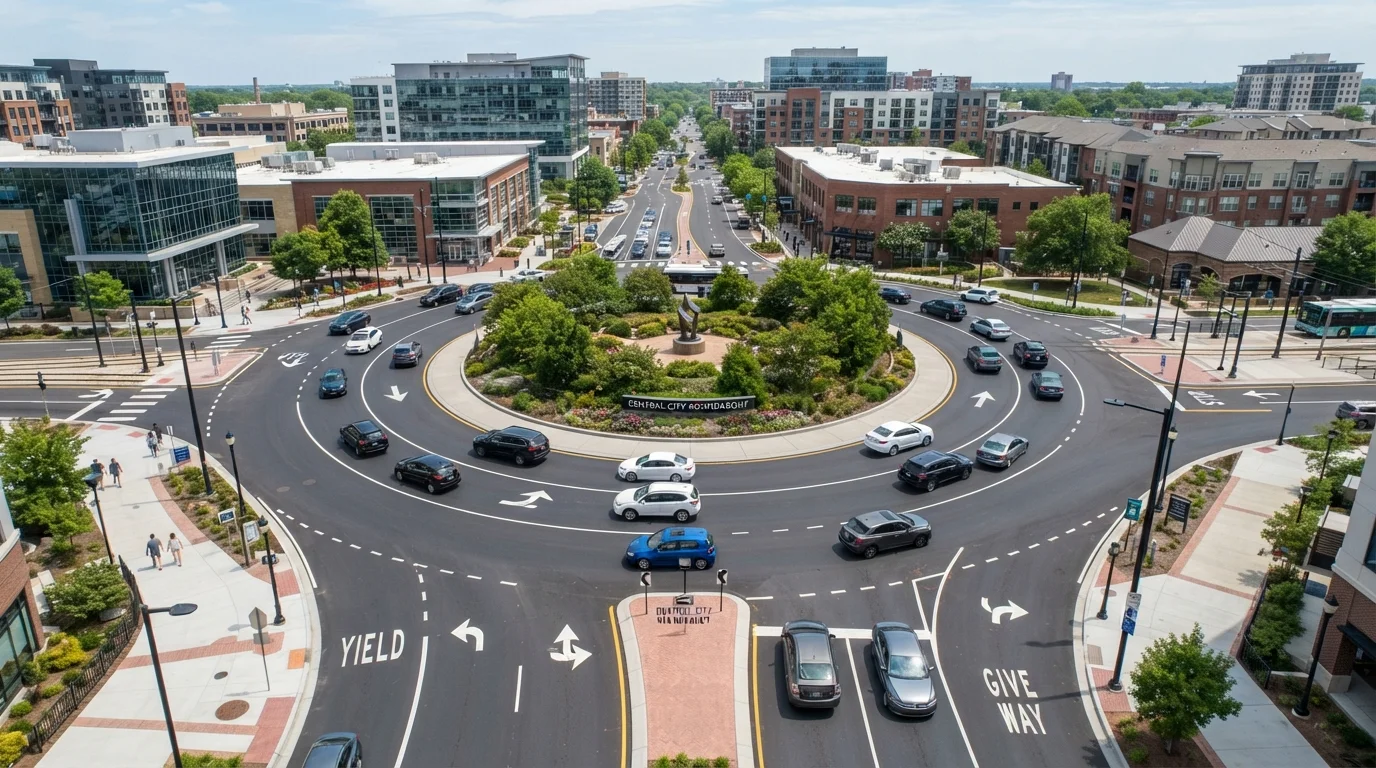
Photo credit: FindersGroove.com | Discover Important Information
In this article
These road features trip up even experienced drivers. A clear breakdown of how to navigate each one with less stress and more confidence.
Key Takeaways
- Roundabouts require you to yield to traffic already inside the circle before entering.
- On merge lanes, your goal is to match highway speed before joining traffic - not stop and wait.
- In multi-lane driving, the right lane is for through travel; left lanes are for passing.
- Signaling early and checking mirrors consistently makes every maneuver more predictable for others.
- Confidence on complex roads grows through deliberate, repeated practice in low-traffic conditions.
Why These Road Features Feel Intimidating
Roundabouts, merge ramps, and multi-lane roads share something in common: they require you to make fast decisions while other vehicles are moving around you. That simultaneity is what stresses most drivers out - not the maneuvers themselves.
The good news is that each of these situations follows a clear, learnable logic. Once you understand the underlying rule - yield to circulating traffic, match speed before merging, stay right unless passing - the specific execution becomes much less overwhelming. This guide breaks each one down so the mechanics are clear before you're in the middle of them.
If you're still building baseline comfort behind the wheel, the skills here connect closely to what's covered in our guide on adapting your habits to different road types.
Yield
To give the right of way to another vehicle or pedestrian. When you yield, you slow or stop to let others proceed before you.
Merge lane
A dedicated lane that allows vehicles to accelerate and join a faster road - most commonly seen leading onto highways or freeways.
Blind spot
The area alongside and slightly behind your vehicle that your mirrors don't show. It must be checked with a physical shoulder glance before changing lanes.
Lane discipline
The practice of staying in the correct lane for your speed and intent, and returning to the right lane after passing on a multi-lane road.
Central island
The raised or marked area in the center of a roundabout that vehicles travel around. It defines the circular path of the intersection.
Roundabouts: Flow, Yield, and Exit
A roundabout is a circular intersection where traffic flows counterclockwise around a central island. Unlike a stop-sign or signal-controlled intersection, roundabouts rely on the yield-to-circulating-traffic rule to keep vehicles moving efficiently.
Entering a roundabout
- Slow down as you approach. Watch for the dashed yield line at the entry point.
- Check for a gap in circulating traffic - vehicles already inside the roundabout have priority.
- Enter when clear. Do not stop unless traffic inside makes it necessary.
Choosing a lane (multi-lane roundabouts)
Read the pavement markings before you arrive. Generally: right lane for right-turn or straight exits, left lane for exits further around. Stay in your chosen lane throughout - do not weave between lanes once inside.
Exiting cleanly
Signal right as you approach your exit. This tells other drivers and pedestrians you're leaving. If you miss your exit, simply continue around and try again - there's no safe way to reverse or cut across lanes mid-circle.
Practice Roundabouts at Off-Peak Hours
If roundabouts are new to you, find one with light traffic - early weekend mornings work well - and drive through it several times. Repetition in a low-pressure setting builds the muscle memory you need to navigate one smoothly during busy commute hours.
Merge Lanes: Matching Speed and Finding Your Gap
A merge lane (also called an acceleration ramp) is designed to give you space and time to reach highway speed before joining the main flow of traffic. The key word is before. Merging is not about inserting yourself at whatever speed you're at - it's about making yourself part of existing traffic as seamlessly as possible.
The merge process, step by step
- Accelerate on the ramp. Use the full length of the ramp to build speed. Aim to match the pace of highway traffic.
- Check your mirrors and blind spot early. Begin scanning for a gap while you're still accelerating - not at the last second.
- Signal. Your turn signal tells nearby drivers your intention, which often prompts them to create space.
- Merge into your gap smoothly. Once in the right lane, maintain your speed and avoid braking sharply.
Don't Stop on the Acceleration Ramp
Coming to a full stop on a merge ramp significantly increases crash risk. Vehicles behind you may not expect it, and re-accelerating from zero into fast-moving traffic is far more difficult and dangerous than merging at speed. Use the entire ramp length to reach traffic speed.
Highway driving requires reading other drivers consistently. Our guide on defensive driving habits explains how to anticipate what others will do before they do it.
Multi-Lane Roads: Positioning and Lane Discipline
On any road with multiple lanes going the same direction, lane choice communicates intent. Using lanes correctly keeps traffic predictable for everyone around you.
The core rule
The rightmost lane is for through travel at the general flow of traffic. Left lanes are for passing or traveling faster than the lane to your right. Once you've passed, return to the right. This isn't just courtesy - many states have laws requiring drivers to keep right except when passing.
Lane changes done well
- Check your mirrors: rear-view, then the mirror on the side you're moving toward.
- Check your blind spot with a quick shoulder glance.
- Signal, then move - not simultaneously.
- Maintain your current speed during the change. Don't slow down before completing it.
Following distance matters especially on multi-lane roads where speeds are higher. See our article on why your following distance is probably too short for the full reasoning.
For a deeper look at how lane etiquette shapes safety culture on faster roads, the unwritten rules of motorway etiquette is worth reading alongside this guide.
Putting It All Together
The through-line connecting roundabouts, merge lanes, and multi-lane travel is the same: read the situation ahead of time, communicate clearly with signals, and move with intention rather than hesitation. Hesitation - slowing suddenly, stopping on a ramp, refusing to commit to a lane - creates more risk than a confident, deliberate move ever would.
Practice each skill in isolation before combining them. Drive a quiet roundabout during off-peak hours. Find a low-traffic on-ramp and practice building speed. Change lanes on a wide suburban road before you do it on a busy interstate.
If you're planning longer drives that will demand all of these skills together, the road trip planning guide for first-timers is a practical next step. Driving is a lifestyle skill - and like any skill, it compounds with deliberate repetition.
Frequently Asked Questions

Author
Autos & Driving Editorial Team
Autos & Driving Editorial Team is the collective byline for our editorial team and contributor network. Articles published under this byline or an editorial pen name are researched, written, and reviewed according to our editorial standards for clarity, consistency, and independence before publication.
View all articles →