
Driving in Rain, Fog, and Snow: How Conditions Change the Rules
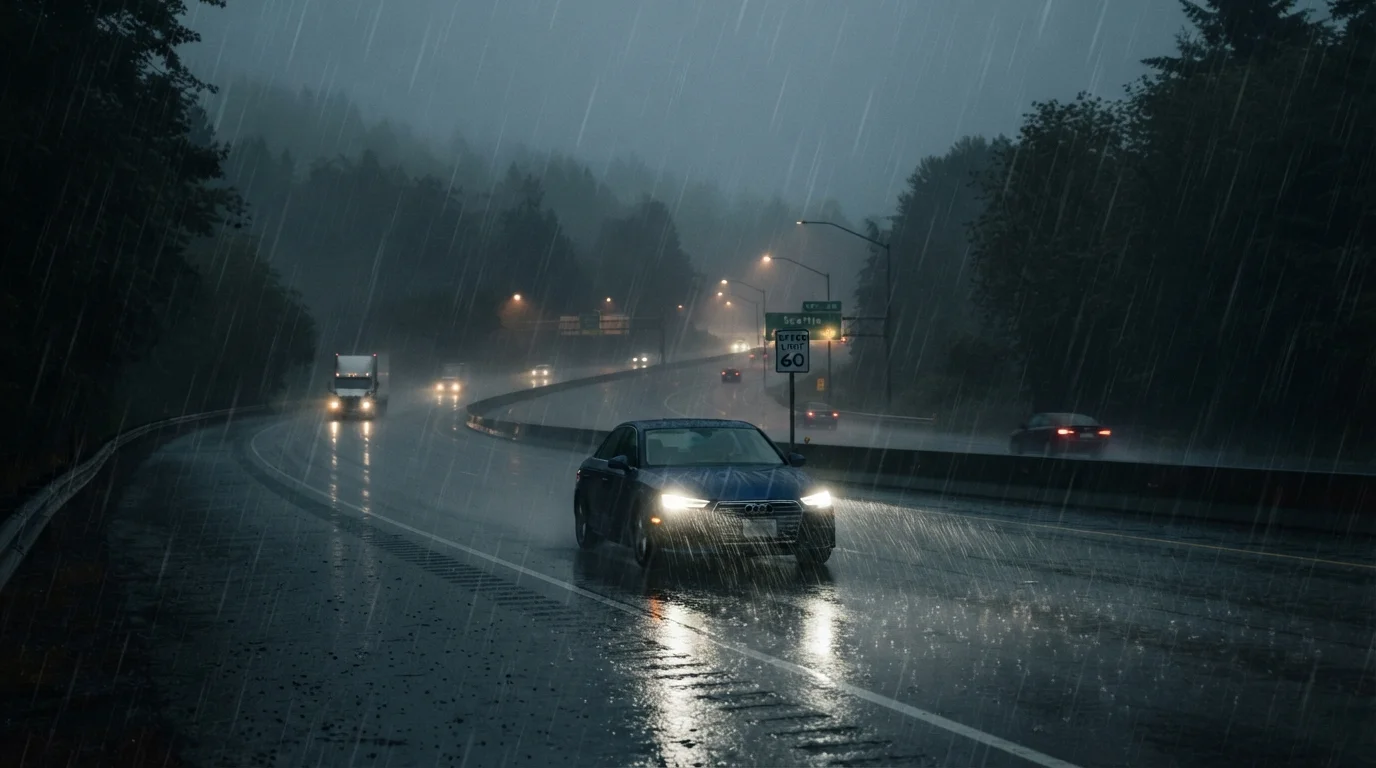
Photo credit: FindersGroove.com | Discover Important Information
In this article
Bad weather demands more than slowing down. Understand how each condition affects visibility, braking, and vehicle control.
Key Takeaways
- Rain, fog, and snow each affect braking distance, visibility, and vehicle control differently.
- Slowing down is necessary but not sufficient - headlight use, following distance, and steering inputs all change too.
- Fog demands low-beam headlights; high beams scatter off water droplets and worsen visibility.
- In snow and ice, smooth, gradual inputs prevent skids far more effectively than sharp reactive corrections.
- Vehicle preparation before bad weather arrives is just as important as in-the-moment driving adjustments.
Why Weather Demands More Than Just Slowing Down
Most drivers know bad weather means reducing speed. What's less understood is how fundamentally each condition rewrites the physics of your vehicle. Rain reduces tire grip. Fog collapses your sight lines. Snow and ice can make a 3,000-pound car feel like it's floating. Responding to each one correctly means recognizing those distinct differences - not just lifting off the gas.
The good news: adverse-weather driving is a learnable skill. It builds on the same foundations covered in adapting your habits to different road types, but asks you to internalize one more layer: what the road surface and the air itself are doing to your vehicle at any given moment.
Before you encounter bad weather on the road, make sure your vehicle is ready. Tires, wipers, lights, and brakes all play a direct role in how controllable your car is when conditions deteriorate. Our seasonal car maintenance checklist walks through exactly what to inspect before each season.
What you will need
Step-by-Step: Adjusting for Each Condition
The steps below walk through rain, fog, and snow as separate scenarios. In practice, conditions often overlap - a winter storm can bring all three at once. Use each section as a mental module you can stack as needed.
Driving in Rain: Manage Grip and Visibility Together
As soon as rain begins, increase your following distance to at least four seconds - double the dry-road standard. Wet pavement can extend braking distance by 50% or more depending on tire condition and speed.
- Turn on headlights even in daylight rain. Many states require this, and it makes you more visible to other drivers.
- Avoid the outer lanes where water pools at road edges. The center lane is typically the highest point of the road surface and drains faster.
- If you feel the steering go light (hydroplaning), ease off the throttle smoothly - do not brake sharply. Keep the wheel straight until traction returns.
Driving in Fog: Slow Down and Use the Right Lights
Fog is uniquely disorienting because it distorts depth perception - objects appear further away than they are, and sudden stops in traffic can materialize with almost no warning.
- Use low-beam headlights. High beams scatter off water droplets in the air and create glare that reduces your own forward visibility.
- Activate rear fog lights if your vehicle has them. This makes you dramatically more visible to traffic behind you.
- Reduce speed well below the posted limit. Your stopping distance must always fit within your visible range - if you can only see 100 feet ahead, you need to be able to stop within 100 feet.
- Use the road's edge markings or painted lines as a visual guide rather than the center line, which can pull you toward oncoming traffic.
Driving in Snow and Ice: Smooth Inputs Are Everything
Snow and ice demand a completely different mental model: think in slow motion. Every input - acceleration, braking, steering - should be deliberate and gradual. Abrupt movements transfer weight in ways that cause slides on low-friction surfaces.
- Accelerate gently from stops. If your wheels spin, ease off and try again with even lighter throttle.
- Brake earlier and more gradually than you think necessary. If your vehicle has ABS (anti-lock braking system), apply firm, steady pressure - don't pump the pedal.
- In corners, slow before the turn, not during it. Braking mid-corner on ice is a reliable way to induce a spin.
- Increase following distance to eight to ten seconds minimum.
Know When Not to Drive
Sometimes the safest driving decision is not to drive. If a weather advisory calls for whiteout conditions, ice storms, or zero-visibility fog, weigh that against your route's necessity. Rescheduling a non-essential trip is not a failure of skill - it's sound risk management.
If you must travel, inform someone of your route and expected arrival time. Keep a basic emergency kit in the trunk: a blanket, a phone charger, a small bag of sand or kitty litter for traction, and a flashlight.
Practice Before You Need It
If you live somewhere that gets winter weather, find an empty parking lot after a snowfall and practice controlled stops and gentle turns at low speed. Understanding how your car actually behaves on ice - in a safe, low-stakes environment - builds the muscle memory that kicks in when you need it on a real road.
Common Mistakes and How to Avoid Them
Even experienced drivers fall into predictable traps in bad weather. Over-reliance on all-wheel drive is one of the most common: AWD improves traction when accelerating, but it does nothing to shorten stopping distance. Braking physics apply equally to all drivetrain layouts.
Another frequent error is overcorrecting during a skid. When the rear of the car slides, the instinct is to steer hard in the opposite direction - which typically amplifies the slide. The correct response is to steer smoothly in the direction you want the front of the car to go and ease off the throttle gradually.
Posted Speed Limits Assume Dry Conditions
Speed limits are set for ideal road conditions. Driving at the posted limit in heavy rain, dense fog, or packed snow is not a defense against unsafe driving - legally or physically. Reduce your speed to match actual conditions, even if that means traveling well below the limit. Other traffic is not a reliable benchmark; drivers around you may also be going too fast.
Fatigue compounds every weather-related risk. Reduced visibility and tense driving conditions are mentally exhausting, and impaired reaction time is the last thing you want when a hazard appears suddenly. If a long drive in bad conditions is ahead of you, review how to recognize driver fatigue before it becomes dangerous before you set out.
For broader visibility challenges - including how glare and reduced contrast affect your depth perception - the same techniques covered in night driving skills transfer directly to fog and heavy rain scenarios.

Author
Autos & Driving Editorial Team
Autos & Driving Editorial Team is the collective byline for our editorial team and contributor network. Articles published under this byline or an editorial pen name are researched, written, and reviewed according to our editorial standards for clarity, consistency, and independence before publication.
View all articles →