
Pet Nutrition Labels Explained: What Those Ingredient Lists Actually Mean
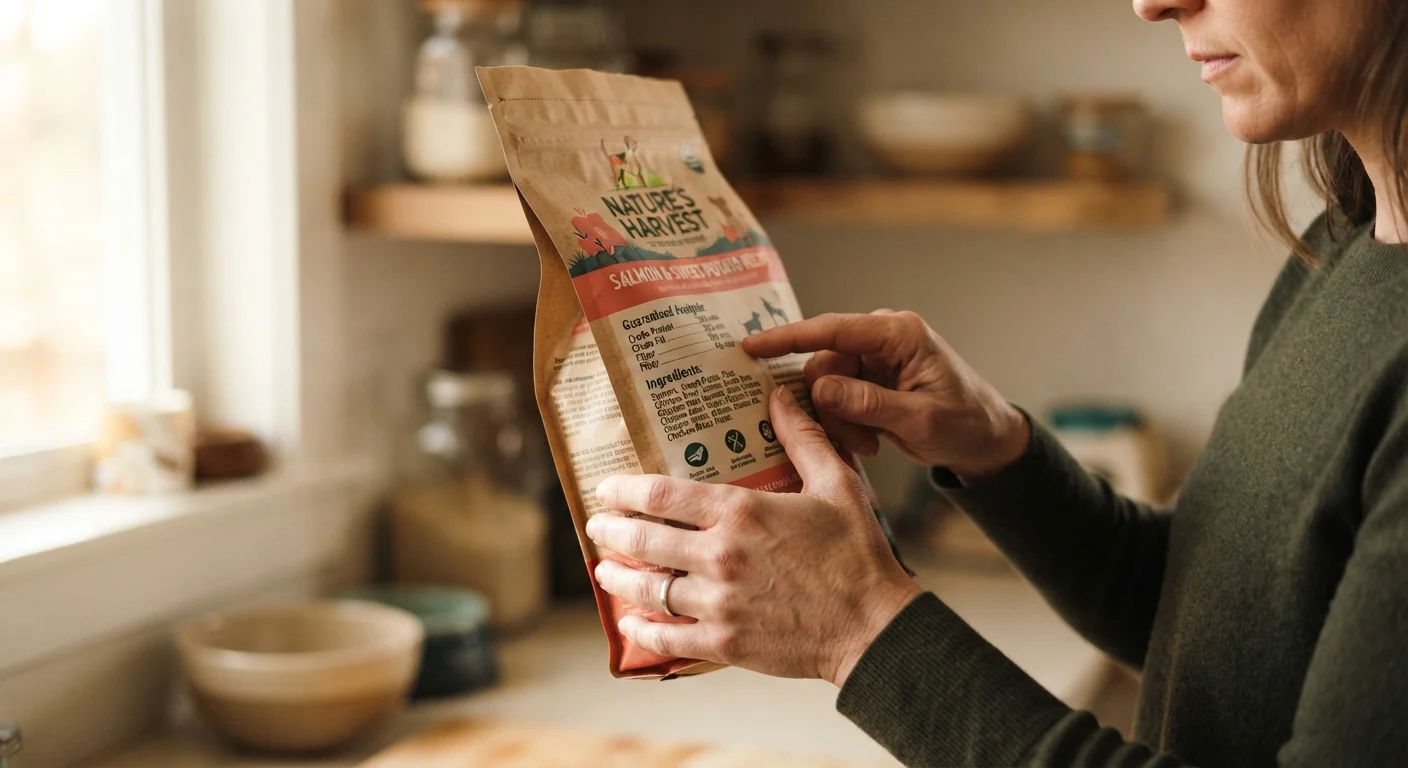
Photo credit: FindersGroove.com | Discover Important Information
In this article
Pet food packaging can be confusing. Learn how to read ingredient lists, guaranteed analysis panels, and nutritional adequacy statements clearly.
Key Takeaways
- Ingredients are listed by weight before processing, so moisture content affects their apparent ranking.
- The guaranteed analysis panel shows minimum or maximum nutrient percentages, not exact amounts.
- An AAFCO nutritional adequacy statement tells you whether a food is complete and balanced for a specific life stage.
- Marketing terms like 'natural' or 'premium' have limited or no regulatory definition on pet food labels.
- A short ingredient list is not automatically healthier than a longer one - nutrient balance matters most.
- Always consult your veterinarian before making significant changes to your pet's diet.
The Five Required Sections on Every Pet Food Label
U.S. pet food labels are required to include five core elements: the product name, the net quantity statement, the manufacturer's name and address, the ingredient list, and the guaranteed analysis panel. An AAFCO nutritional adequacy statement is also expected on foods marketed as complete diets. Together, these sections give you a structured picture of what's inside the bag - if you know how to read them. For a broader walkthrough of how regulatory labels work, see Reading a Pet Food Label Without Getting Lost in the Fine Print.
Even the product name carries regulated meaning. Under AAFCO guidelines, if a food is called 'Chicken for Dogs,' chicken must make up at least 95% of the total product weight (excluding water). A label reading 'Chicken Dinner' or 'Chicken Entrée' requires only 25% chicken. The word 'with' - as in 'with Real Chicken' - requires just 3%. These thresholds are easy to overlook but dramatically affect what you're actually purchasing.
Check the Life Stage Statement First
Before reading anything else on a pet food label, find the AAFCO nutritional adequacy statement and confirm it covers your pet's life stage. A food formulated only for 'adult maintenance' is not appropriate as the sole diet for a puppy or kitten. This single line does more to establish a food's baseline suitability than any ingredient or marketing claim on the package.
How the Ingredient List Really Works
Ingredients are listed in descending order by weight as they are added to the recipe - before cooking or processing. This means a fresh protein like chicken or salmon is weighed with all its natural moisture intact, which can push it to the top of the list even if the dried food ultimately contains more grain than meat by weight. This is called ingredient splitting in reverse - understanding it prevents you from over-reading ingredient order as a direct quality signal.
Ingredient splitting itself is a different concern: manufacturers sometimes divide a single ingredient - say, corn - into multiple forms (ground corn, corn gluten meal, corn bran) that each appear separately and lower on the list, even though corn is the dominant ingredient overall. Neither practice is illegal, but both can obscure the true composition of a diet.
By-Products Are Not Automatically Low Quality
The term 'meat by-products' often triggers concern, but AAFCO defines it to include organ meats like liver and kidney - both of which are nutritionally rich. What's excluded under AAFCO's definition includes hair, hooves, horn, and intestinal contents. The nutritional value of by-products depends on the specific tissues included and the quality controls of the manufacturer, not on the term itself.
The practical takeaway: use the ingredient list to identify what proteins, carbohydrates, and fats are present, but rely on the guaranteed analysis and the AAFCO statement to judge nutritional adequacy. If you're curious how similar label-reading challenges apply to human food, Decoding a Nutrition Label Without a Science Degree offers a useful comparison.
The Guaranteed Analysis and Nutritional Adequacy Statement
The guaranteed analysis panel lists crude protein (minimum), crude fat (minimum), crude fiber (maximum), and moisture (maximum). These are not precise measurements - they are regulatory thresholds. A food guaranteed to have at least 26% protein could contain 30% or more. The word 'crude' refers to the chemical method used to estimate the nutrient, not its quality or digestibility.
Comparing a dry kibble to a wet canned food using these numbers directly is misleading because kibble contains roughly 10% moisture while canned food may be 75-80% water. To compare them fairly, convert both to a dry-matter basis: divide the nutrient percentage by (100 minus the moisture percentage), then multiply by 100. This normalizes the comparison across different food formats, which matters if you're managing a pet's weight or protein intake. The article Weight Management in Pets: Why the Scale Isn't the Whole Picture explores how diet composition fits into a broader wellness picture.
The AAFCO nutritional adequacy statement is perhaps the most important line on the label. It confirms whether the food was formulated to meet AAFCO nutrient profiles for a specific life stage, or whether it was tested through feeding trials. Look for phrases like 'formulated to meet the nutritional levels established by AAFCO' for 'adult maintenance' or 'all life stages.' A label marked 'for supplemental or intermittent feeding only' means the food is not complete and balanced and should not be a pet's sole diet.
95%
Meat required for a single-protein product name
Under AAFCO's '95% rule,' a pet food named simply after one ingredient (e.g., 'Chicken for Dogs') must contain at least 95% of that ingredient, excluding added water, per AAFCO model regulations.
3%
Minimum required when 'with' precedes an ingredient
AAFCO's '3% rule' means a label stating 'with Real Tuna' only requires the food to contain 3% tuna by weight - a sharp contrast to the 95% required for a single-named product.
75-80%
Typical moisture content in canned wet pet food
Most commercial wet pet foods contain between 75% and 80% moisture, which is why direct nutrient comparisons with dry kibble require a dry-matter basis conversion to be meaningful.
Marketing Language vs. Regulated Claims
Pet food packaging is full of language designed to appeal to owners who care deeply about their animals. Words like 'premium,' 'holistic,' 'artisan,' and 'human-grade' carry emotional weight but little regulatory definition. Understanding which claims are regulated - and which are not - is one of the most protective things you can do as a consumer.
'Natural' has a partial AAFCO definition: it generally means no chemically synthetic ingredients were added, though vitamins and minerals sourced synthetically may still be included if noted. 'Organic' follows USDA standards when used on pet food. Everything else - 'holistic,' 'premium,' 'gourmet' - is essentially unregulated marketing language. For a practical guide to decoding product claims more broadly, see How to Read a Product Claim Without Being Misled.
The format of a food - dry, wet, raw, or fresh-cooked - also doesn't determine its nutritional adequacy on its own. Each format has distinct trade-offs in moisture content, caloric density, and ingredient stability. Dry Food vs. Wet Food: What the Difference Means for Your Pet's Health breaks down those differences clearly.
This article provides general educational information about pet food labeling and is not a substitute for personalized veterinary guidance. Always consult a licensed veterinarian before making significant changes to your pet's diet, particularly for animals with health conditions, weight concerns, or special life-stage needs.
Frequently Asked Questions

Author
Pets & Animal Life Editorial Team
Pets & Animal Life Editorial Team is the collective byline for our editorial team and contributor network. Articles published under this byline or an editorial pen name are researched, written, and reviewed according to our editorial standards for clarity, consistency, and independence before publication.
View all articles →