
How to Read a Product Claim Without Being Misled
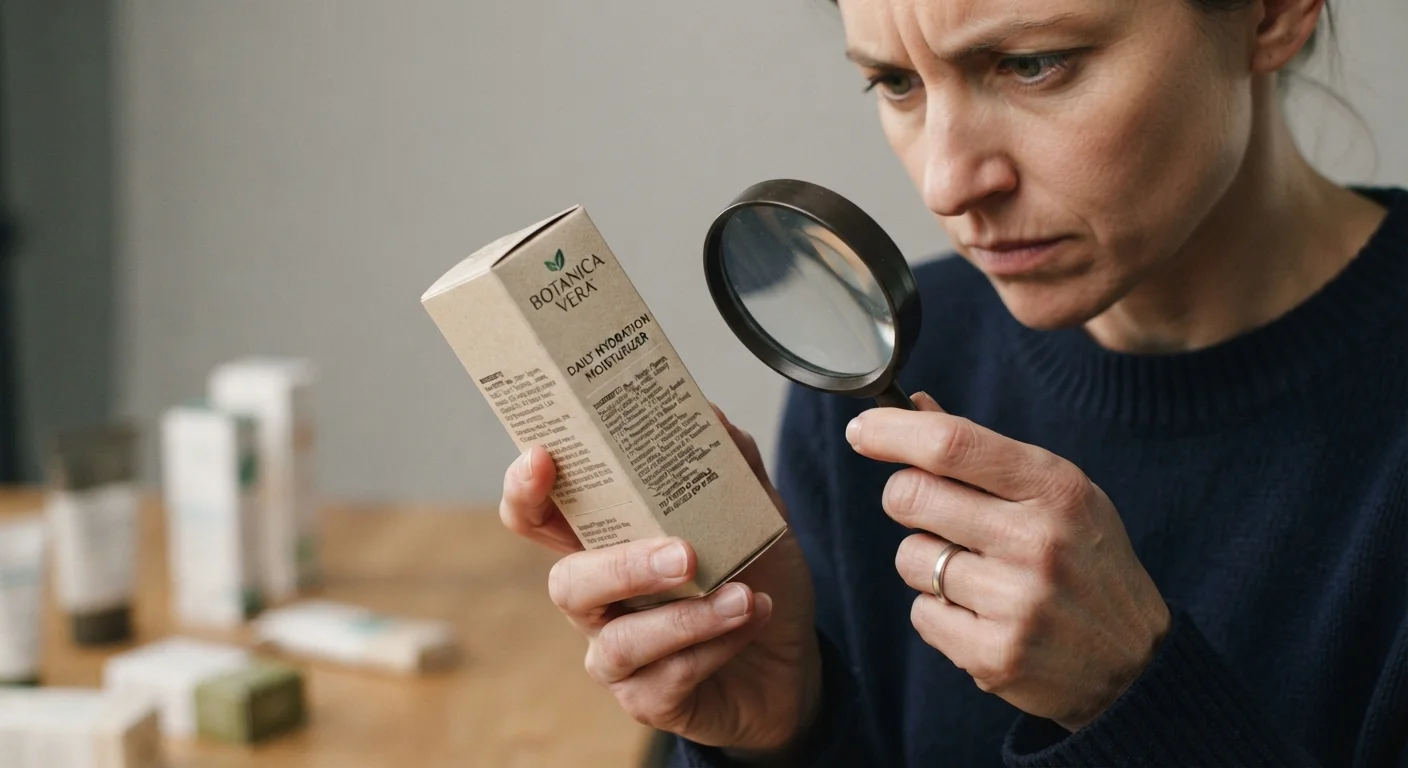
Photo credit: FindersGroove.com | Discover Important Information
In this article
"Up to" discounts, "helps support" health claims, and fine-print exclusions — a practical guide to decoding what ads actually say.
Key Takeaways
- Vague qualifiers like 'up to', 'helps support', and 'may' legally protect advertisers while telling you almost nothing concrete.
- Health claims on packaging are regulated differently from drug claims - 'supports immunity' is not the same as 'treats illness'.
- Discount claims often rely on inflated reference prices; the 'was' price may never have been a real selling price.
- Reading the full claim - including asterisks and footnotes - is the single most protective consumer habit you can build.
- When a claim cannot be verified or quantified, treat it as marketing language, not product fact.
Why Product Claims Are Designed to Impress, Not Inform
Advertising language is a craft. The goal is to create a strong impression while staying inside legal guardrails - and marketers are very good at it. Understanding the gap between what a claim sounds like and what it actually means is one of the most useful consumer skills you can develop.
Three categories of language do most of the heavy lifting in misleading claims: vague quantifiers, hedge words, and unverifiable superlatives. Spotting them takes practice, but once you know what to look for, you'll see them everywhere.
For a related angle on how pricing language works the same way, see our look at retail pricing myths that cost shoppers money.
Locate and read every asterisk, footnote, and fine-print disclosure before trusting a headline claim.
Advertisers are legally required to ensure the full claim is not deceptive, but they are not required to make disclosures prominent. The asterisk often negates or severely limits the headline. Skipping it means you're only reading the part of the claim designed to persuade you.
Treat 'up to' as a ceiling that tells you nothing about typical results.
'Up to X%' means the best-case, most favorable outcome under ideal conditions - not the outcome you should expect. The actual result for most users or purchases may be far lower, or the advertised ceiling may apply to only a tiny fraction of cases.
Ask what specific claim is actually being made whenever you see a hedge word like 'helps,' 'may,' or 'supports.'
These words exist to prevent falsifiability. 'Helps reduce the appearance of fine lines' makes no commitment about whether lines actually reduce, by how much, or over what timeframe. A claim you cannot test or verify cannot protect you as a consumer.
Check whether 'clinically proven' or 'study-backed' claims link to peer-reviewed, published research.
These phrases are frequently applied to internal company studies, unpublished data, or studies on individual ingredients at doses different from what the product contains. Legitimate clinical evidence is publicly accessible and conducted independently.
Distinguish between regulated label content and unregulated front-of-pack marketing.
On food and supplement packaging, the Supplement Facts or Nutrition Facts panel and the ingredient list are regulated by the FDA. The front-of-pack headlines - 'natural,' 'superfood,' 'clean' - are largely unregulated marketing language with no legal definition.
The Language Patterns That Signal a Weak Claim
Certain phrases are almost always doing defensive work for the advertiser rather than informative work for you. Recognizing the patterns puts you in control.
“Advertising is most powerful when it creates a feeling of certainty from language that contains none. The job of a careful consumer is to notice when confidence in language isn't backed by specificity.”
— Jonah Berger, Marketing professor and author on consumer behavior and influence
The Federal Trade Commission (FTC) requires that advertising claims be substantiated, but the bar for vague or subjective claims is much lower than for specific, measurable ones. Advertisers exploit this gap deliberately. If a claim can't be measured, it's very hard to challenge - which is exactly why so many claims are written to resist measurement.
Environmental marketing follows the same playbook. Our guide to greenwashing and environmental claims that don't hold up shows how 'eco-friendly' and 'sustainable' face similar structural ambiguity.
Health and Supplement Claims: A Special Case
In the United States, the FDA distinguishes between drug claims (which require proof of treating or curing a condition) and structure/function claims (which only need to describe a general role a nutrient plays in the body). 'Supports heart health' is a structure/function claim. It does not mean the product prevents heart disease.
Structure/Function Claims Are Not Medical Claims
Under FDA rules, a structure/function claim describes how a nutrient or ingredient is believed to affect normal body structure or function - not how it treats, cures, or prevents disease. Manufacturers must notify the FDA of such claims, but they do not require FDA pre-approval. This means 'supports healthy cholesterol levels' and 'treats high cholesterol' are in entirely different regulatory categories, even if they sound similar on a label.
This matters enormously for supplements, functional foods, and beauty products that borrow health-adjacent language. The phrase 'clinically studied ingredients' sounds authoritative, but it tells you nothing about whether the finished product was studied, at what dose, or with what result.
The same scrutiny applies to food packaging more broadly. Our guide to decoding a nutrition label walks through what regulated label sections actually guarantee - and what front-of-pack claims don't.
Quick Habits That Make You a Harder Target
You don't need a law degree to push back on misleading claims. A few consistent habits dramatically reduce your exposure to marketing misdirection.
55%
Shoppers who misread discount claim terms
A 2022 consumer study by Which? (UK) found that over half of shoppers misunderstood the conditions attached to promotional price claims they encountered.
~80%
Supplement claims not independently verified
Research published in JAMA Network Open found the vast majority of structure/function claims on dietary supplements lacked supporting publicly accessible clinical evidence.
Influencer content adds another layer of complexity - paid endorsements can look like genuine personal recommendations. Our piece on influencer endorsements versus independent recommendations explains what disclosure rules require and how to tell the difference. And if you want to stress-test your approach to reviews, reading reviews more critically is worth a look.
Building these habits is part of a broader shift toward mindful purchasing - buying with intention rather than reaction.

Author
Smart Shopping Editorial Team
Smart Shopping Editorial Team is the collective byline for our editorial team and contributor network. Articles published under this byline or an editorial pen name are researched, written, and reviewed according to our editorial standards for clarity, consistency, and independence before publication.
View all articles →