
Greenwashing: Recognising Environmental Claims That Don't Hold Up
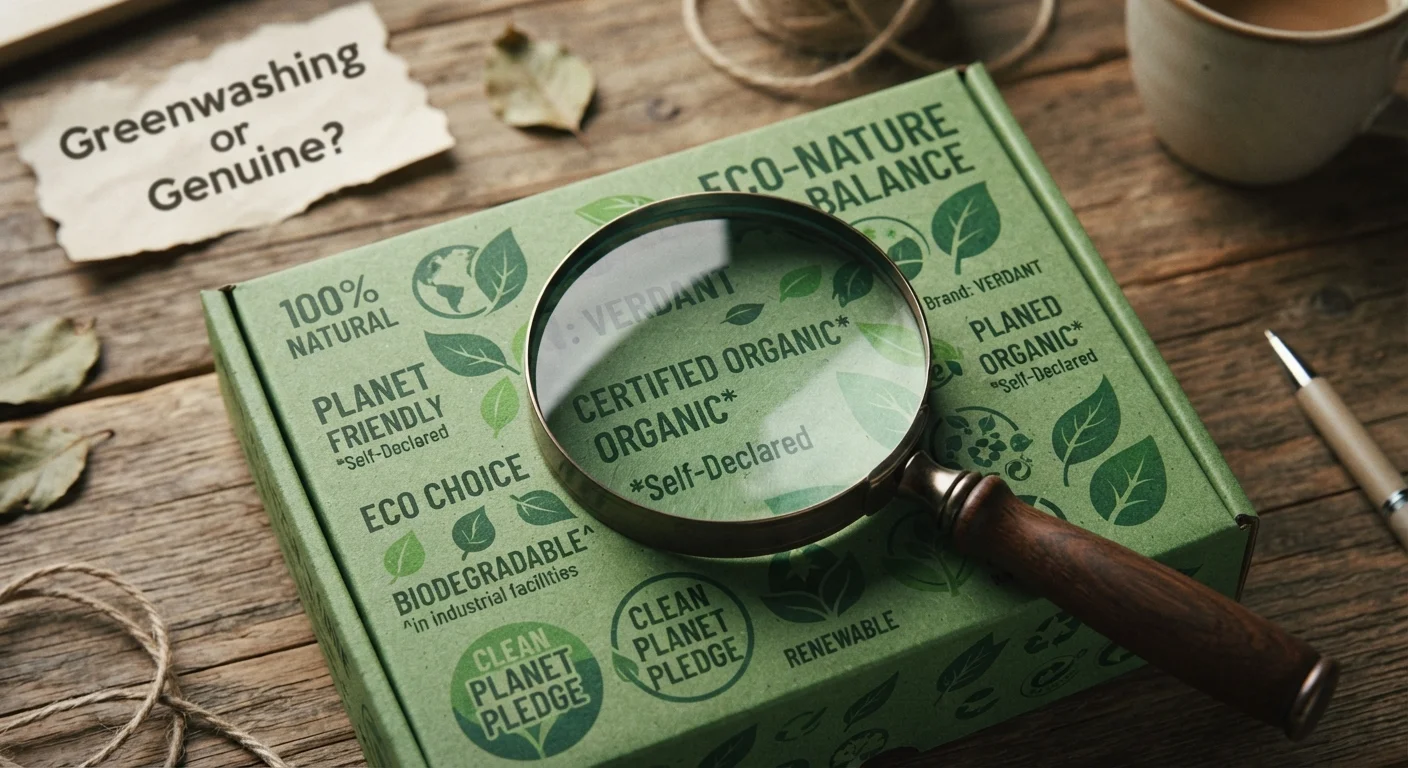
Photo credit: FindersGroove.com | Discover Important Information
In this article
Eco-friendly labels and sustainability pledges vary wildly in substance. Here's what to look for beyond the green packaging.
Key Takeaways
- Vague terms like "eco-friendly" and "natural" have no legal definition and require no proof.
- Third-party certifications with auditable standards are more trustworthy than self-declared claims.
- A single green attribute does not make an entire product or company sustainable.
- Asking what specifically changed - and who verified it - cuts through most greenwashing.
- The most effective environmental choice is often buying less or using what you already own.
Why Green Claims Are So Easy to Make
Sustainability has become a powerful sales signal. Brands know that a meaningful share of consumers - particularly younger adults - factor environmental impact into purchase decisions. The problem: terms like "eco-friendly," "green," "clean," "conscious," and "sustainable" have no standardized legal definition in the US. Any company can print a leaf on a label and call a product natural without providing a shred of supporting evidence.
The US Federal Trade Commission (FTC) publishes Green Guides - advisory guidance on environmental marketing claims - but these are not legally binding regulations that automatically punish vague wording. The result is a market flooded with environmental language that ranges from credible and verified to entirely decorative.
Understanding why greenwashing works helps you resist it. Consumers tend to process green imagery (leaf icons, earthy tones, words like "pure" or "planet") as trustworthy signals before reading any actual claim. Marketers know this, and design packaging accordingly. This is an emotional shortcut, not an evidence-based one. See our guide to reading product claims critically for a broader look at how marketing language obscures substance.
Start with the Certification, Not the Color
When evaluating any green claim, skip the packaging design and go straight to the fine print. Look for a named certification body, not just a logo. If the only evidence of environmental responsibility is the brand's own marketing copy, that's your signal to dig deeper - or move on.
What You'll Need Before You Start
What you will need
FTC Green Guides (ftc.gov)
Free government resource explaining what environmental marketing claims are considered truthful and non-deceptive under US guidance.
Third-party certification database (e.g., USDA Organic, B Corp, FSC, Certified Carbon Neutral)
Cross-reference any certification logo on a product to confirm it is issued by a credible, audited, independent body.
Brand's sustainability or CSR report
Where available, company-published reports disclose measurable environmental targets, progress data, and methodology - or reveal their absence.
How to Evaluate an Environmental Claim Step by Step
Identify the specific claim being made
Write down or screenshot the exact wording used. Is the claim about the product (its ingredients, materials, packaging) or the company (its operations, supply chain, carbon footprint)? These are very different scopes. A product can be packaged in recycled cardboard while being manufactured in a facility with no environmental controls whatsoever.
Check whether the claim is specific or vague
A credible environmental claim answers: what changed, by how much, compared to what baseline. "30% less plastic than our previous packaging" is specific and verifiable. "Better for the planet" is not. If the claim cannot be paraphrased into measurable, comparable terms, treat it as unverified.
Look for third-party verification
A brand verifying its own environmental claims is like a restaurant grading its own health inspection. Search for the certification logo name plus "certification body" or "standards" to confirm it is issued by an independent organization with published, auditable criteria. Well-known examples include USDA Organic, Forest Stewardship Council (FSC), and B Corp - each with publicly available certification requirements. Self-created seals that appear official but link to no external body are a common greenwashing tactic.
Assess the full product scope, not just one attribute
A product can be accurately described as having one green attribute while performing poorly on every other dimension. "Made with organic cotton" does not speak to dyeing processes, water use, worker conditions, or shipping emissions. Ask whether the highlighted attribute is genuinely significant relative to the product's total environmental footprint - or whether it's the one favorable data point pulled from a larger picture.
Weigh the claim against your actual alternatives
Even a genuinely certified product may not be the most environmentally sound choice if the alternative is buying nothing new. Before accepting a sustainability claim as a reason to purchase, ask whether the purchase itself is necessary. Value-based purchasing frameworks can help you make this call without defaulting to marketing-driven logic.
"Natural" Doesn't Mean Safe or Sustainable
The word "natural" has no regulated definition for most consumer product categories in the US. Arsenic is natural. So is palm oil, which is linked to significant deforestation. Treat "natural" as a sensory descriptor, not an environmental or health certification. Always look for what specifically the term is meant to communicate.
Common Greenwashing Patterns to Recognise
Once you know what to look for, greenwashing tends to follow recognizable patterns:
- The irrelevant claim: Highlighting the absence of something already banned (e.g., "CFC-free") as though it's a special achievement.
- The hidden trade-off: A product made with "recycled content" that still relies on harmful manufacturing processes or unethical supply chains.
- The vague virtue: Phrases like "committed to sustainability" or "supporting a greener future" with no disclosed targets, timelines, or third-party oversight.
- The lesser-of-evils framing: Positioning a product as sustainable mainly because it's slightly less harmful than a worse alternative - not because it meets any positive standard.
- Fake or look-alike seals: Self-created certification badges designed to mimic the appearance of legitimate third-party logos.
Greenwashing awareness also applies to the influencer content you encounter. Sponsored posts can amplify environmental claims without any editorial scrutiny - understanding the difference between paid endorsements and independent recommendations matters here too.
Finally, remember that the most durable environmental choice is often extending the life of what you already own. Getting more wear out of clothes you already own is one concrete example - and thinking beyond the transaction applies across every category.
No Single Purchase Makes a Brand Sustainable
Sustainability is a system-level outcome, not a product feature. A company's overall supply chain practices, labor standards, waste management, and long-term environmental commitments matter far more than any individual product's packaging. If a brand's broader record contradicts its green marketing, the marketing should not be the deciding factor in your purchasing decision.

Author
Smart Shopping Editorial Team
Smart Shopping Editorial Team is the collective byline for our editorial team and contributor network. Articles published under this byline or an editorial pen name are researched, written, and reviewed according to our editorial standards for clarity, consistency, and independence before publication.
View all articles →