
Reading a Pet Food Label Without Getting Lost in the Fine Print
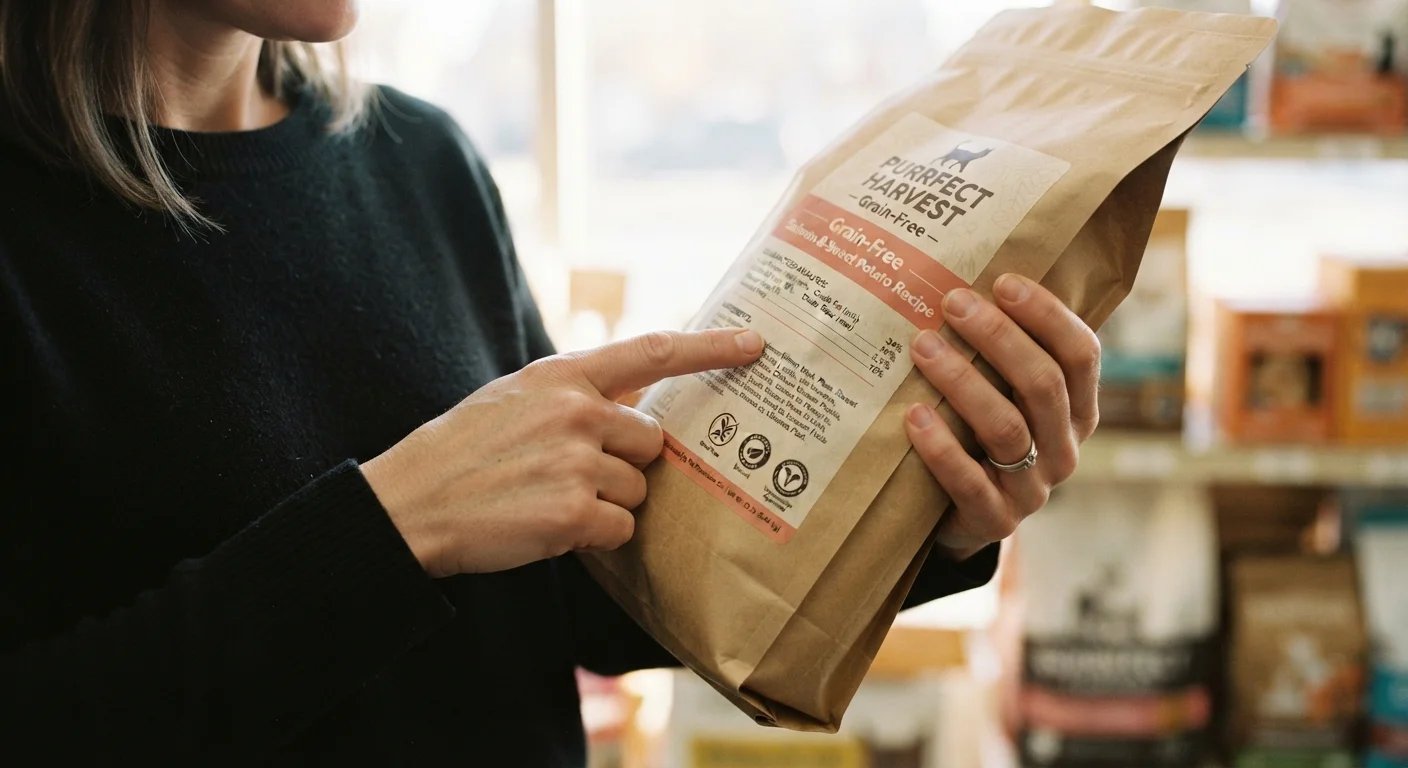
Photo credit: FindersGroove.com | Discover Important Information
In this article
Ingredient lists, guaranteed analysis, AAFCO statements — learn what each section of a pet food label actually tells you about nutritional quality.
Key Takeaways
- Ingredient lists are ordered by pre-cooking weight, which can be misleading without context.
- The guaranteed analysis panel shows minimum or maximum nutrient levels, not exact amounts.
- An AAFCO nutritional adequacy statement tells you whether a food is complete and balanced for your pet's life stage.
- Marketing terms like "natural" and "premium" have limited or no regulatory definitions on pet food.
- Moisture content differences make comparing dry and wet food nutrients tricky without conversion.
Why Pet Food Labels Are Worth Learning to Read
Pet food packaging is designed, in part, to sell. Front-of-pack imagery, ingredient callouts, and lifestyle language can make one product feel meaningfully different from another - even when the regulated nutritional content is nearly identical. Learning to focus on the label sections that carry legal weight helps you cut through that noise.
The good news: once you know the structure, reading a pet food label takes only a few minutes. The same basic framework applies whether you're evaluating kibble, canned food, raw-frozen, or fresh-cooked formats. If you're also thinking about how food type affects your pet's overall health, our guide on dry food vs. wet food trade-offs provides useful context alongside what labels can tell you.
This how-to walks you through each section of a standard US pet food label in the order you are likely to encounter it, explaining what each part is required to include and what it actually tells you about nutritional quality.
What you will need
What the Label Must Tell You: Section by Section
US pet food labels are regulated at the state level, with most states adopting model regulations from AAFCO. While exact enforcement varies, most commercially sold pet foods in the US follow a consistent structure. Here are the required sections and what to look for in each.
The pet food label itself
The primary source of ingredient, nutrient, and adequacy information you will be evaluating.
AAFCO Official Publication or website
Reference for understanding nutrient profiles and the meaning of nutritional adequacy statements.
Dry matter basis calculator
Helps convert guaranteed analysis figures to a moisture-free basis for accurate food comparisons.
Find the Product Name and Species Statement
The product name is regulated more strictly than most shoppers realize. If a food is called "Salmon for Dogs," salmon must make up at least 95% of the total product weight (excluding water). A name like "Salmon Dinner" or "Salmon Formula" lowers that threshold to just 25%. Words like "with salmon" require only 3%.
Also confirm the label clearly states the species it is intended for - dog food and cat food have different nutrient requirements and should never be routinely swapped.
Read the Ingredient List in Order
Ingredients are listed by weight before cooking, from most to least. This sounds straightforward, but water weight can be significant. A whole meat listed first - say, "chicken" - loses substantial weight during processing, meaning the final food may contain less chicken protein than a bag listing "chicken meal" (a concentrated, pre-dried ingredient) slightly lower on the list.
Watch for ingredient splitting: a single ingredient broken into sub-types (e.g., "ground corn," "corn gluten meal," "corn bran") listed separately to push each lower on the list individually.
Interpret the Guaranteed Analysis Panel
This panel lists four figures required by most state regulators: minimum crude protein, minimum crude fat, maximum crude fiber, and maximum moisture. Note the words minimum and maximum - these are not exact values. Actual nutrient content may differ.
Because wet foods contain far more moisture (often 75-82%) than kibble (around 10%), comparing these numbers across formats is misleading without conversion. See the tip below on dry matter basis calculations.
Locate the AAFCO Nutritional Adequacy Statement
This is arguably the most important line on the label. The Association of American Feed Control Officials (AAFCO) sets nutrient profiles for dogs and cats. A complete and balanced food will carry a statement such as: "[Product] is formulated to meet the nutritional levels established by the AAFCO [Dog/Cat] Food Nutrient Profiles for [life stage]."
There are two types of substantiation: formulation (the recipe meets nutrient targets on paper) and feeding trial (the food was tested on actual animals). Feeding trial substantiation is generally considered a higher standard of evidence.
Foods labeled "for supplemental feeding only" or "for intermittent use" are not complete and balanced and should not be a pet's sole diet.
Evaluate Front-of-Pack Marketing Claims Critically
Terms like "natural," "holistic," "human-grade," and "premium" are loosely defined or entirely unregulated in pet food. "Natural" has a partial AAFCO definition (generally means no artificial flavors, colors, or preservatives), but "holistic" and "premium" carry no regulatory standard whatsoever.
For a broader look at how product claims are constructed to influence perception, see how product claims are designed to influence perception.
Check the Manufacturer's Contact Information and Feeding Guidelines
Reputable manufacturers include a phone number or address where you can ask questions about sourcing, quality control, and testing. Feeding guidelines provide a starting point based on your pet's weight, but individual needs vary considerably based on activity level, metabolism, and health status. Treat them as a baseline, not a prescription.
Convert Nutrients to a Dry Matter Basis
To compare a wet food and a dry food fairly, subtract moisture content from 100% to find the dry matter percentage, then divide each nutrient by that number. This removes the water variable and gives you an apples-to-apples comparison. Many veterinary nutrition resources include dry matter calculators to simplify this step.
"Grain-Free" Is Not Automatically Healthier
Grain-free labeling is a marketing distinction, not a guaranteed health upgrade. The FDA has investigated a potential link between grain-free diets high in legumes and dilated cardiomyopathy (DCM) in dogs, though research is ongoing. Discuss any major dietary shifts with your vet before making changes.
Labels Don't Replace Veterinary Guidance
Pet food labels provide general nutritional information, not a prescription for your individual animal. If your pet has a health condition, is a senior, or is at a specific life stage such as pregnancy, consult your veterinarian before changing their diet. This article is for general educational purposes only and is not veterinary advice.
Nutrition directly affects more than just your pet's weight. If you're thinking holistically about your animal's condition, weight management in pets goes beyond the scale - body condition scoring and dietary quality work together. And if you're curious about how more specialized diets like raw feeding stack up, what the evidence shows on raw diets is a balanced starting point.
This article is for general informational and educational purposes only and does not constitute veterinary advice. Always consult a licensed veterinarian for guidance specific to your pet's health and dietary needs.

Author
Pets & Animal Life Editorial Team
Pets & Animal Life Editorial Team is the collective byline for our editorial team and contributor network. Articles published under this byline or an editorial pen name are researched, written, and reviewed according to our editorial standards for clarity, consistency, and independence before publication.
View all articles →