
Dry Food vs. Wet Food: What the Difference Means for Your Pet's Health
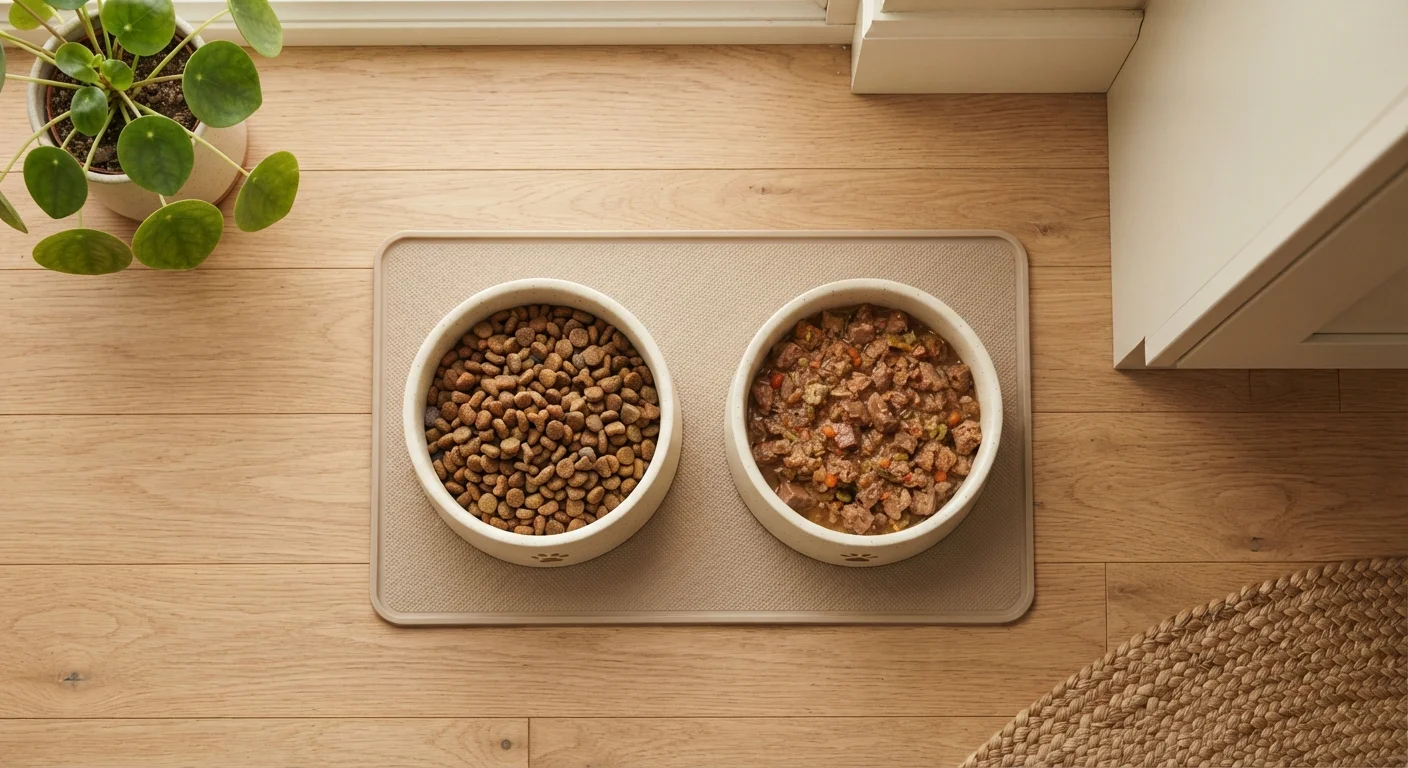
Photo credit: FindersGroove.com | Discover Important Information
In this article
Kibble and canned food each have distinct nutritional profiles and use cases. Here's how to weigh the trade-offs for your specific animal.
Key Takeaways
- Wet food contains roughly 70-80% moisture, making it critical for pets prone to urinary or kidney issues.
- Dry food is more calorie-dense per cup, so portion control matters more to prevent overfeeding.
- Neither format is universally superior - the right choice depends on your pet's health, age, and lifestyle.
- Many veterinarians support combining both formats to balance palatability, hydration, and convenience.
- Always check the AAFCO nutritional adequacy statement on any food, regardless of format.
The Core Difference: Moisture and Macronutrients
The most significant difference between dry and wet pet food is water content. Dry kibble typically contains 6-10% moisture, while canned wet food ranges from 70-80%. This distinction isn't just textural - it fundamentally changes calorie density, feeding volumes, and how your pet's body processes each meal.
Because kibble is so calorie-dense, a small cup can pack considerably more energy than the same visual volume of wet food. This means pets on dry-only diets may need more precise portioning to avoid gradual weight gain. If weight management is a concern for your animal, our overview of body condition scoring and weight management offers useful context beyond the scale.
Wet food, by contrast, delivers hydration alongside nutrition - something particularly relevant for cats, who evolved as desert animals with a naturally low thirst drive and often don't drink enough water independently.
| Criterion | Dry Food (Kibble) | Wet Food (Canned) |
|---|---|---|
| Moisture content | 6-10% | 70-80% |
| Calorie density | High per cup | Lower per serving |
| Dental abrasion | Minor mechanical benefit | Minimal to none |
| Palatability | Moderate | Generally higher |
| Storage convenience | Room temperature, long shelf life | Refrigerate after opening |
| Cost per serving | Typically lower | Typically higher |
| Best for urinary health | Less ideal | Strongly preferred |
| Suitable for seniors | Depends on dental health | Generally yes |
Health Considerations by Life Stage and Condition
Age and underlying health status are the two factors most likely to tip the balance between formats.
Kittens and Puppies
Young animals have high caloric needs relative to their body size. Wet food can be easier to consume when teeth are small and developing, but many complete dry foods formulated for growth are equally appropriate. The key is choosing a food labeled for the correct life stage.
Senior Pets
Older animals commonly experience reduced kidney function, dental disease, and decreased appetite. Wet food addresses all three: its moisture content supports kidneys, soft texture is gentler on sore teeth, and its stronger aroma tends to be more appealing to pets with diminished senses of smell.
Pets with Urinary or Kidney Issues
Veterinarians frequently recommend wet food - or a wet-food-heavy diet - for cats and dogs with urinary tract conditions or chronic kidney disease. Increased water intake from food helps dilute urine, which can reduce the formation of crystals and ease kidney workload. Always follow your veterinarian's specific dietary recommendations for these conditions.
70-80%
Moisture content in canned wet food
Compared to just 6-10% in dry kibble, this difference significantly impacts daily hydration, particularly for cats with low voluntary water intake.
~50%
Estimated prevalence of dental disease in adult pets
Veterinary dental associations estimate that most dogs and cats show signs of periodontal disease by age three, underscoring that food format alone is insufficient for oral health.
2-3x
Higher water intake in cats fed wet food
Research on feline hydration consistently finds that cats consuming wet diets take in substantially more total water daily than those eating dry food exclusively.
This article provides general educational information and is not a substitute for personalized veterinary advice. Always consult a licensed veterinarian before making significant changes to your pet's diet, especially if your animal has an existing health condition.
Dental Health, Palatability, and Practical Trade-offs
A common claim is that dry food cleans teeth. The evidence here is more nuanced. While the mechanical action of chewing kibble does provide minor abrasive contact with tooth surfaces, most veterinary dental organizations note that kibble alone is not a reliable substitute for active dental care like brushing or veterinary cleanings. Specially formulated dental diets - a distinct category from standard kibble - have better evidence behind them.
Wet food, on the other hand, leaves more residue in the mouth and does not offer the same abrasive benefit. For pets prone to dental disease, this may be a consideration, though again, regular professional cleanings remain the gold standard.
On the practical side:
- Dry food is easier to store, stays fresh in the bowl longer, and is generally less expensive per serving.
- Wet food requires refrigeration after opening, costs more per calorie, and must be discarded within a few hours of being served to avoid spoilage.
- Mixed feeding - using kibble as the primary diet with wet food as a topper or supplement - is a common approach that balances cost, hydration, and palatability.
Understanding what's actually in each format matters as much as the format itself. Learning to read a pet food label accurately - including AAFCO statements and guaranteed analysis panels - will help you compare options regardless of whether they come in a bag or a can. You can also explore what ingredient lists on pet food actually mean for a practical breakdown. For a look at how dry and wet foods compare to more unconventional feeding approaches, raw diet research and veterinary perspectives offers a balanced review.

Author
Pets & Animal Life Editorial Team
Pets & Animal Life Editorial Team is the collective byline for our editorial team and contributor network. Articles published under this byline or an editorial pen name are researched, written, and reviewed according to our editorial standards for clarity, consistency, and independence before publication.
View all articles →