
What 'Works with Matter' Actually Means for Your Devices
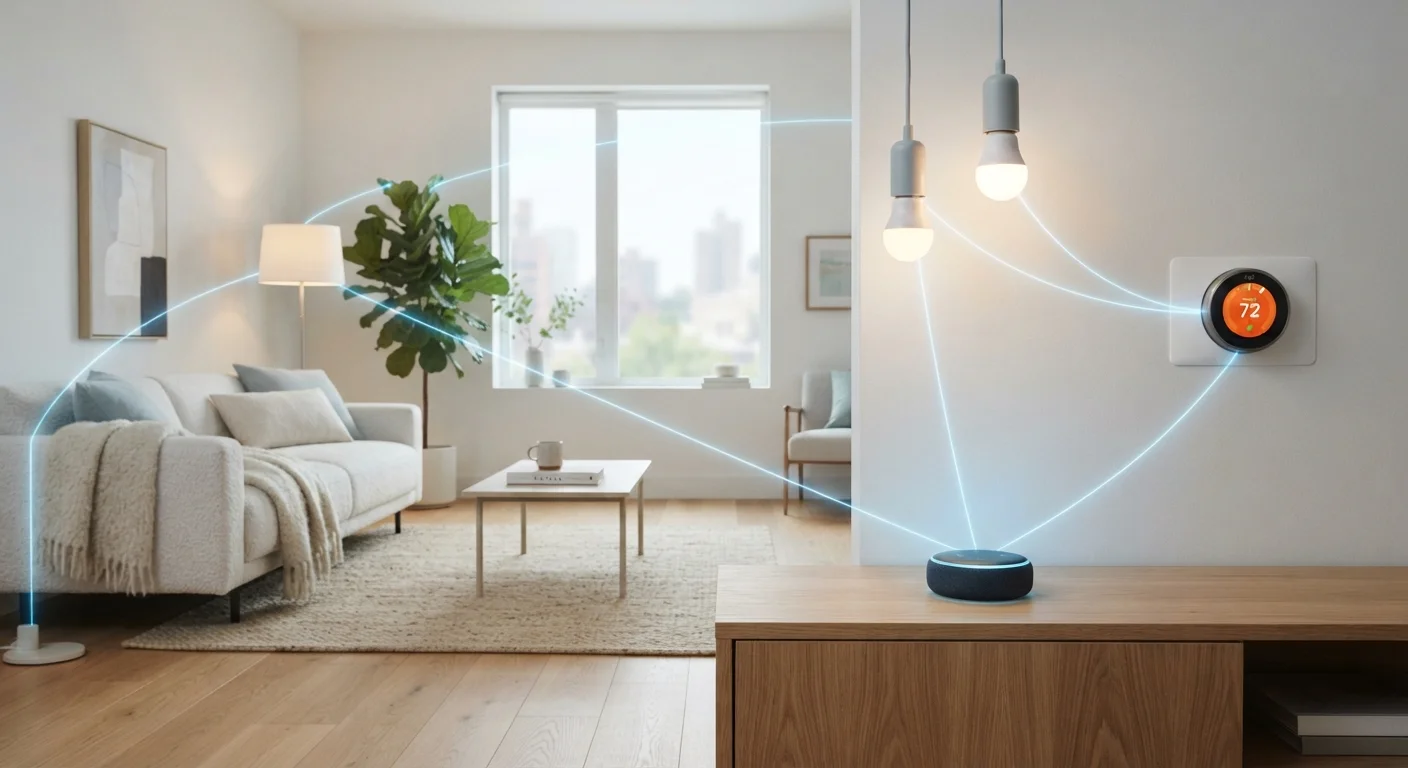
Photo credit: FindersGroove.com | Discover Important Information
In this article
Matter is the new interoperability standard reshaping smart home tech. Here's what it promises, what it delivers, and what to realistically expect.
Key Takeaways
- Matter is an open interoperability standard, not a brand or product - it's a shared language for smart devices.
- A Matter-certified device can work with multiple ecosystems simultaneously, like Apple Home, Google Home, and Amazon Alexa.
- Matter does not automatically upgrade older non-Matter devices; legacy gear typically stays in its original ecosystem.
- Some device categories - including cameras and complex appliances - have limited or no Matter support currently.
- Matter simplifies setup but doesn't eliminate the need for a capable hub or border router in some configurations.
The Problem Matter Was Built to Solve
Anyone who has assembled a smart home incrementally knows the frustration: one brand's bulbs only talk to one app, a thermostat requires its own hub, and a lock refuses to connect to the same voice assistant as everything else. This is platform fragmentation, and it has been the defining headache of consumer smart home tech for years.
Matter is the industry's coordinated answer. Backed by the Connectivity Standards Alliance - whose member roster includes Apple, Google, Amazon, Samsung, and hundreds of device makers - Matter defines a common application layer so that certified devices can discover, pair, and communicate with each other regardless of who manufactured them. Think of it like the USB standard for smart home: not every device is identical, but a shared interface means they can connect.
For a broader grounding in how smart home technology works at a foundational level, it helps to understand what connects devices before you add a compatibility layer on top.
2,500+
Matter-certified devices available
According to the Connectivity Standards Alliance, the number of Matter-certified devices crossed this threshold within roughly two years of the standard's launch in late 2022.
280+
Member companies in the CSA
The Connectivity Standards Alliance, which governs the Matter specification, includes members ranging from major platform companies to smaller device manufacturers.
What the Certification Actually Guarantees
The "Works with Matter" badge on packaging means the device has passed testing through the Connectivity Standards Alliance's certification program. In practice, it signals three things:
- Cross-platform setup: The device can be onboarded by any Matter-compatible controller app - Apple Home, Google Home, Amazon Alexa, or Samsung SmartThings - using a standard QR code or numeric pairing code.
- Multi-admin support: One device can be added to more than one ecosystem at the same time. Your partner's Google Home setup and your Apple Home setup can both control the same light.
- Local processing: Core controls work on your local network without depending on a manufacturer's cloud server. This matters for reliability - if the company's servers go down, basic functions still work.
What it doesn't guarantee is feature parity across platforms. Advanced features a manufacturer builds into their own app - custom scheduling modes, diagnostic data, firmware updates - may not be accessible through a third-party Matter controller. The certification covers the baseline; extras are still ecosystem-specific.
Check the Label Before You Buy
When shopping for smart home devices, look specifically for the Matter logo or 'Works with Matter' language on packaging or product specs - not just broad claims about smart home compatibility. A device that works with a specific platform's app is not the same as a Matter-certified device. Taking 30 seconds to verify the certification can save hours of troubleshooting later.
The Role of Thread and Your Existing Hub
Matter runs over two wireless transports: Wi-Fi and Thread. Understanding the difference matters for setup decisions. Wi-Fi Matter devices behave like any other networked device - they join your router directly. Thread is different.
Thread is a low-power mesh protocol designed for battery-operated sensors and devices that benefit from not being always-on Wi-Fi clients. To use Thread-based Matter devices, you need a Thread Border Router in your home - a device that bridges the Thread mesh to your IP network. Many current smart speakers and hubs from major platforms include a Thread Border Router, but not all do. Before assuming your existing hub is ready, it's worth confirming Thread Border Router support in the device's specifications.
For a deeper look at how these wireless protocols compare, this breakdown of Wi-Fi, Zigbee, Z-Wave, and Thread is worth reading before making hardware decisions.
Real-World Expectations: Where Matter Delivers and Where It Falls Short
Matter has made measurable progress on its core promise. Setting up a certified bulb or plug through a supported app is genuinely faster and more predictable than it was with legacy proprietary systems. Multi-ecosystem control works as advertised for simple commands.
However, some practical limits are worth knowing upfront:
- Device category gaps
- Security cameras, video doorbells, and robot vacuums have been slower to gain robust Matter support. If these are central to your setup, check current compatibility carefully rather than assuming the label covers everything.
- Legacy devices don't upgrade automatically
- Older Zigbee or Z-Wave devices remain in their original ecosystems. Matter bridges exist, but compatibility is device-specific and not universal.
- Early firmware can be rough
- Like any maturing standard, early-generation Matter firmware on some devices has had reliability issues. Manufacturers continue to issue updates, so checking firmware release history before purchasing can save headaches.
If avoiding ecosystem lock-in is a priority, strategies for building an interoperable smart home covers this in practical depth. And if you're still working out what "smart" even means on a device spec sheet, this explainer on what 'smart' signals in consumer electronics is a useful starting point.
Frequently Asked Questions

Author
Tech & Gadgets Editorial Team
Tech & Gadgets Editorial Team is the collective byline for our editorial team and contributor network. Articles published under this byline or an editorial pen name are researched, written, and reviewed according to our editorial standards for clarity, consistency, and independence before publication.
View all articles →