
What 'Smart' Actually Means in Consumer Electronics
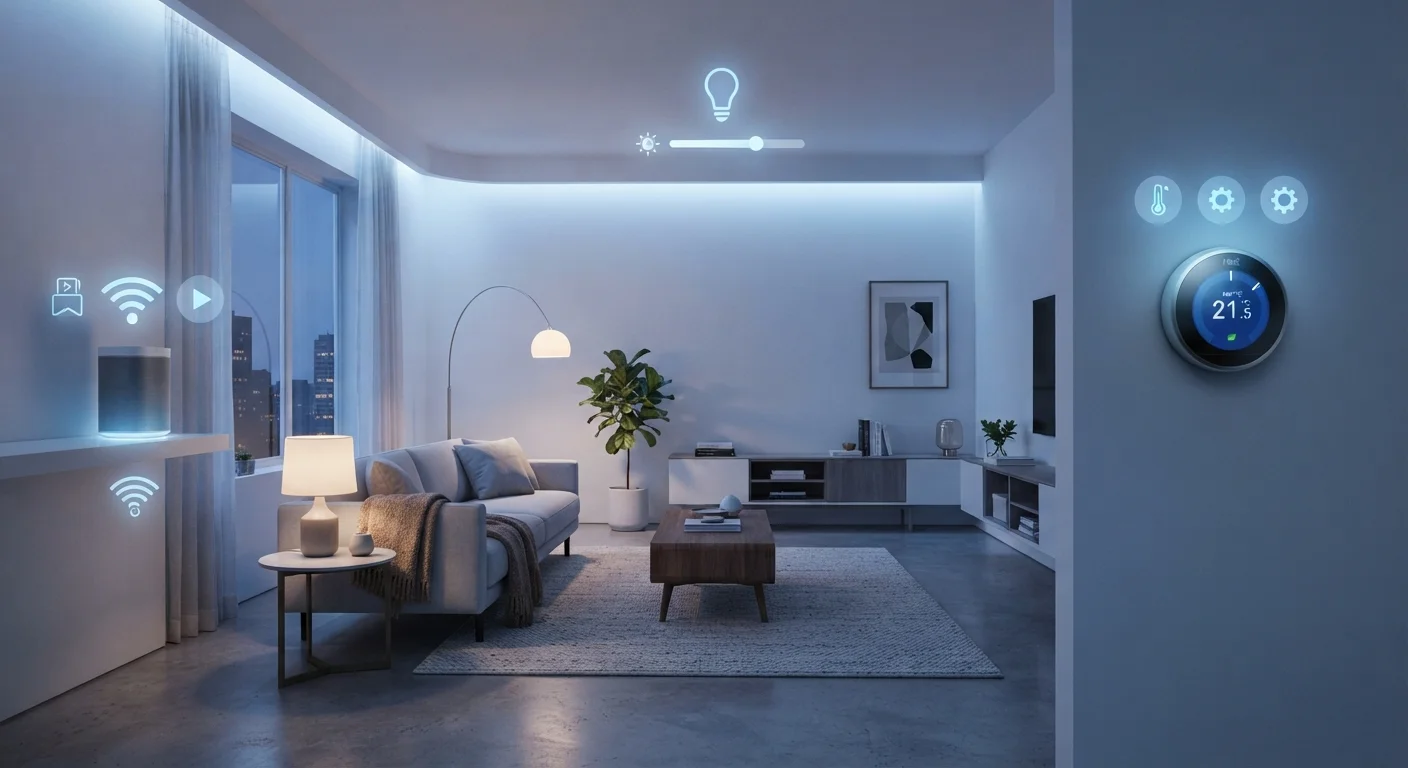
Photo credit: FindersGroove.com | Discover Important Information
In this article
The word 'smart' gets attached to everything. Here's what it actually signals about a device's connectivity, automation, and real-world usefulness.
Key Takeaways
- 'Smart' means network-connected and capable of remote control, automation, or data exchange - not just digitally enhanced.
- A device can be connected without being genuinely useful; real-world value depends on how well automation fits your habits.
- All smart devices collect some data; understanding what and why is essential before you buy.
- Interoperability - whether devices work together - is often more important than any individual feature.
- More features don't always mean more convenience; simpler setups often deliver better daily experiences.
The Word 'Smart' Is a Marketing Term First
Before anything else, accept this: 'smart' is not a regulated technical specification. Any manufacturer can print it on a box. What it generally signals is that a device connects to a network, can be controlled or monitored beyond its physical buttons, and often exchanges data with an app or cloud service. But the depth of those capabilities ranges wildly - from a plug that simply turns on and off remotely, to a thermostat that learns your schedule and adjusts preemptively.
When evaluating whether 'smart' functionality adds genuine value, it helps to strip the label away entirely and ask three practical questions: What does this device do that a standard version cannot? Does that extra capability solve a real friction point in my daily routine? And what do I give up - in privacy, complexity, or cost - to get it?
No Regulatory Standard for 'Smart'
Unlike energy ratings or safety certifications, the term 'smart' carries no standardized definition enforced by a regulatory body. Two products can both be marketed as 'smart' while offering dramatically different levels of connectivity, automation, and data capability. Evaluating what a specific device actually does is always more reliable than trusting the label alone.
The Three Core Capabilities That Define 'Smart'
Most devices that legitimately earn the 'smart' label share three functional layers:
- Connectivity: The device communicates over Wi-Fi, Bluetooth, Zigbee, Z-Wave, or another protocol. This is the baseline - without it, nothing else is possible. For a deeper look at how these protocols interact in the home, see our explainer on smart home technology.
- Remote control or monitoring: You can check status or issue commands from an app, voice assistant, or web interface - regardless of whether you're in the same room or across the country.
- Automation or responsiveness: The device can trigger actions based on conditions: time of day, your location, sensor readings, or events from other devices. This is where 'smart' starts earning its name.
A device that only checks box one - connectivity - isn't meaningfully smarter than its analog counterpart. The value compounds when all three layers work together reliably.
~17 billion
Connected IoT devices globally
Industry analysts estimate there are roughly 17 billion active Internet of Things devices worldwide as of recent years, reflecting how broadly 'smart' connectivity has spread across consumer and commercial products.
60%+
Smart device owners who use basic features only
Research from consumer technology organizations consistently finds that a majority of smart device owners never configure advanced automation, using their devices primarily as remotely controlled versions of standard appliances.
3-5 years
Typical software support window
Many smart device manufacturers provide firmware and security updates for three to five years post-launch, after which devices may stop receiving patches - a key consideration for long-term purchases.
When 'Smart' Delivers - and When It Doesn't
Automation is only useful when it matches behavior you'd otherwise repeat manually. A smart lock that unlocks as you arrive home removes a real, daily micro-friction. A smart toaster that sends your phone a notification when bread is done solves a problem almost no one has.
The strongest use cases for smart devices tend to involve:
- Tasks you perform on a predictable schedule (lighting, heating, appliance timing)
- Monitoring something you can't constantly watch (door sensors, water leak detectors)
- Coordinating multiple devices into a single action (a 'leaving home' routine that locks doors, dims lights, and adjusts the thermostat simultaneously)
Where smart devices consistently underdeliver: when setup is complex enough that most users never configure the advanced features, or when the app experience is clunky enough to make manual control faster. Common misconceptions about smart home setups often center on exactly this gap between marketed capability and everyday usability.
Test the App Before You Commit
Most smart device apps are available to download for free before you own the hardware. Browsing the interface in advance gives you a realistic sense of whether the controls are intuitive or frustrating - a better signal of real-world usability than spec sheets.
Interoperability: The Hidden Factor That Determines Real Value
Individual smart devices are less powerful than networks of smart devices that communicate with each other. But for years, the industry was fragmented - a device designed for one ecosystem often wouldn't cooperate with another. That's shifting with standards like Matter, which aims to let devices from different manufacturers work on the same network without proprietary bridges. See what 'Works with Matter' actually means for a grounded look at what that standard delivers today.
Before investing in multiple connected devices, check whether they share a compatible protocol or ecosystem. A glossary of the key terms - hub, bridge, latency, geofencing - is available in the smart home glossary if the vocabulary feels overwhelming.
The Trade-Off You Should Actually Think About
Every smart device is a data-generating endpoint on your home network. That's not a reason to avoid them, but it is a reason to be deliberate. Understanding what data flows out of your devices - and to whom - is a reasonable part of any purchase decision. For a practical breakdown, the guide to how everyday devices collect data covers what's typically logged and what controls users realistically have.
Security is the other side of this. More connected devices mean more potential entry points to your home network. Firmware updates, strong passwords, and network segmentation (keeping smart devices on a separate guest network) are the practical baseline - covered in detail in the privacy and security realities of smart devices.
The bottom line: 'smart' is a spectrum, not a guarantee. The label tells you a device can connect - it doesn't tell you whether that connection will make your life easier or just more complicated.
Frequently Asked Questions

Author
Tech & Gadgets Editorial Team
Tech & Gadgets Editorial Team is the collective byline for our editorial team and contributor network. Articles published under this byline or an editorial pen name are researched, written, and reviewed according to our editorial standards for clarity, consistency, and independence before publication.
View all articles →