
The Privacy and Security Realities of Living With Smart Devices
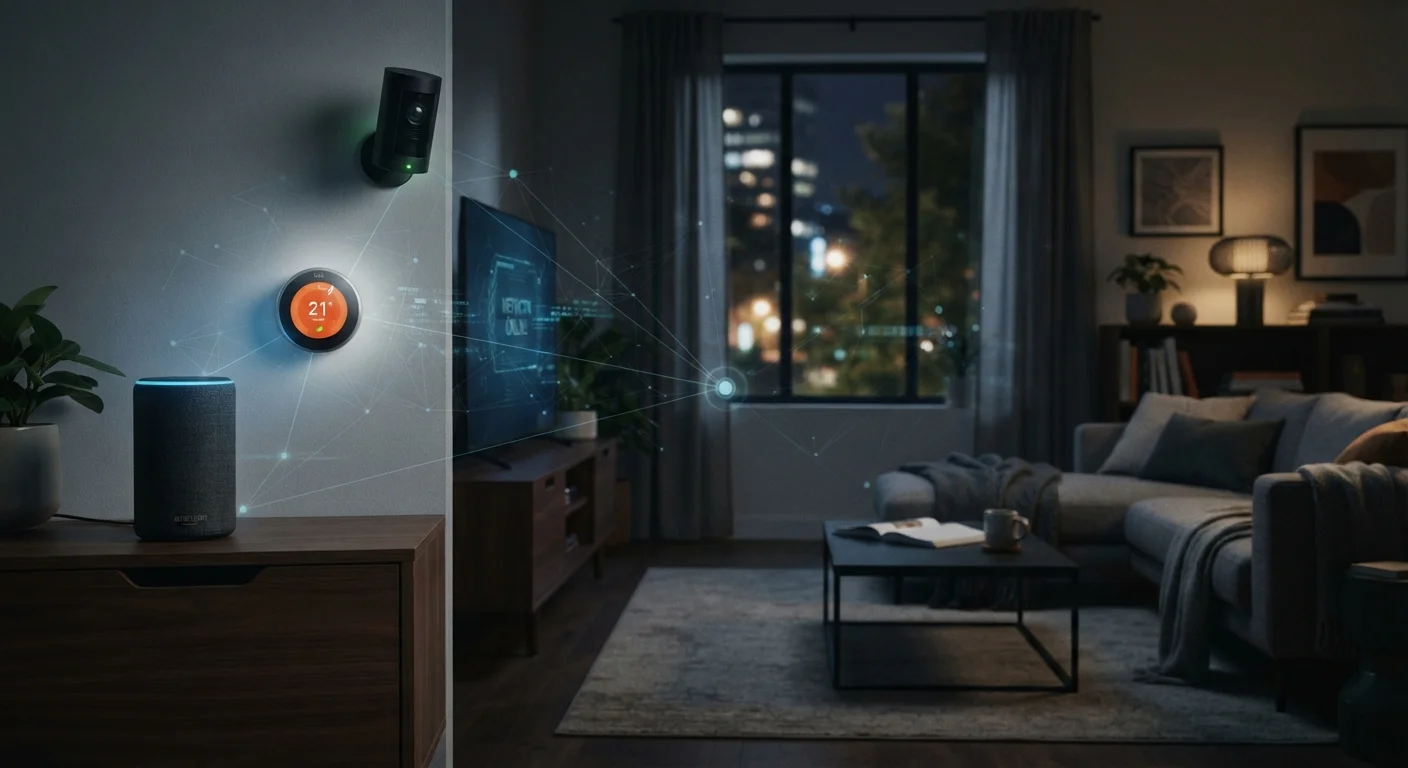
Photo credit: FindersGroove.com | Discover Important Information
In this article
Connected devices collect data and introduce network entry points. Here's an honest look at the security landscape and practical ways to reduce risk.
Key Takeaways
- Smart devices collect usage data by default; understanding what is collected helps you make informed choices.
- Most smart home vulnerabilities stem from weak passwords and outdated firmware rather than sophisticated hacking.
- Local control devices offer stronger privacy than cloud-dependent ones, but usually require more technical setup.
- Separating smart devices onto a dedicated network segment meaningfully reduces household security risk.
- The convenience benefits of smart home tech are real, but they come with permanent trade-offs in data transparency.
Genuine daily convenience and time savings
Automated routines - lights adjusting to time of day, thermostats learning schedules - reduce small but repeated friction in daily life. These are real usability gains, not just novelty.
Remote access adds practical flexibility
Checking whether you left an appliance on, adjusting the thermostat before arriving home, or receiving a doorbell alert while traveling are concrete benefits that standard devices cannot match.
Energy monitoring can reduce utility costs
Smart thermostats and plugs with energy monitoring give households visibility into consumption patterns that can inform meaningful reductions in electricity and heating use over time.
Accessibility benefits for some users are significant
Voice-controlled devices and automated routines can meaningfully improve independence for people with mobility limitations or other disabilities - an underreported but important use case.
Continuous data collection is the default state
Most smart devices send usage data to manufacturer servers by design. Opting out is often partial or unavailable, meaning some level of data sharing is baked into the product.
Each device adds a potential network entry point
A home with ten smart devices has ten additional network endpoints to secure. Cheap hardware with poor security practices widens that surface area considerably.
Cloud dependency creates reliability risk
Devices that require manufacturer servers to function can stop working if those servers change, are discontinued, or go offline - a real risk given how frequently smart home products are discontinued.
Privacy policy changes can alter data use retroactively
Manufacturers can update data collection and sharing terms after purchase. Continuing to use the device after a policy change typically constitutes acceptance under most terms of service.
Setup complexity is frequently underestimated
Getting multiple devices from different ecosystems to work reliably together involves protocol compatibility, app management, and network configuration that goes well beyond plug-and-play for many households.
What Smart Devices Are Actually Doing on Your Network
Smart devices - thermostats, voice assistants, lights, cameras, plugs - are essentially small networked computers running continuously in your home. Each one communicates with manufacturer servers to deliver features, receive updates, and in many cases, to log usage patterns. That last part is where privacy considerations begin.
The data collected varies significantly by device type. A smart plug might send on/off timestamps. A voice assistant processes audio clips, sometimes retaining short recordings for service improvement. A security camera may upload footage to cloud storage automatically. None of this is hidden - it's in the privacy policies - but those documents rarely get read at setup.
Understanding the local control vs. cloud control distinction is one of the most practical things you can do before adding any device to your home. Cloud-dependent devices are more convenient out of the box but expose more of your usage data to third-party servers. Local control devices keep data on your own network, though they often require more technical setup to get running.
What 'Data Collection' Actually Looks Like
Not all data collection is equivalent. A device logging when a light turned on is very different from one storing audio recordings or sharing behavioral profiles with advertising partners. Before dismissing or accepting data collection broadly, it is worth identifying what specific data a given device sends and to whom. Device-specific privacy labels, where manufacturers provide them, are a useful starting point.
The Real Security Risks - and How Big They Actually Are
Consumer smart home security incidents do occur, but the most common attack vectors are mundane: default or reused passwords, unpatched firmware, and unencrypted communications on cheap hardware. Sophisticated remote exploits targeting average households are rare by comparison.
~80%
Smart home breaches tied to weak credentials
Security researchers broadly estimate that the large majority of consumer IoT compromises involve default or reused passwords rather than novel exploits, though exact figures vary by study.
15+
Average connected devices per US household
According to Parks Associates research, the average US broadband household has exceeded 15 connected devices, a figure that continues to grow year over year.
The practical implication is that basic hygiene handles the vast majority of risk. Changing default credentials immediately, enabling automatic firmware updates where offered, and keeping devices on a separate network segment (most modern routers support a guest network or VLAN for this purpose) reduces your household's exposure substantially. Your router's admin settings are worth understanding - the settings panel contains real security controls that most households never touch.
For a deeper dive into securing the network layer specifically, practical network security principles for smart homes covers the foundational steps in detail.
Pros and Cons of Living With Smart Devices
The convenience case for smart home technology is genuine. Automated lighting, remote climate control, and hands-free information lookup are not trivial quality-of-life improvements for many people. The privacy and security costs are also real, not theoretical. Here is an honest look at both sides.
Genuine daily convenience and time savings
Automated routines - lights adjusting to time of day, thermostats learning schedules - reduce small but repeated friction in daily life. These are real usability gains, not just novelty.
Remote access adds practical flexibility
Checking whether you left an appliance on, adjusting the thermostat before arriving home, or receiving a doorbell alert while traveling are concrete benefits that standard devices cannot match.
Energy monitoring can reduce utility costs
Smart thermostats and plugs with energy monitoring give households visibility into consumption patterns that can inform meaningful reductions in electricity and heating use over time.
Accessibility benefits for some users are significant
Voice-controlled devices and automated routines can meaningfully improve independence for people with mobility limitations or other disabilities - an underreported but important use case.
Continuous data collection is the default state
Most smart devices send usage data to manufacturer servers by design. Opting out is often partial or unavailable, meaning some level of data sharing is baked into the product.
Each device adds a potential network entry point
A home with ten smart devices has ten additional network endpoints to secure. Cheap hardware with poor security practices widens that surface area considerably.
Cloud dependency creates reliability risk
Devices that require manufacturer servers to function can stop working if those servers change, are discontinued, or go offline - a real risk given how frequently smart home products are discontinued.
Privacy policy changes can alter data use retroactively
Manufacturers can update data collection and sharing terms after purchase. Continuing to use the device after a policy change typically constitutes acceptance under most terms of service.
Setup complexity is frequently underestimated
Getting multiple devices from different ecosystems to work reliably together involves protocol compatibility, app management, and network configuration that goes well beyond plug-and-play for many households.
The weight you give each side depends heavily on your household's threat model - a shared rental apartment with multiple guests has a different risk profile than a private home with a locked-down network. Renters face additional constraints that further shape what devices are practical to deploy at all.
Practical Steps to Reduce Risk Without Abandoning Convenience
You do not need to choose between a connected home and a reasonably private one. A few deliberate steps at setup reduce most meaningful risk:
- Audit before you add: Read the data collection section of a device's privacy policy before purchasing. Look specifically for whether data is sold to third parties.
- Use unique, strong passwords: Every device and every account connected to your smart home should have its own credential. A password manager makes this practical.
- Update firmware promptly: Manufacturer patches frequently address known vulnerabilities. Enable auto-updates where the option exists.
- Segment your network: Place smart devices on a separate Wi-Fi network from your phones and computers. This limits lateral movement if any device is compromised.
- Revisit permissions periodically: App permissions for microphone, camera, and location access are worth reviewing every few months. The digital wellness audit framework includes device permission review as a practical habit.
The goal is not zero risk - that does not exist in any connected system. The goal is an informed trade-off you have consciously chosen, rather than one you drifted into by default.

Author
Tech & Gadgets Editorial Team
Tech & Gadgets Editorial Team is the collective byline for our editorial team and contributor network. Articles published under this byline or an editorial pen name are researched, written, and reviewed according to our editorial standards for clarity, consistency, and independence before publication.
View all articles →