
Creating a Consistent Aesthetic Across Casual, Work, and Social Occasions
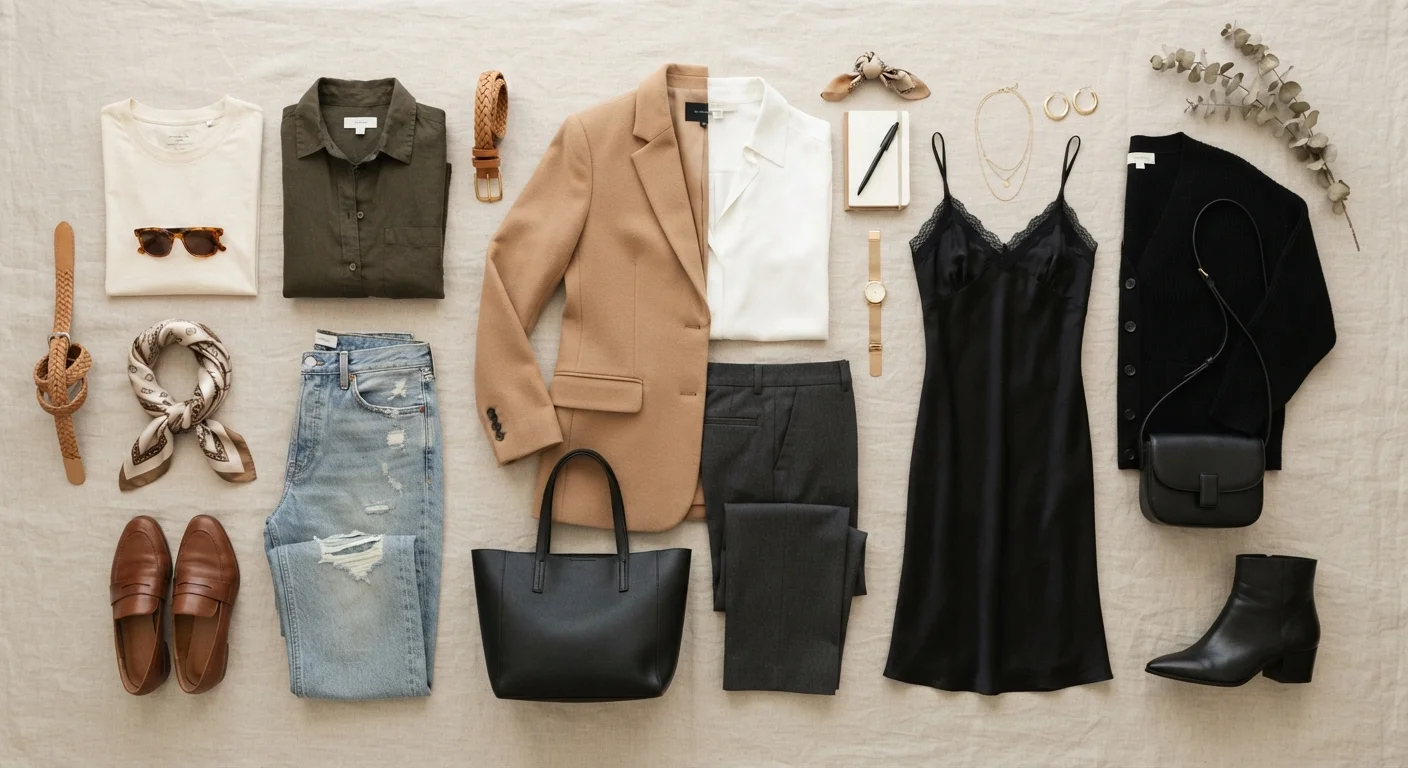
Photo credit: FindersGroove.com | Discover Important Information
In this article
Your style shouldn't disappear the moment the dress code changes. Learn how to carry a coherent visual identity through different contexts in your life.
Key Takeaways
- A consistent aesthetic is defined by recurring elements - color, silhouette, texture - not identical outfits.
- Identifying two or three anchor traits gives your style a through-line that survives any dress code.
- Crossover pieces that function in multiple settings are the practical backbone of a cohesive wardrobe.
- Adapting to an occasion is about calibrating formality, not abandoning your identity.
- Small, repeated styling moves - a tuck, a cuff, a signature accessory - signal a deliberate personal aesthetic.
Why Aesthetic Consistency Actually Matters
Most of us have experienced it: the Sunday-self who wears relaxed linen trousers and earth-toned sneakers feels like a completely different person from the Monday-self squeezed into a corporate blazer that was chosen mostly out of obligation. The disconnect isn't just uncomfortable - it's a signal that your wardrobe is reacting to contexts rather than expressing you within them.
Aesthetic consistency doesn't mean wearing the same outfit everywhere. It means that someone who knows your style could look at your work outfit, your weekend look, and your dinner-out ensemble and recognize the same hand behind all three. That continuity is what makes personal style feel intentional rather than accidental. If you're still working out what that identity actually is, our foundational style guide is a helpful starting point.
Style Consistency Is a Practice, Not a Rule
Think of aesthetic consistency less as a set of restrictions and more as a creative constraint that actually makes getting dressed easier. When you know what your style stands for, decisions get faster, purchases get smarter, and you spend less time in front of a full closet feeling like you have nothing to wear.
Before You Start: Define Your Aesthetic Anchors
Before adapting your look across contexts, you need to know what stays fixed. Aesthetic anchors are the two or three defining traits that show up in virtually every outfit you feel most like yourself in - a preference for relaxed, slightly oversized silhouettes, say, or a gravitational pull toward monochromatic dressing and natural fibers.
If you're not sure what yours are, a wardrobe audit is one of the fastest ways to find out. Pull out the pieces you reach for first, habitually, without overthinking - patterns emerge quickly. You might also find it useful to read up on the core elements of visual cohesion - color palette, silhouette, texture, and proportion - before working through the steps below.
What you will need
Step-by-Step: Building Cross-Context Consistency
The following steps walk you through translating a defined aesthetic into practical dressing decisions across casual, professional, and social occasions. Work through them in order for the clearest results.
Name your two or three non-negotiable aesthetic traits
Write them down specifically. Not "I like minimal style" but "I gravitate toward clean lines, a muted color palette, and natural fabrics." Specificity is what makes these traits translatable across contexts rather than too vague to act on. Refer to the complete personal style reference if you need vocabulary to describe what you're seeing in your closet.
Identify your crossover pieces
These are items that genuinely function in at least two contexts without forcing a read. A well-cut trouser in a neutral tone can move from office to dinner. A quality knit can dress down with denim or dress up under a blazer. Crossover pieces are the literal connective tissue of a context-spanning wardrobe. Audit your current closet for these first before buying anything new.
Map each context to a formality level, not a separate aesthetic
The mistake most people make is treating "work clothes" and "weekend clothes" as entirely separate categories with separate rules. Instead, think of your contexts as points on a formality spectrum - and think about which of your anchor traits hold at every point. Structure might mean a blazer at work and a structured canvas tote on weekends. The trait travels; the specific item adapts.
Develop a color palette that works across all three contexts
A cohesive palette is one of the most efficient tools for visual consistency. Choose a range of neutrals you genuinely like and two or three accent tones that recur across casual, work, and social looks. When your wardrobe shares a color language, mixing across contexts becomes intuitive. Colour coordination basics can help if building a palette feels overwhelming.
Choose one or two signature styling moves
These are small, repeatable choices that become part of your visual signature regardless of the outfit: always rolling your sleeves once, tucking the front of a shirt, wearing a specific type of earring, or defaulting to a particular shoe silhouette. These micro-decisions create continuity between otherwise different looks and are often what makes someone's style feel distinctly recognizable - even when everything else changes.
Maintaining the Thread Over Time
Consistency isn't a one-time achievement - it's an ongoing practice. Tastes evolve, dress codes shift, and new pieces enter your wardrobe. The goal isn't to freeze your aesthetic in place but to keep checking in with it. Ask periodically: does this new purchase share at least two of my anchor traits? Would I recognize this as mine?
For practical habits that keep this process sustainable, dressing with intention offers a useful framework. And if you want outfit structures that make cross-context dressing easier on a day-to-day basis, outfit formulas are worth building into your routine.
Don't Mistake Rigidity for Consistency
A consistent aesthetic leaves room for experimentation. Wearing something outside your usual range isn't a failure - it's information. Notice whether it energizes or drains you, and let that feed back into how you refine your anchors over time. The goal is self-expression, not self-restriction.

Author
Style & Beauty Editorial Team
Style & Beauty Editorial Team is the collective byline for our editorial team and contributor network. Articles published under this byline or an editorial pen name are researched, written, and reviewed according to our editorial standards for clarity, consistency, and independence before publication.
View all articles →