
Neutral Wardrobe vs. Colour-Driven Wardrobe: Finding Your Mix
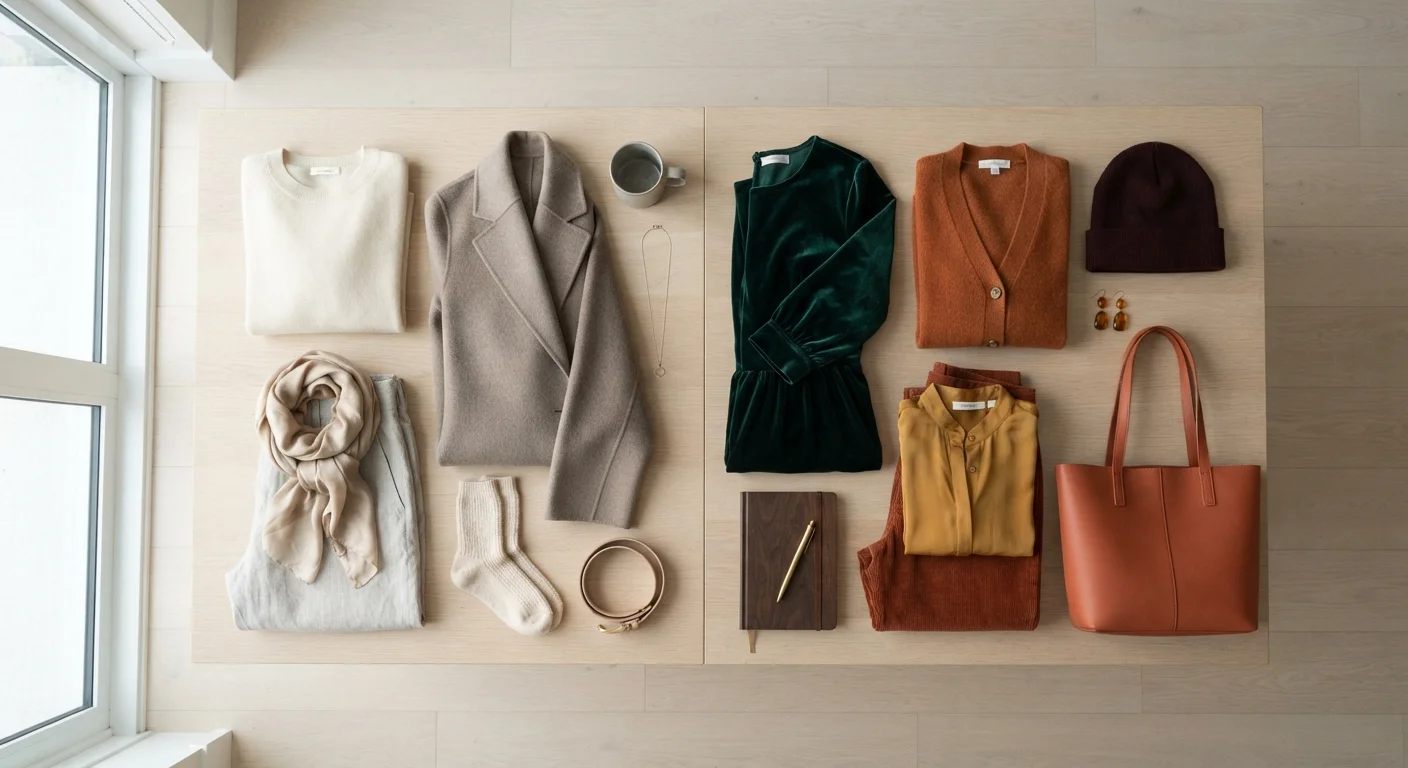
Photo credit: FindersGroove.com | Discover Important Information
In this article
All-neutrals or expressive colour? Each approach has real trade-offs. Understand both before defaulting to a strategy that may not suit your lifestyle.
Key Takeaways
- Neutral wardrobes excel at versatility and easy outfit-building, but can feel visually flat or uninspiring over time.
- Colour-driven wardrobes are expressive and mood-boosting, but require more planning to avoid clashing combinations.
- Most functional wardrobes are a hybrid - anchored in neutrals with a curated set of intentional colour pieces.
- Your lifestyle, daily contexts, and how much you enjoy getting dressed should guide your colour strategy.
- A personal colour palette, even a loose one, prevents impulse buys and keeps your closet cohesive.
What Each Approach Actually Means
A neutral wardrobe is built primarily around colours without strong hue - white, ivory, cream, beige, tan, grey, charcoal, navy, and black. These tones work together almost automatically, meaning virtually any top pairs with any bottom. The draw is undeniable: fewer decisions, fewer mistakes, and a closet that photographs like an editorial spread.
A colour-driven wardrobe, by contrast, prioritises expressive hues - rich terracottas, cobalt blues, sage greens, warm mustards, or whatever palette resonates with you personally. Colour here isn't an accent; it's the point. Done thoughtfully, it creates looks that feel genuinely distinct and authentically you.
Neither is inherently superior. They represent different design philosophies with real trade-offs - and understanding those trade-offs is the first step to building a closet that actually serves your life. For a broader framework on intentional dressing, see Capsule Wardrobe vs. Curated Closet.
The Real Trade-Offs, Side by Side
Before committing to either philosophy, it helps to see the practical differences laid out plainly.
| Criterion | Neutral Wardrobe | Colour-Driven Wardrobe |
|---|---|---|
| Outfit versatility | Very high - pieces combine almost automatically | Moderate - requires more deliberate pairing |
| Decision fatigue | Low - minimal planning needed | Higher - colour coordination takes thought |
| Self-expression | Subtle - communicates taste through texture and cut | Strong - colour is a primary identity signal |
| Adaptability across dress codes | Excellent - transitions formal to casual with ease | Context-dependent - bold colour can limit some settings |
| Risk of impulse purchases | Lower - neutrals tend to integrate easily | Higher - a striking colour can be hard to incorporate |
| Emotional impact of dressing | Calm and frictionless - but can feel flat | Energising and expressive - but requires more effort |
| Curation difficulty | Easier - fewer compatibility concerns | More demanding - a personal palette is essential |
One thing the table can't fully capture: the emotional dimension. Many people find neutral wardrobes freeing precisely because they stop thinking about clothes - but others find them quietly draining, like dressing in greyscale when you naturally think in colour. Neither reaction is wrong.
The Case for Neutrals - and Their Hidden Limits
A neutral-anchored wardrobe genuinely earns its reputation for ease. When every piece shares a tonal family, outfit-building becomes almost automatic, which matters on rushed mornings or during periods of low mental bandwidth. Neutrals also travel well, layer effortlessly, and adapt across dress codes - a beige linen blazer works in a boardroom and at a weekend brunch.
The practical upside extends to budgeting: neutral foundational pieces tend to command more cost-per-wear value because they pair with everything you already own. Weighing what owning less actually costs you is worth reading if budget-efficiency is a priority.
But neutrals have a real limit: they can flatten your style into something generic. If your wardrobe looks interchangeable with everyone else's, it stops communicating anything personal - which matters if self-expression is part of why you dress intentionally in the first place. Not every 'versatile' piece lives up to the label - a point worth remembering before defaulting to beige everything.
The Case for Colour - and Where It Gets Complicated
Colour does something neutrals simply can't: it communicates mood, energy, and identity before you say a word. Research in environmental and fashion psychology consistently suggests that colour influences both the wearer's emotional state and how others perceive them - though individual responses vary significantly, so no single colour "means" one thing universally.
62%
People who say colour affects their mood when dressing
A 2022 consumer survey by the Pantone Color Institute found that a majority of respondents said the colour of their clothing influenced how they felt throughout the day.
3-5
Colours in a cohesive personal palette
Style educators commonly recommend anchoring a colour-driven wardrobe around a core palette of three to five hues that complement each other and your skin undertone.
The complication is that a colour-led wardrobe demands more intentional curation. Without a personal colour palette - even a loose one - you risk accumulating pieces that don't play well together, which ironically reduces your actual outfit options despite having more clothes. Building that palette is easier than it sounds; a practical approach to finding your colour palette can help you define yours before you shop.
Building Your Hybrid: The Practical Middle Path
For most people, the smartest wardrobe isn't purely neutral or aggressively chromatic - it's a deliberate hybrid. The classic framework: roughly 70-80% neutrals as your structural foundation, with 20-30% intentional colour pieces that reflect your personality and pair well within your palette.
Concretely, this might look like navy trousers, white and grey shirts, and a camel coat as your workhorses - then a terracotta linen set, a cobalt sweater, and a printed silk skirt as the pieces that make your outfits feel like yours. The colour pieces don't need to match each other; they need to work with your neutral anchors.
Before adding anything new, an honest audit of what you already own is enormously clarifying. Auditing your wardrobe to find your real aesthetic walks through a practical checklist for identifying the patterns and gaps hiding in your current closet - often the best guide to where colour actually fits in your life.
Your Mix Doesn't Have to Be Permanent
How much colour you want in your wardrobe will likely shift across life stages, job changes, and personal growth - and that's completely normal. The goal isn't to lock in a formula forever, but to make intentional choices at each point rather than defaulting to habit. Revisit your colour strategy whenever your life context changes significantly.
The broader goal is a wardrobe that reduces friction without erasing identity. For more on which specific garment types actually deliver on versatility promises, see Versatility as a Wardrobe Strategy, and explore more personal style tips to keep building with intention.

Author
Style & Beauty Editorial Team
Style & Beauty Editorial Team is the collective byline for our editorial team and contributor network. Articles published under this byline or an editorial pen name are researched, written, and reviewed according to our editorial standards for clarity, consistency, and independence before publication.
View all articles →