
Curated Closet vs. Full Wardrobe: What Owning Less Actually Costs You
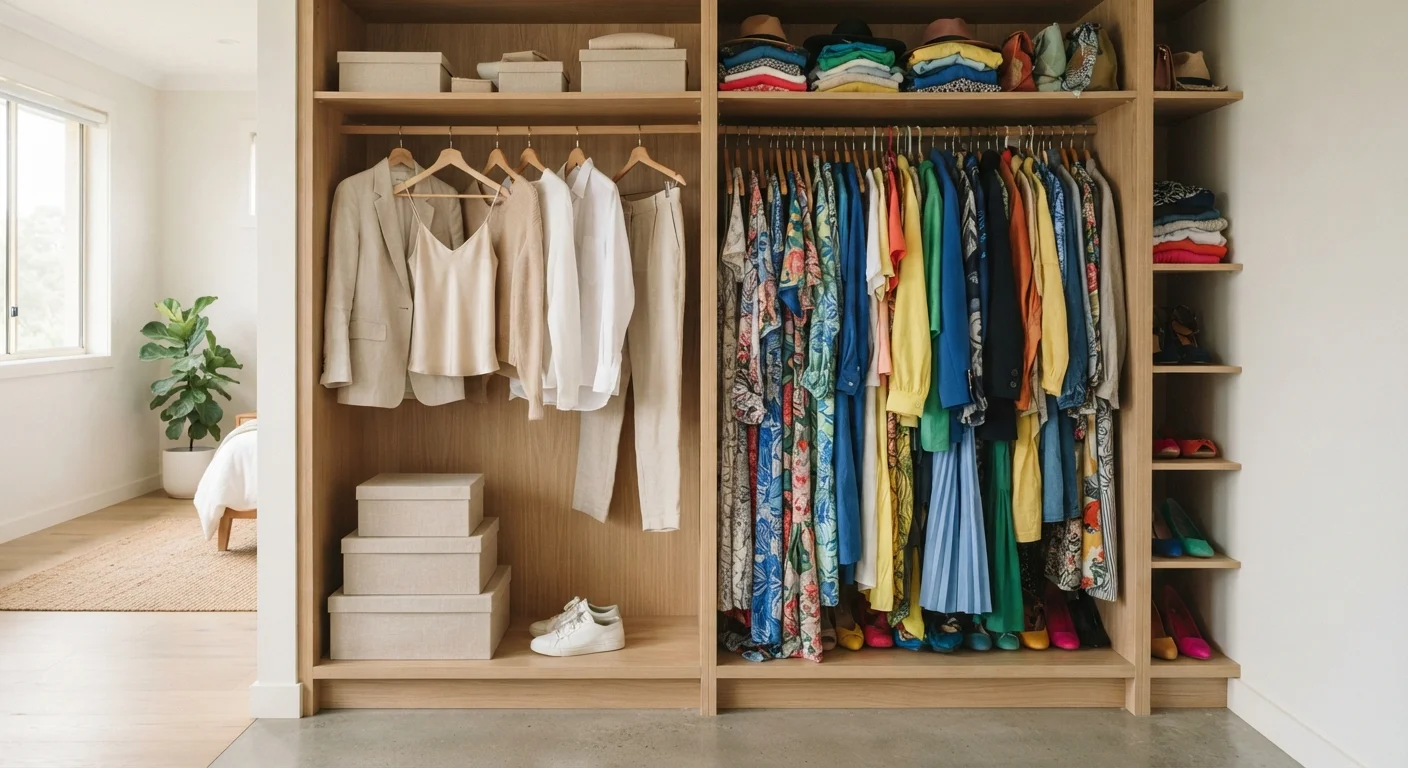
Photo credit: FindersGroove.com | Discover Important Information
In this article
Weighing a capsule wardrobe approach against conventional shopping habits — including what each demands of your time, money, and identity.
Key Takeaways
- A curated closet typically costs more upfront per item but less overall when tracked over time.
- A full wardrobe creates decision fatigue and often hides significant per-wear cost inefficiency.
- Neither approach is inherently better - lifestyle, income pattern, and identity all shape the right fit.
- The psychological cost of an overfull wardrobe is underestimated by most shoppers.
- Starting with a wardrobe audit is more useful than committing to a philosophy cold.
The Hidden Math of Your Wardrobe
Most people don't know what their wardrobe actually costs them - not because they haven't looked at receipts, but because they've never calculated cost-per-wear. A $180 jacket worn 90 times costs $2 per wear. A $35 blouse worn twice costs $17.50 per wear. Volume doesn't indicate value.
The average US consumer buys roughly 68 garments per year, according to industry estimates, yet research on clothing utilization consistently finds that a substantial portion of what's owned rarely gets worn. That gap between owned and worn is where real money disappears.
Before deciding which wardrobe philosophy suits you, a structured wardrobe audit is the most practical first step. It gives you actual data - not assumptions - about what you use.
~68
Garments bought per US consumer annually
Industry estimates suggest the average American purchases around 68 new clothing items each year, a figure that has grown significantly over recent decades.
~50%
Wardrobe items rarely or never worn
Multiple clothing utilization studies suggest roughly half of what people own is seldom or never worn, representing significant sunk cost.
What a Curated Closet Actually Demands
A curated closet - sometimes called a capsule wardrobe - typically means owning 30 to 50 intentionally chosen pieces that work across multiple combinations. The appeal is real: fewer decisions, less storage stress, and a cleaner spending narrative. But the entry cost is often higher than people expect.
Curating well requires knowing your actual style, not your aspirational one. Pieces bought for a life you don't yet live are just as wasteful as impulse buys. If you're unsure where to start, identifying your real aesthetic before purchasing anything new prevents the common mistake of building a curated closet that doesn't reflect how you actually live.
The psychological payoff can be significant. Decision fatigue - the mental depletion from too many daily choices - is a documented phenomenon, and clothing choice is a real contributor. Fewer, well-matched pieces mean mornings take less effort. That's not a trivial benefit.
Start With What You Already Own
Before committing to either approach, spend time with what's already in your closet. Track which items you reach for in a typical two-week period. The pieces you consistently skip are your clearest signal - whether that means editing down or simply reconsidering future purchases. Getting more from what you already own is almost always a better first move than buying differently.
What a Full Wardrobe Actually Costs You
A larger wardrobe isn't inherently a problem. People with genuinely varied lifestyle demands - someone who shifts between formal office environments, outdoor activities, and social events - may legitimately need more pieces. The issue is when volume is a byproduct of shopping habits rather than lifestyle reality.
Common purchasing patterns quietly fill wardrobes with items that compete for mental attention but don't earn their space. The hidden costs here extend beyond money: physical storage, time spent searching, and the low-grade anxiety of owning things you feel you should wear but don't.
There's also an emotional dimension worth naming. Shopping for emotional relief is a well-documented behavior, and it's not irrational - but retail therapy has real limits that a full wardrobe quietly exposes over time. The dopamine of a new purchase fades; the item remains.
| Curated Closet | Full Wardrobe | |
|---|---|---|
| Upfront cost per item | Higher - quality over quantity | Lower - more volume, varying quality |
| Long-term total spend | Often lower when tracked | Often higher due to underused items |
| Decision fatigue | Low - fewer daily choices | High - more options, more friction |
| Lifestyle flexibility | Limited - demands consistent lifestyle | Higher - accommodates varied demands |
| Storage and space required | Minimal | Significant - often a pain point |
| Self-knowledge required | High - must know your real style | Lower - easier to accumulate broadly |
| Environmental footprint | Generally lower | Generally higher |
Identity, Flexibility, and the Real Trade-Off
One underappreciated cost of going minimal is the loss of sartorial range. Clothing communicates identity, and a tightly curated wardrobe can feel restrictive when your sense of self - or your actual social context - shifts. wearing what you love over what's trending, rather than following trends, is sustainable over time, but it requires enough self-knowledge to shop decisively.
A full wardrobe, by contrast, preserves optionality. If your lifestyle is genuinely varied - different environments, seasonal commitments, cultural occasions - having more pieces isn't excess; it's functional. The key question is whether the breadth you own actually maps to your life, or whether it maps to an imagined version of it.
For a deeper look at how these wardrobe philosophies diverge in practice, comparing capsule versus curated approaches reveals meaningful differences in how each method handles lifestyle fit. Neither is a universal answer - both reward honest self-assessment over aesthetic aspiration.
The wardrobe that works is the one you actually use. That truth is simpler than most shopping content suggests - and more actionable than any philosophy.

Author
Smart Shopping Editorial Team
Smart Shopping Editorial Team is the collective byline for our editorial team and contributor network. Articles published under this byline or an editorial pen name are researched, written, and reviewed according to our editorial standards for clarity, consistency, and independence before publication.
View all articles →