
The Habits That Lead to a Cluttered, Unusable Wardrobe
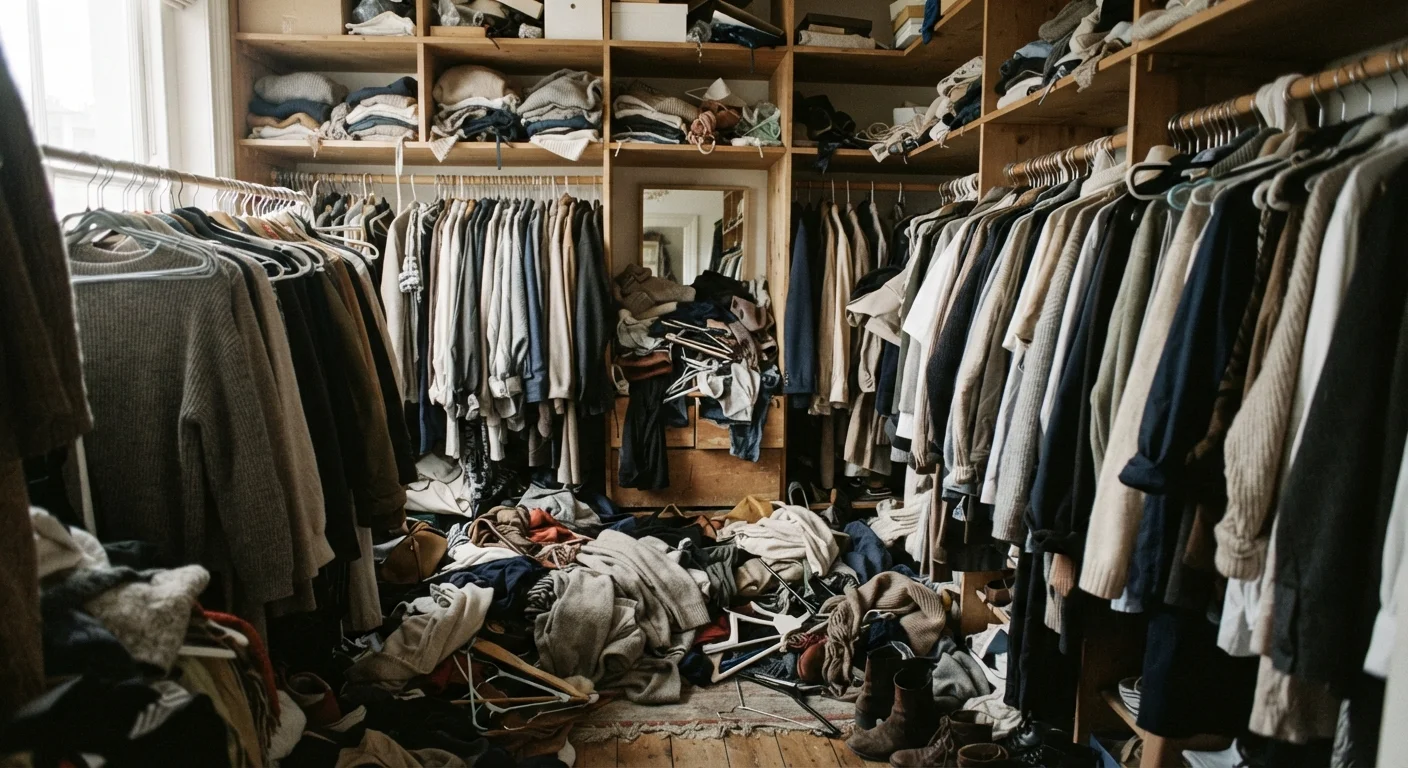
Photo credit: FindersGroove.com | Discover Important Information
In this article
Most overfull wardrobes aren't a storage problem — they're a purchasing pattern problem. Understand the common behaviours that quietly fill wardrobes with things you won't wear.
Key Takeaways
- Most wardrobe clutter comes from repeated purchasing patterns, not a lack of storage space.
- Buying for occasions that rarely happen or moods that don't reflect real life fills closets fast.
- Understanding why you shop is as important as knowing what to buy.
- A smaller, intentional wardrobe is almost always easier to use and get dressed from daily.
Why Wardrobes Fill Up Faster Than They Should
A cluttered wardrobe is rarely the result of one bad shopping trip. It builds gradually - purchase by purchase, sale by sale - until opening the closet door triggers stress instead of inspiration. The clothes are there, but somehow nothing works together, and getting dressed takes longer than it should.
The good news: these patterns are learnable and reversible. Most overfull wardrobes trace back to a handful of recurring habits, and once you can name them, they lose a lot of their power. If you're building a wardrobe from scratch, understanding these traps upfront will save you significant time and money.
Clutter Is a Pattern Problem, Not a Space Problem
Adding more storage - extra rails, shelf dividers, under-bed boxes - doesn't fix a wardrobe that's already full of things you don't wear. The root cause is almost always a purchasing habit. Solving for space before solving for behaviour means the clutter simply grows to fill whatever room you give it.
The Habits Creating the Problem
These aren't character flaws - they're patterns that make complete psychological sense in the moment. Recognising them is the first step to shopping with more intention and building a wardrobe you can actually use every day.
Buying for a life you don't actually live yet - purchasing clothes for aspirational occasions, trips, or versions of yourself that haven't materialised.
Why it happens: Optimism feels good in the moment. Imagining the dinner parties, gallery openings, or beach holidays makes the purchase feel justified, even when your daily reality is casual and routine.
Shopping to manage emotions rather than to fill genuine wardrobe gaps.
Why it happens: Retail therapy is culturally normalised and provides a quick mood lift. Stress, boredom, and low self-confidence are common triggers that send people shopping without any real need.
Buying duplicates of items you already own because you forgot what you had.
Why it happens: When a wardrobe is disorganised or overcrowded, it's genuinely hard to see what's in there. Out of sight really does mean out of mind, and shopping fills the gaps you think you have.
Treating sale prices as a reason to buy rather than a bonus on something you already needed.
Why it happens: Discounts create urgency and reframe the decision - it stops feeling like spending money and starts feeling like saving it. The perceived deal overrides the honest question of whether the item is actually useful.
Chasing trends without considering whether they fit your existing wardrobe or personal style.
Why it happens: Social media and fast-fashion cycles make trends feel urgent and personally relevant. A piece looks great in a curated flat-lay but has nothing to pair with in a real closet.
Keeping clothes that don't fit, don't suit you, or that you've never worn, out of guilt or the hope that things will change.
Why it happens: Sunk cost thinking makes it hard to let go of something that cost money, even when it's taking up space and making the wardrobe harder to navigate daily.
~80%
Of wardrobe items rarely or never worn
Wardrobe behaviour research consistently suggests most people regularly wear only around 20% of the clothes they own, leaving the vast majority unworn.
48 hrs
Recommended impulse-purchase waiting period
Consumer behaviour studies suggest a short waiting period significantly reduces impulse purchases by allowing initial emotional responses to subside.
The common thread across all of these mistakes is a disconnect between imagination and reality. Whether it's imagining future occasions, a future self, or future motivation to wear something - wardrobe clutter is largely the residue of optimistic but impractical decisions made at the point of purchase.
What to Do Instead
Breaking these habits doesn't require a dramatic wardrobe overhaul overnight. Start with awareness: before your next purchase, pause long enough to ask which of these patterns might be at play. That moment of friction is genuinely useful.
Aspirational Shopping Has Real Financial Costs
Buying clothes for a version of yourself you haven't become yet isn't just a style problem - it quietly drains your budget over time. Garments bought for imagined occasions accumulate cost without delivering value. If wardrobe spending is creating financial pressure, it may be worth reviewing your broader spending patterns. General information on managing spending habits is available through resources like the Debt & Credit hub.
From there, working with what you already own pays dividends quickly. Getting more wear out of clothes you already own is one of the most practical starting points - it shifts the mindset from acquisition to activation. If you're weighing a more intentional, curated approach to your closet altogether, it's worth understanding what owning less actually costs you before committing to either direction.
A wardrobe that works for your real, daily life - not an imagined one - is almost always a smaller, more considered one. Getting there is mostly a matter of catching yourself in the moment and asking better questions before you buy.

Author
Style & Beauty Editorial Team
Style & Beauty Editorial Team is the collective byline for our editorial team and contributor network. Articles published under this byline or an editorial pen name are researched, written, and reviewed according to our editorial standards for clarity, consistency, and independence before publication.
View all articles →