
Your Car's Warning Lights, Decoded
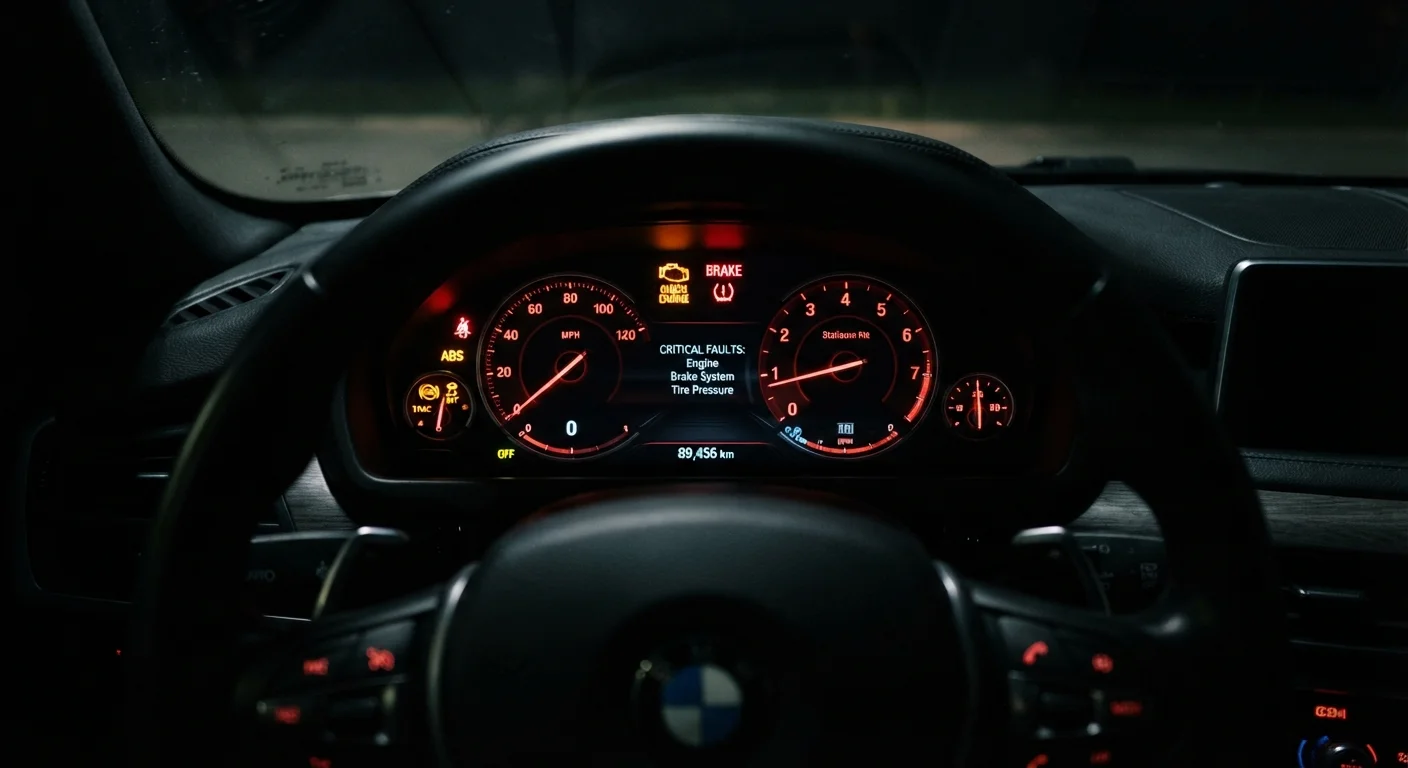
Photo credit: FindersGroove.com | Discover Important Information
In this article
From the check engine light to the TPMS icon, learn what your dashboard warning lights actually mean and when to act.
Why Warning Lights Exist (and Why They're Worth Taking Seriously)
Modern vehicles monitor dozens of systems simultaneously - from engine combustion to tire pressure to brake fluid. When a sensor detects something outside its normal range, it triggers a warning light on your instrument cluster. Think of these lights as early-warning signals, not necessarily emergencies - but also not something to dismiss with a piece of tape over the cluster.
Warning lights are grouped by urgency. Red lights almost always indicate an immediate or safety-critical issue. Amber/yellow lights signal that something needs attention soon but isn't necessarily dangerous right now. Green or blue lights are informational - they confirm a system is active, like your high beams or turn signal.
For the full picture of what your instrument panel communicates, see everything your dashboard is trying to tell you. Your owner's manual is also the definitive source - reading it doesn't have to be painful.
| Number of standard OBD-II fault codes | Thousands (standardized + manufacturer-specific) (SAE International OBD-II standard) |
| Color coding for urgency | Red = immediate, Amber = soon, Green/Blue = informational (General industry convention) |
| OBD-II requirement (US) | All cars sold in the US after 1996 (US EPA regulation) |
| Recommended tire pressure location | Driver's door jamb sticker (not tire sidewall) (Vehicle manufacturer standard) |
| TPMS federal mandate (US) | Required on all new passenger vehicles since 2008 (NHTSA TPMS rule) |
The Most Common Warning Lights, Decoded
Below are the lights most drivers encounter. Exact symbols can vary slightly by manufacturer, so always cross-reference with your owner's manual.
MIL (Malfunction Indicator Lamp)
The official term for the check engine light. It signals that the vehicle's onboard diagnostic system has detected a fault in an emissions-related or engine-management component.
OBD-II
On-Board Diagnostics, second generation - a standardized system in vehicles sold in the US after 1996 that stores fault codes mechanics or drivers can read with a compatible scanner.
TPMS
Tire Pressure Monitoring System. A sensor-based system that alerts the driver when one or more tires drops significantly below the vehicle manufacturer's recommended pressure.
Fault Code (DTC)
A Diagnostic Trouble Code stored by the vehicle's computer when a sensor detects an out-of-range reading. Codes follow a standardized format (e.g., P0300) that identifies the system and type of fault.
Alternator
A generator driven by the engine that continuously recharges the battery while the vehicle runs. A failing alternator causes the battery warning light to illuminate.
Coolant / Antifreeze
A liquid circulated through the engine to regulate temperature. Low coolant level or a system fault can cause the engine temperature warning light to activate.
Check Engine Light (MIL)
The Malfunction Indicator Lamp (MIL) - commonly called the check engine light - covers a wide range of issues, from a loose gas cap to a failing catalytic converter. If it's steady, the fault is present but not immediately dangerous; schedule a diagnostic scan soon. If it's flashing, a misfire is occurring that can damage the catalytic converter - reduce speed and seek service promptly. A basic OBD-II scanner (available at auto parts stores for self-service diagnostic checks) can read the fault code and give you a starting point before you visit a mechanic.
Battery / Charging System
This red battery icon means the charging system isn't maintaining proper voltage. Causes include a failing alternator, a worn drive belt, or a dying battery. If this illuminates while driving, minimize electrical load (turn off AC, radio) and head to a service center - the car may stall if the battery drains completely.
Oil Pressure Warning
A red oil can icon is one of the most serious lights on your dashboard. Low oil pressure can cause rapid, severe engine damage within minutes. Pull over safely, shut off the engine, and check your oil level. If the level is fine but the light stays on, do not drive - call for assistance. Topping up fluids yourself is a learnable skill; checking your fluid levels walks you through the process.
Tire Pressure Monitoring System (TPMS)
An exclamation mark inside a tire cross-section means one or more tires is significantly under-inflated. Check pressure at a gas station gauge when tires are cold. Correct PSI is on the sticker inside your driver's door jamb - not on the tire sidewall (that figure is the tire's maximum rating, not the vehicle's recommended level).
Temperature Warning
A thermometer submerged in liquid means your engine coolant is overheating. Pull over, turn off the engine, and let it cool before investigating. Never open a hot radiator cap. This situation can escalate to serious engine damage quickly.
~1 in 4
Vehicles on US roads with a check engine light on
Estimates from automotive research suggest roughly one in four vehicles is driven with an illuminated check engine light at any given time.
25%
Fuel efficiency loss from under-inflated tires
The US Department of Energy notes that properly inflated tires can improve gas mileage by up to roughly 3%, while significantly under-inflated tires can reduce it meaningfully.
Brake System Warning
If this red exclamation mark or "BRAKE" text appears while the parking brake is released, check your brake fluid level first. Low fluid can indicate worn brake pads or a leak - both are safety-critical and warrant professional inspection before further driving.
When to Act Immediately vs. Schedule an Appointment
Not every light demands you pull over instantly. Here's a practical framework:
- Stop driving now: Oil pressure (red), engine temperature (red), brake system (red while parking brake is off), flashing check engine light.
- Drive to a shop today or tomorrow: Battery/charging, steady check engine light, TPMS (once pressure is corrected and light persists).
- Schedule within the week: Service due reminders, tire rotation indicators, low washer fluid.
When in doubt, treat any unfamiliar light as the higher-urgency category until you've confirmed otherwise. A diagnostic check at a shop gives you the specific fault code - that information helps you have an informed conversation with any mechanic rather than going in blind.
Keeping your vehicle roadworthy also has legal dimensions. Understanding your roadworthiness obligations ensures a warning light doesn't become a compliance issue. Being part of Car Ownership Basics means knowing these systems before you need them.
This article provides general vehicle information for educational purposes only. Always consult a qualified mechanic for diagnosis and repair decisions specific to your vehicle.

Author
Autos & Driving Editorial Team
Autos & Driving Editorial Team is the collective byline for our editorial team and contributor network. Articles published under this byline or an editorial pen name are researched, written, and reviewed according to our editorial standards for clarity, consistency, and independence before publication.
View all articles →