
Registration, Roadworthiness, and Licensing: The Paperwork Side of Car Ownership
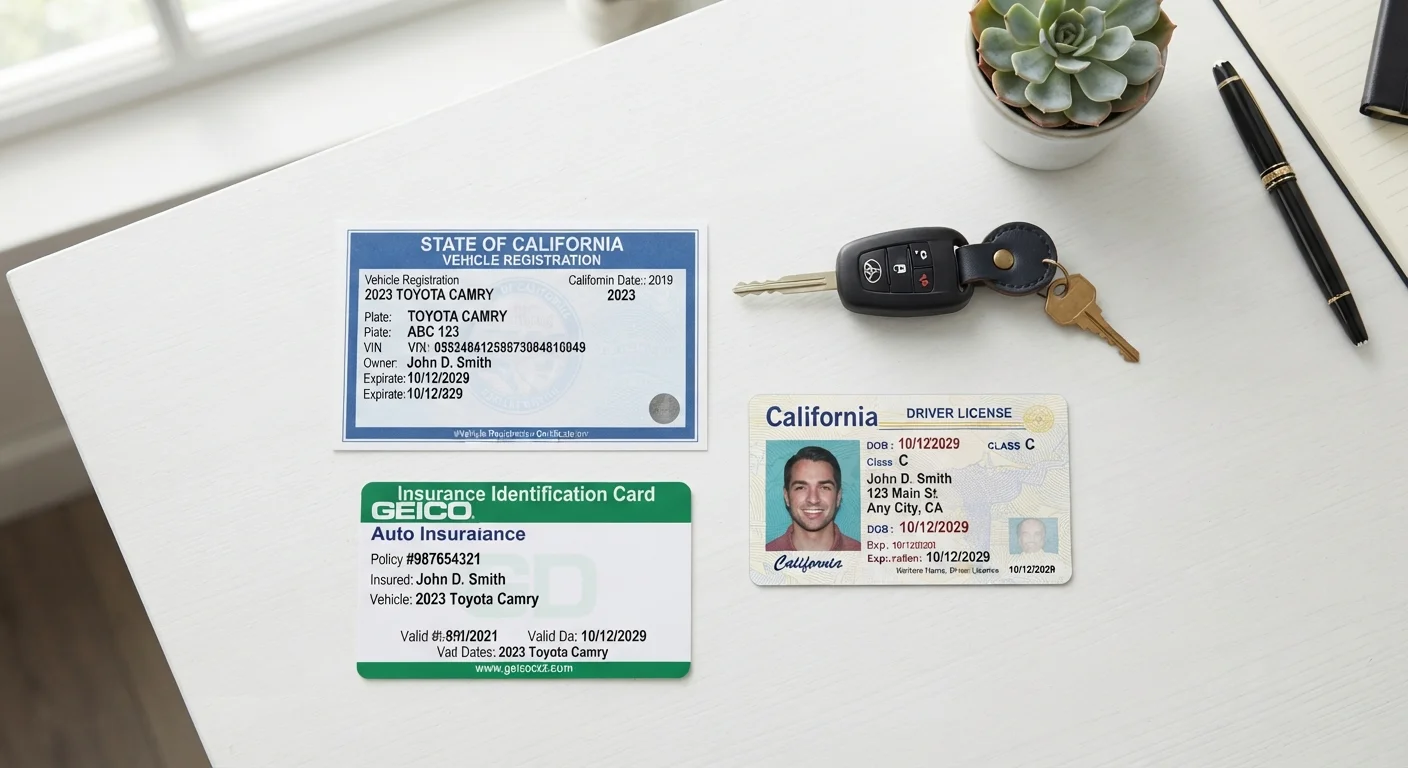
Photo credit: FindersGroove.com | Discover Important Information
In this article
A clear overview of the legal documents every car owner needs, what they mean, and the consequences of letting any of them lapse.
The Three Documents Every Driver Must Have
Operating a vehicle legally in the United States requires three distinct documents working in tandem: a valid driver's license, current vehicle registration, and proof of auto insurance. Missing any one of these during a traffic stop or accident can result in fines, license suspension, or impoundment - regardless of whose fault the incident was.
| Average registration renewal frequency | Annually (some states offer 2-year terms) (Varies by state DMV policy) |
| Grace period after license expiry | Varies: 0-60 days depending on state (Check your state DMV for exact rules) |
| States requiring safety inspections | Approximately 15-17 states (plus D.C.) (Inspection requirements change periodically; verify with your state) |
| Minimum insurance requirement | Liability coverage mandated in 49 states (New Hampshire allows alternatives to traditional insurance) |
| Time to register after moving states | Typically 30-90 days after establishing residency (Varies by state law) |
Understanding what each document actually represents helps you manage them proactively rather than scrambling when renewal deadlines arrive.
- Driver's license: Issued by your state's Department of Motor Vehicles (DMV) or equivalent agency, this certifies that you've passed the required knowledge and skills tests and are legally authorized to operate a motor vehicle.
- Vehicle registration: Ties a specific vehicle to a registered owner in the state's database. It confirms the car exists in the system, taxes have been paid, and - in many states - the vehicle has passed required safety or emissions inspections.
- Proof of insurance: Demonstrates that you carry at least your state's minimum liability coverage. Most states mandate it; driving uninsured is illegal in nearly all of them.
All three documents expire on predictable schedules. Setting calendar reminders 30-60 days ahead of each expiry date is one of the simplest habits a new car owner can develop.
Vehicle Registration: What It Covers and How It Works
When you purchase a vehicle - new or used - you typically have a limited window (often 30 days, though it varies by state) to register it with your state's DMV. Registration links the vehicle identification number (VIN) to your name and address, establishes ownership in the public record, and generates the license plate that law enforcement can query.
Vehicle Identification Number (VIN)
A unique 17-character code assigned to every motor vehicle at manufacture. It encodes details like country of origin, manufacturer, vehicle type, and production sequence, and is used to track ownership, recalls, and accident history.
SR-22
A certificate of financial responsibility that some states require high-risk drivers to file with their DMV, typically after serious violations like driving uninsured. Your insurer files it on your behalf; it is not a separate insurance policy.
Emissions Test
A check of the pollutants your vehicle's exhaust system releases, required in many states as a condition of registration renewal. Failures indicate issues with the engine, catalytic converter, or related systems.
Liability Coverage
Auto insurance that pays for damage or injuries you cause to others in an accident you're at fault for. Most states require a minimum level of liability coverage as a condition of legal vehicle operation.
Title
The legal document that establishes ownership of a vehicle. It is separate from registration - the title proves you own the car, while registration grants permission to operate it on public roads.
Registration must be renewed annually or biennially depending on your state. The renewal fee often includes a portion that funds road infrastructure, which is why it scales with vehicle weight or value in some states.
What triggers a failed registration renewal? In many states, you cannot renew registration if your vehicle has outstanding emissions test failures, unpaid parking violations tied to the plate, or a lapsed insurance policy. These linkages are intentional - the registration system functions as a compliance checkpoint, not just a revenue mechanism.
If you move to a new state, most states require you to re-register the vehicle within 30-90 days of establishing residency. Waiting too long can create gaps in your legal standing and may complicate insurance claims. See our pre-purchase inspection checklist for what to verify on a vehicle's documentation history before buying.
Roadworthiness Checks: Inspections and Emissions Testing
Not all states require periodic safety inspections, but many do - and the requirements vary significantly. Some states conduct combined safety-and-emissions inspections annually; others separate them; a handful have no mandatory inspection program at all.
Inspection Requirements Vary Widely by State
Some states - like California - focus primarily on emissions, while others like New York require a comprehensive annual safety inspection covering dozens of components. A handful of states, including Florida, have no mandatory periodic vehicle inspection program at all. Always check your specific state's DMV website for current requirements, since these rules can and do change.
A typical safety inspection checks components directly related to crash risk and vehicle control:
- Brakes (pad thickness, rotor condition, hydraulic function)
- Tires (tread depth, sidewall integrity)
- Lights (headlights, brake lights, turn signals)
- Steering and suspension
- Windshield wipers and visibility
- Horn and mirrors
Emissions tests - where required - measure what your exhaust system releases. Failing an emissions test often means a sensor, catalytic converter, or fuel system component needs attention. Many states offer cost-assistance programs for low-income owners who can't afford required repairs after a failed test.
Maintaining your vehicle properly is the most reliable way to pass these checks without surprises. Our coverage of what happens during a routine car service explains how a standard service addresses many inspection-relevant systems simultaneously.
~13%
Estimated share of US drivers who are uninsured
According to the Insurance Research Council, an estimated 1 in 8 drivers on US roads operates without auto insurance.
49 states
States mandating minimum auto insurance
New Hampshire is the only state that does not require traditional auto insurance, though drivers remain financially responsible for damages.
What Happens When Documents Lapse
Letting any of these three documents expire isn't just a bureaucratic inconvenience - it carries real legal and financial consequences.
| Lapsed Document | Common Consequence |
|---|---|
| Driver's license | Fine, possible misdemeanor charge, and insurance complications if you're in an accident |
| Vehicle registration | Fine, potential vehicle impoundment, and inability to legally operate the vehicle |
| Auto insurance | Personal liability for all damages, license suspension, SR-22 filing requirement in many states |
Insurance lapses are particularly consequential. If you're in an at-fault accident while uninsured, you're personally liable for property damage and medical costs - which can reach six figures in serious collisions. Some insurers also treat a lapse as a risk indicator and raise your premiums when you reinstate coverage.
Driving habits that keep your vehicle in good condition also reduce the chance of an inspection failure derailing your registration renewal. See everyday driving habits that quietly wear down your vehicle for a practical breakdown of what not to do.
This article is for general informational purposes only and does not constitute legal or financial advice. Requirements vary significantly by state - consult your state's DMV or a licensed professional for guidance specific to your situation.

Author
Autos & Driving Editorial Team
Autos & Driving Editorial Team is the collective byline for our editorial team and contributor network. Articles published under this byline or an editorial pen name are researched, written, and reviewed according to our editorial standards for clarity, consistency, and independence before publication.
View all articles →