
Why Skipping Oil Changes Is More Expensive Than It Looks
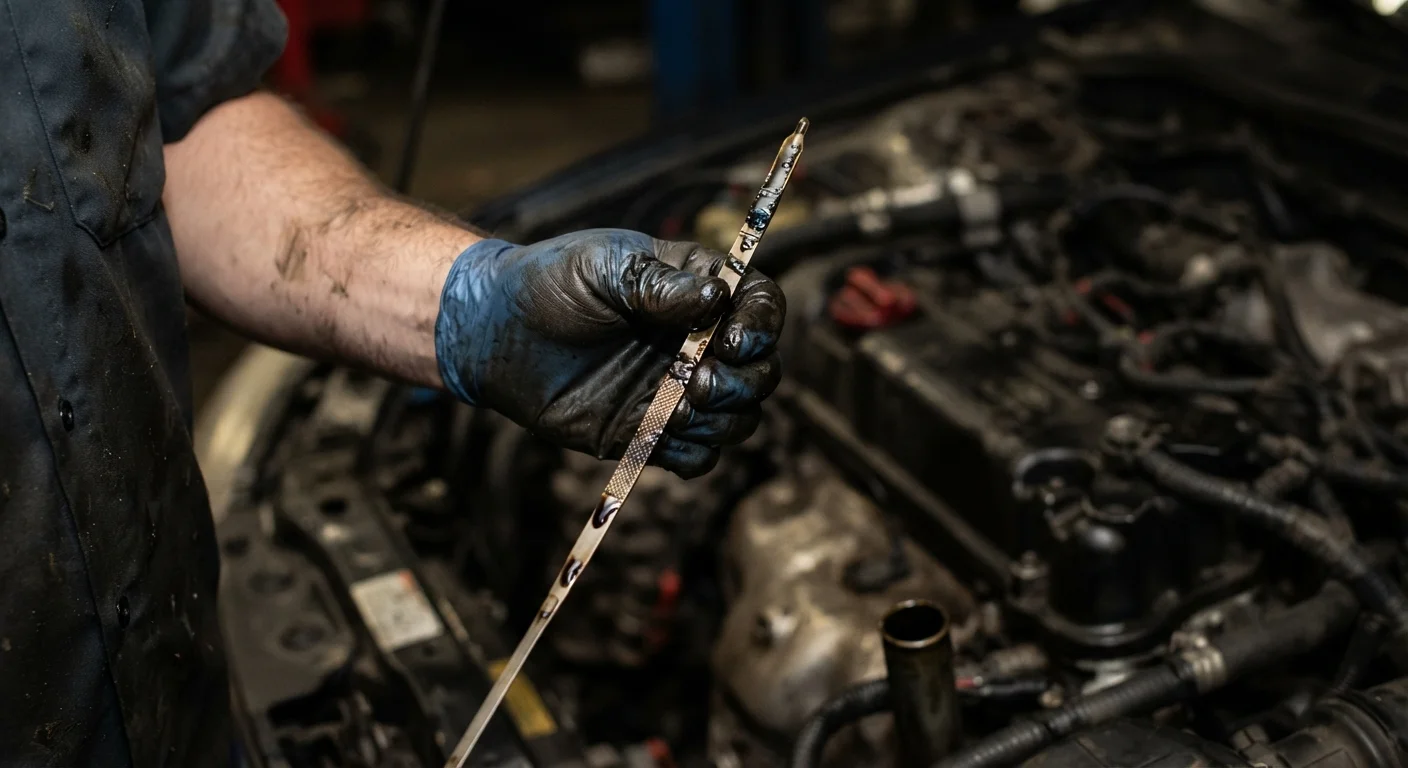
Photo credit: FindersGroove.com | Discover Important Information
In this article
Delaying oil changes seems like a small saving. Here's what actually happens inside your engine when lubrication degrades over time.
Key Takeaways
- Degraded oil stops lubricating and starts causing friction damage that compounds quickly.
- Engine repairs triggered by neglected oil changes can cost 10-50 times more than the service itself.
- Modern oil-life monitoring systems are more reliable interval guides than the old 3,000-mile rule.
- Skipping oil changes can void powertrain warranty coverage, leaving you unprotected on costly repairs.
- Most oil-change mistakes stem from misunderstanding what oil actually does inside a running engine.
What Oil Actually Does - and What Happens When It Fails
Motor oil does three jobs simultaneously: it lubricates metal surfaces moving against each other at high speed, carries heat away from the combustion zone, and suspends contaminants - carbon particles, metal shavings, and combustion byproducts - so the filter can trap them. Fresh oil handles all three well. Oil that has been in service too long does none of them effectively.
As oil ages, its base molecules break down and its additive package (detergents, anti-wear agents, viscosity modifiers) gets depleted. What remains is thicker, darker, and acidic. Instead of forming a protective film between metal surfaces, degraded oil allows micro-contact between parts. That contact removes material from camshafts, crankshaft bearings, and cylinder walls - damage that is permanent and cumulative. Understanding this is the foundation for understanding why delayed oil changes are a cost problem, not just a maintenance checkbox. For a deeper look at how oil composition affects performance, see our guide to oil viscosity grades.
The Mistakes That Make This Worse
Most drivers who skip or delay oil changes aren't being careless - they're operating on outdated assumptions or incomplete information. Here are the most common errors and how to correct them.
Sticking to the old 3,000-mile oil-change rule regardless of what the manufacturer specifies.
Why it happens: The 3,000-mile interval was appropriate for older engine designs and conventional oil formulations. It has persisted as a cultural norm long after engineering moved past it.
Ignoring the oil-life monitor and instead relying on calendar time or rough mileage estimates.
Why it happens: Drivers who are accustomed to fixed intervals often distrust dynamic systems, or simply don't know their vehicle has one.
Topping off low oil instead of changing it, and assuming that restores the oil's protective quality.
Why it happens: Adding fresh oil to an engine feels like a fix. It raises the level on the dipstick, which reads as solved.
Assuming a quiet engine means the oil is still good.
Why it happens: Drivers associate engine noise with problems, so silence feels like confirmation everything is fine. Oil degradation, however, is largely silent until serious damage has already occurred.
Skipping oil changes during periods of low mileage, reasoning that the oil hasn't been 'used up.'
Why it happens: Mileage feels like the logical measure of oil consumption. Short-trip, low-mileage driving seems less demanding on the engine.
These errors rarely produce a single dramatic failure. More often, they quietly reduce engine longevity over months and years - which is exactly what makes them so costly. The habits that quietly shorten your car's lifespan article covers how similar patterns of deferred maintenance stack up over time.
What Deferred Oil Changes Actually Cost
$25-$100
Typical oil change cost range
General service pricing varies by region, oil type, and vehicle - but remains a fraction of the repairs neglect can trigger.
$3,000-$8,000+
Engine rebuild or replacement cost
Severe sludge buildup or oil starvation are among the leading causes of premature engine failure requiring full replacement.
40%
Engine wear occurs at cold start
Engineering research consistently shows a large proportion of engine wear happens during startup before oil fully circulates - making oil condition at startup especially important.
An oil change - depending on oil type and service location - is a modest, predictable expense. The repairs it prevents are not. A spun bearing, typically caused by oil starvation or severe sludge buildup, can require a complete engine rebuild or replacement. Repair estimates for that level of damage commonly run into the thousands - sometimes exceeding the value of older vehicles entirely.
There's also a less-visible cost: reduced resale value. Buyers and used-car inspectors check service records. A car with documented, consistent oil changes commands more confidence - and more money - than one without. Skipping services doesn't just cost you repair dollars; it costs you future sale dollars too.
Neglect Can Void Your Powertrain Warranty
Most vehicle manufacturer warranties require documented, timely maintenance - including oil changes - to remain valid. If an engine failure occurs and service records show skipped or severely delayed oil changes, the manufacturer may deny the warranty claim. Keep receipts or digital records of every oil change, whether you do it yourself or use a shop.
Oil neglect rarely travels alone. Drivers who defer oil changes often skip other fluid services too. Our article on overlooked maintenance tasks covers the other services most likely to be quietly overdue.
Building a Maintenance Habit That Sticks
The most effective fix is removing the guesswork. Check your owner's manual for the manufacturer-specified oil-change interval - it's based on your actual engine design and is more accurate than any generic mileage rule. Many vehicles built in the last decade include an oil-life monitoring system that calculates intervals based on real driving conditions like temperature, load, and start cycles. Trust it over the old 3,000-mile sticker on your windshield.
If you're uncertain whether your current oil is due for a change, pull the dipstick: oil that is very dark and opaque, gritty to the touch, or noticeably below the minimum line is overdue. Milky or foamy oil signals a more serious issue - coolant contamination - that warrants immediate professional attention.
Finally, it's worth understanding your oil type. Synthetic motor oils generally last longer between changes and perform better under temperature extremes than conventional oils. Our synthetic vs. conventional oil comparison breaks down the practical differences. And if you're reevaluating your overall ownership habits, common car ownership myths is worth a read - several popular beliefs about engine care don't hold up under scrutiny.

Author
Autos & Driving Editorial Team
Autos & Driving Editorial Team is the collective byline for our editorial team and contributor network. Articles published under this byline or an editorial pen name are researched, written, and reviewed according to our editorial standards for clarity, consistency, and independence before publication.
View all articles →