
Synthetic vs. Conventional Motor Oil: What Actually Changes Under the Hood
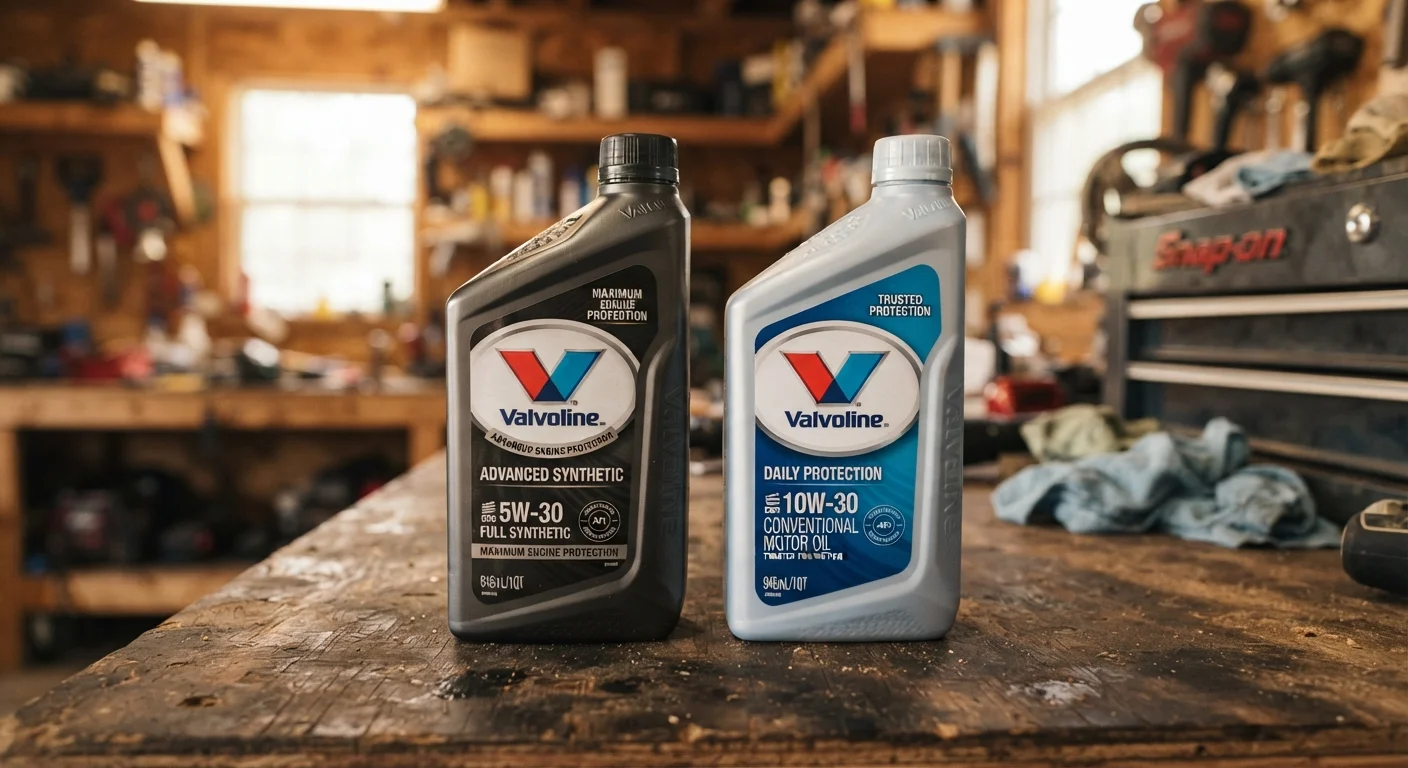
Photo credit: FindersGroove.com | Discover Important Information
In this article
Synthetic and conventional motor oils differ in more than just price. Understand what sets them apart and which suits your driving habits.
Key Takeaways
- Synthetic oil is chemically engineered for consistency; conventional oil is refined from crude oil with natural impurities.
- Synthetic oil generally lasts longer between changes and performs better in temperature extremes.
- Conventional oil costs less per quart but may require more frequent changes, affecting the overall cost gap.
- Your owner's manual - not habit or marketing - should determine which oil type your engine requires.
- Switching from conventional to synthetic is generally safe, but the reverse may not be ideal for all engines.
What's Actually in Each Bottle
Motor oil has one essential job: reduce friction between moving metal parts inside your engine. But not all oil does that job equally well, and the difference starts at the molecular level.
Conventional motor oil is derived from crude oil that's been refined and processed to remove most - but not all - impurities. It contains naturally occurring molecules that vary in size and shape, which means it behaves less predictably under extreme heat or cold.
Synthetic motor oil is either fully engineered from chemical compounds or heavily processed from a conventional base to create molecules that are uniform in size and structure. That uniformity is what gives synthetic oil its performance edge: it flows more consistently, holds up longer under heat, and resists oxidation (the process that makes oil sludgy and ineffective).
Both types are blended with additive packages - detergents, anti-wear agents, viscosity modifiers - that help protect your engine. Synthetic oil simply starts with a more stable foundation. For a deeper look at how oil grades like 5W-30 work within either type, see our engine oil viscosity guide.
| Criterion | Synthetic Motor Oil | Conventional Motor Oil |
|---|---|---|
| Base composition | Engineered or heavily processed molecules | Refined crude oil |
| Molecular consistency | Uniform - predictable performance | Variable - less predictable |
| Cold-weather flow | Faster circulation at startup | Thickens more in cold temps |
| Heat resistance | Higher thermal stability | Degrades faster under sustained heat |
| Typical change interval | 7,500-10,000+ miles (varies by vehicle) | 3,000-5,000 miles |
| Cost per quart | Higher upfront | Lower upfront |
| Best engine compatibility | Modern, turbocharged, high-performance | Older, simpler engine designs |
Where the Real Differences Show Up
The performance gap between synthetic and conventional oil becomes most visible under three conditions: cold starts, sustained heat, and extended driving intervals.
Cold starts are when most engine wear actually happens. Oil needs to circulate quickly before metal parts grind against each other. Synthetic oil flows faster at low temperatures, reaching critical components sooner. Conventional oil thickens more in cold weather, creating a brief but meaningful lag.
High heat degrades conventional oil faster. Turbocharged engines, towing conditions, and stop-and-go city driving all push oil temperatures up. Synthetic oil resists thermal breakdown better, maintaining its protective film longer under stress.
Change intervals reflect these differences directly. Many vehicles using full synthetic oil are rated for intervals of 7,500 to 10,000 miles or more, depending on the manufacturer. Conventional oil typically calls for changes every 5,000 miles or fewer. This doesn't mean longer is always better - skipping or stretching oil changes carries real engine risk regardless of oil type.
~40%
Engine wear occurs at cold startup
Engineering studies cited by the American Petroleum Institute suggest a significant portion of engine wear happens in the first moments after a cold start, before oil fully circulates.
10,000 mi
Typical full-synthetic change interval
Many vehicle manufacturers now recommend full-synthetic oil changes at 7,500 to 10,000 miles, though always defer to your specific owner's manual.
Cost, Compatibility, and What Your Manual Says
Synthetic oil costs more per quart - sometimes two to four times as much - but that comparison is incomplete without factoring in change frequency. If synthetic allows fewer changes per year, the annual cost difference often narrows or disappears. Run the numbers for your specific vehicle and mileage before assuming conventional is automatically cheaper.
Compatibility matters too. Most modern vehicles are engineered to run on synthetic, and some manufacturers - particularly those with turbocharged or high-compression engines - explicitly require it. Using conventional oil in an engine that specifies synthetic may void your warranty and reduce engine longevity. Your owner's manual is the authoritative source here, not the quick-lube service counter.
Switching from conventional to synthetic mid-life is generally fine for most engines. The persistent myth that synthetic "loosens" seals and causes leaks in older vehicles isn't supported by modern oil chemistry - though very high-mileage engines with degraded seals may warrant a conversation with a qualified mechanic before switching. The reverse - going from synthetic back to conventional - is less recommended, as it can introduce inconsistency in protection. Don't fall for common car ownership myths when making this decision.
This article provides general educational information about motor oil types and is not a substitute for the recommendations in your vehicle's owner's manual or guidance from a qualified mechanic.

Author
Autos & Driving Editorial Team
Autos & Driving Editorial Team is the collective byline for our editorial team and contributor network. Articles published under this byline or an editorial pen name are researched, written, and reviewed according to our editorial standards for clarity, consistency, and independence before publication.
View all articles →