
What the Service Interval in Your Owner's Manual Actually Means
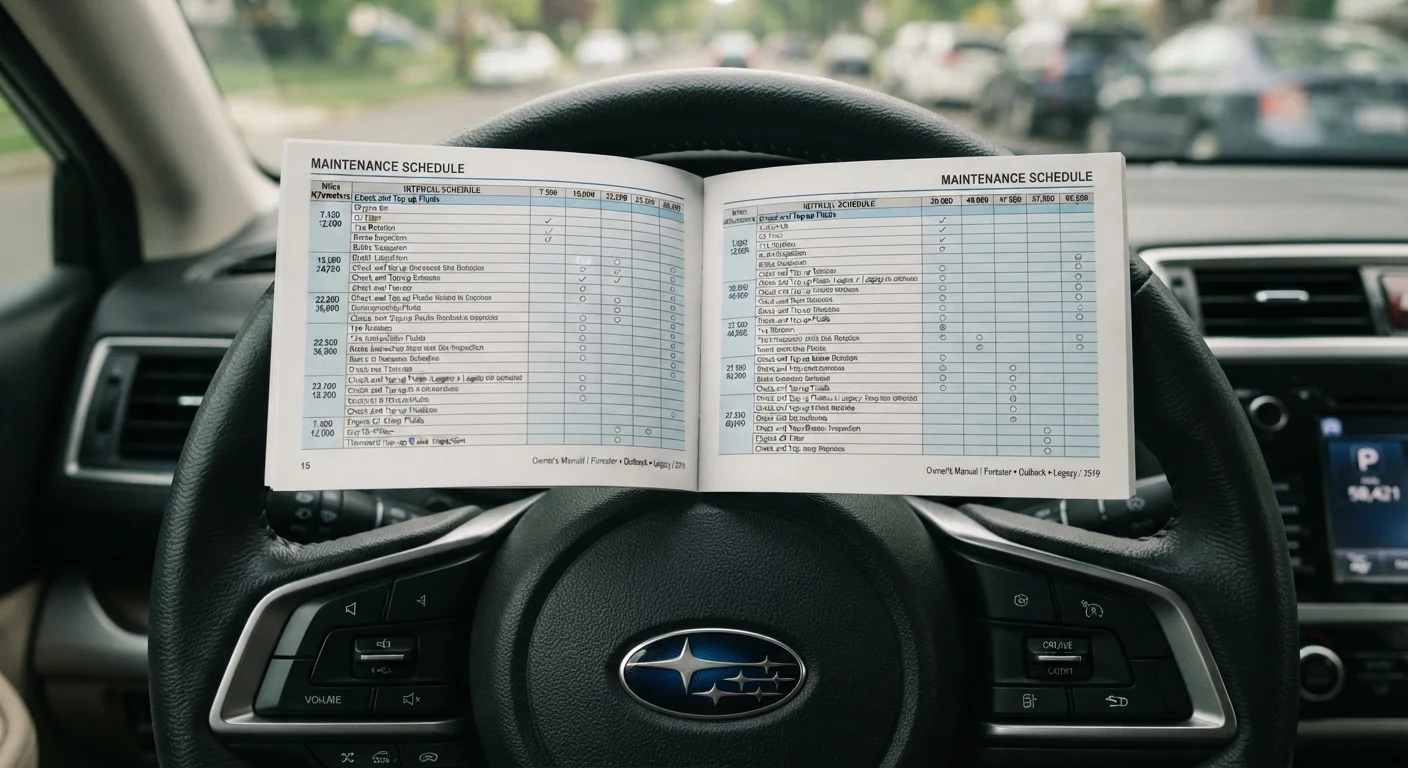
Photo credit: FindersGroove.com | Discover Important Information
In this article
Manufacturer service schedules aren't arbitrary. Understand what scheduled servicing covers and why skipping it has real consequences.
Key Takeaways
- Service intervals are engineered thresholds, not arbitrary upsell tactics from dealerships.
- Both mileage and time triggers apply - whichever comes first takes precedence.
- Skipping scheduled maintenance can void powertrain warranties and accelerate component wear.
- Severe-duty driving conditions shorten service intervals compared to normal schedules.
- Your owner's manual is the authoritative source - not shop signage or generic online advice.
Where the Schedule Comes From
Every service interval in your owner's manual is the product of engineering testing, not a sales strategy. Manufacturers run components through simulated wear cycles, measure fluid degradation rates, and model real-world driving patterns to determine when maintenance becomes necessary for performance and longevity. The result is a schedule tailored to your exact powertrain, not a generic estimate.
The schedule typically covers two triggers: mileage and elapsed time. Whichever arrives first applies. A driver who accumulates 3,000 miles in a year may still need an oil change at the 12-month mark because engine oil oxidizes over time regardless of use. Low mileage creates its own maintenance challenges that are easy to overlook.
If you're unsure how to navigate your manual's maintenance section, reading it efficiently is a learnable skill that pays off quickly.
Normal vs. Severe-Duty Schedules
Most owner's manuals list two maintenance tracks: normal and severe duty. Normal conditions assume highway-heavy driving at moderate temperatures with infrequent short trips. Severe duty applies when your driving regularly includes any of the following:
- Frequent trips under five miles, especially in cold weather
- Extended idling (delivery routes, long traffic commutes)
- Towing, hauling, or carrying heavy loads
- Dusty, muddy, or off-road environments
- Extreme cold or heat
Under severe conditions, heat cycles are shorter and more intense, fluids accumulate contaminants faster, and filters load up sooner. The severe schedule is not reserved for commercial vehicles - it applies to a significant portion of everyday drivers.
Choosing the wrong schedule and under-servicing your vehicle has the same practical outcome as skipping service entirely: accelerated wear without warning.
What a Service Interval Actually Covers
A single service appointment typically bundles several tasks that share a similar wear timeline. Common elements include oil and filter replacement, tire rotation, multi-point inspection, and fluid top-offs. At longer intervals - typically 30,000, 60,000, and 90,000 miles - more substantial items come due: transmission fluid, spark plugs, coolant flush, and drive belts.
Understanding what each interval covers helps you prioritize intelligently. A standard log-book service covers far more than most drivers realize, including checks that catch developing problems before they become expensive repairs.
There are also components that fall outside routine service schedules but degrade quietly in the background. Cabin air filters, serpentine belts, and transmission fluid are frequently skipped because they don't trigger warning lights - until the damage is already done.
The Real Cost of Skipping Service
Delaying service feels like a saving in the short term. The financial reality is more complicated. Degraded engine oil loses its viscosity and lubricating properties, increasing metal-on-metal friction inside the engine. Contaminated coolant becomes acidic and attacks hoses and the radiator. A clogged cabin air filter stresses the HVAC blower motor.
Beyond mechanical wear, skipping documented service can affect your warranty coverage. Most powertrain warranties require proof of maintenance at manufacturer-specified intervals. A missed service at the wrong time can complicate a warranty claim significantly.
What happens inside an engine when oil degrades illustrates why small delays compound into large repair bills over time.
Treating your service schedule as a fixed operating cost - rather than an optional expense - is the single most effective way to protect the long-term value and reliability of your vehicle.
Frequently Asked Questions

Author
Autos & Driving Editorial Team
Autos & Driving Editorial Team is the collective byline for our editorial team and contributor network. Articles published under this byline or an editorial pen name are researched, written, and reviewed according to our editorial standards for clarity, consistency, and independence before publication.
View all articles →