
Morning vs Evening Skincare: Why Your Skin Needs Different Things at Different Times
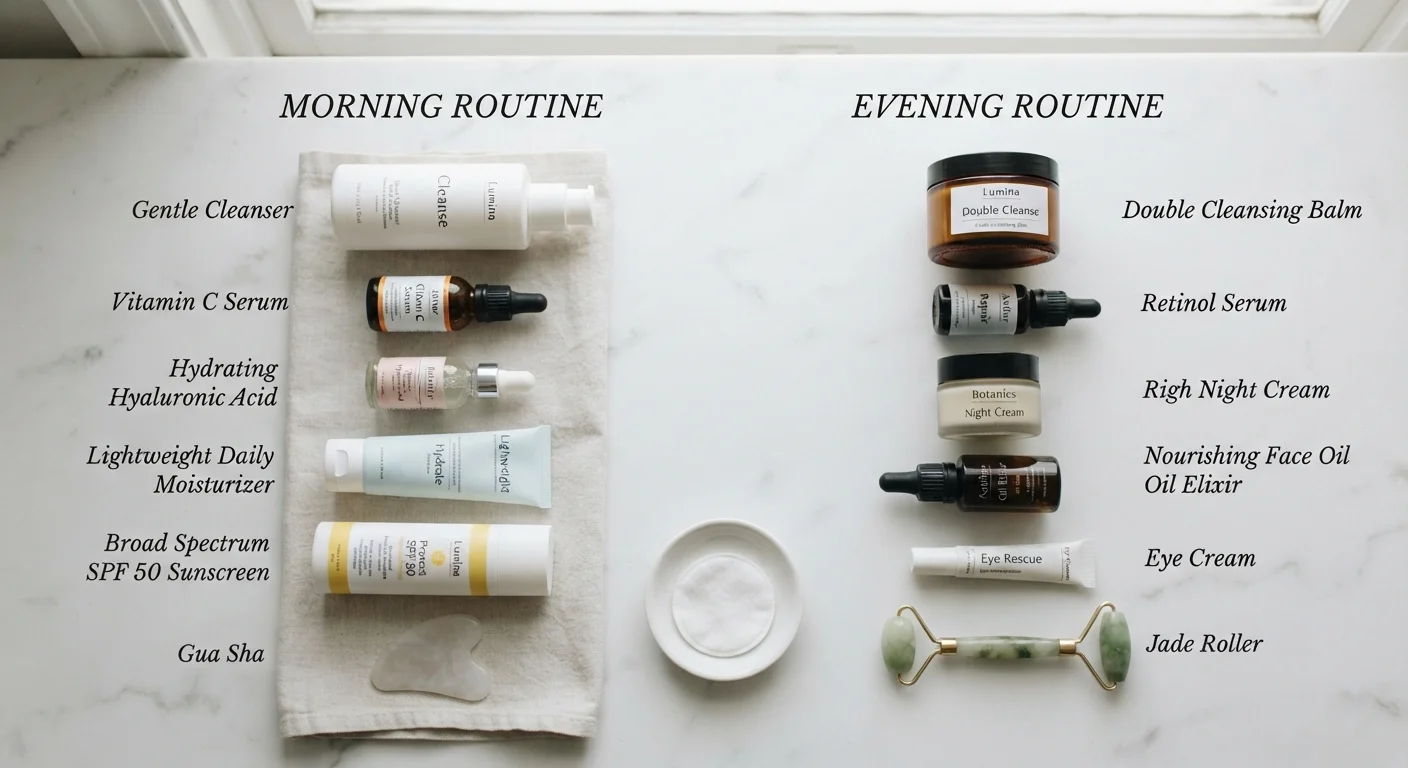
Photo credit: FindersGroove.com | Discover Important Information
In this article
Your skin's needs shift between AM and PM. Here's how to build routines that work with your skin's natural rhythm.
Key Takeaways
- Morning routines should focus on protection - SPF is non-negotiable regardless of skin type.
- Evening routines are the right time for active ingredients like retinoids and exfoliating acids.
- Your skin repairs and regenerates more actively at night, making PM routines especially impactful.
- Double-cleansing in the evening removes makeup and sunscreen that a single wash can miss.
- Layering the same products morning and night is rarely ideal - different goals require different tools.
Why Timing Isn't Just a Preference - It's Biology
Your skin doesn't operate on a flat, unchanging schedule. It follows a circadian rhythm - the same internal clock that governs your sleep, hunger, and energy levels. In the morning, skin ramps up its defenses: sebum production increases, circulation picks up, and the outer barrier is geared toward protecting you from the outside world. By evening, that dynamic shifts. Skin temperature rises slightly, blood flow deepens, and cellular repair processes accelerate. Understanding this biological rhythm is what separates a routine that actually works from one that just feels like a routine.
This is why the advice to use the same products morning and night rarely serves your skin well. It's not about spending more money or collecting more bottles - it's about matching what you apply to what your skin is already doing. To understand exactly what each step in your routine is accomplishing, see our breakdown of what each skincare step actually does.
Morning Routine: Think Protection First
Your AM routine has one primary job: shield your skin from the stressors it's about to face. That means UV radiation, environmental pollution, wind, and even blue light from screens. Every product you layer in the morning should support that defense or at minimum not undermine it.
| Criterion | Morning Routine | Evening Routine |
|---|---|---|
| Primary goal | Protection and defense | Repair and renewal |
| Cleanse intensity | Gentle, light cleanse | Thorough, often double cleanse |
| SPF required | Yes - essential step | No - skip at night |
| Active ingredients | Antioxidants (vitamin C) | Retinoids, AHAs, BHAs |
| Moisturizer weight | Lightweight, non-greasy | Richer, more occlusive |
| Skin biology at this time | Defensive mode, barrier active | Repair mode, cell turnover peaks |
A morning cleanse is typically gentler than an evening one - you're mostly removing overnight sebum and product residue, not environmental grime. Follow with a lightweight moisturizer that supports your skin barrier, and then - always - a broad-spectrum SPF. Sunscreen isn't a summer-only step or an optional add-on. Dermatologists consistently identify daily SPF use as one of the most impactful long-term skin decisions you can make.
Heavy actives like retinoids and strong exfoliating acids don't belong in most morning routines. Many are photosensitizing, meaning UV exposure after application can increase skin irritation or reduce their effectiveness. Save those for after sunset. If you're still figuring out which steps belong where, building a routine from scratch is a practical place to start.
Evening Routine: Repair, Renew, Restore
Your PM routine begins with removal - and it matters more than most people give it credit for. A single cleanse often isn't enough to fully lift sunscreen, makeup, and the day's pollution layer. A two-step cleanse (an oil-based cleanser followed by a water-based one) ensures your skin is truly clean before you layer on anything else. Skipping this step means your active ingredients are sitting on top of residue rather than reaching skin. Our article on evening makeup removal goes deeper on what this step actually requires.
~11 PM
Peak time for skin cell renewal
Research into skin circadian rhythms suggests cell mitosis (division and renewal) peaks in late evening to early night, supporting the logic of PM-focused actives.
2x
More effective with daily SPF use
Consistent daily sunscreen use is widely cited by dermatologists as one of the most effective long-term strategies for reducing visible skin aging and UV damage.
Once your skin is clean, the PM window is when you bring in the heavy hitters. Retinoids (vitamin A derivatives) encourage cell turnover and are best used at night due to their light sensitivity. Chemical exfoliants like AHAs and BHAs work more effectively on freshly cleansed skin without competition from SPF. Richer moisturizers and barrier-repair ingredients like ceramides and peptides can absorb undisturbed through the night.
The key insight: your skin is already trying to repair itself overnight. Your evening routine is simply working with that process rather than against it. Consistency matters enormously here - routine stability often outperforms product-switching when it comes to real results.
Building Routines That Actually Fit Your Life
Neither routine needs to be elaborate to be effective. A three-step morning routine - gentle cleanser, moisturizer, SPF - and a four-step evening routine - oil cleanse, water cleanse, active serum, moisturizer - can deliver meaningful results when practiced consistently. The right combination also depends on your skin type, which shifts with age, season, hormones, and environment. Understanding those signals helps you adapt intelligently rather than just following a fixed formula. Our guide to understanding your skin type is a useful foundation for any routine-building decision.
The goal isn't a perfect 10-step regimen - it's a sustainable practice that respects your skin's natural rhythms. Two routines, each with a clear purpose, will always outperform a single undifferentiated one. Start simple, stay consistent, and let your skin tell you when it's ready for more.
This article is for general informational and educational purposes only and is not a substitute for professional dermatological advice. If you have specific skin concerns or conditions, consult a qualified skincare professional or dermatologist.

Author
Style & Beauty Editorial Team
Style & Beauty Editorial Team is the collective byline for our editorial team and contributor network. Articles published under this byline or an editorial pen name are researched, written, and reviewed according to our editorial standards for clarity, consistency, and independence before publication.
View all articles →