
Price vs. Value: Why the Cheaper Option Isn't Always the Smarter Buy
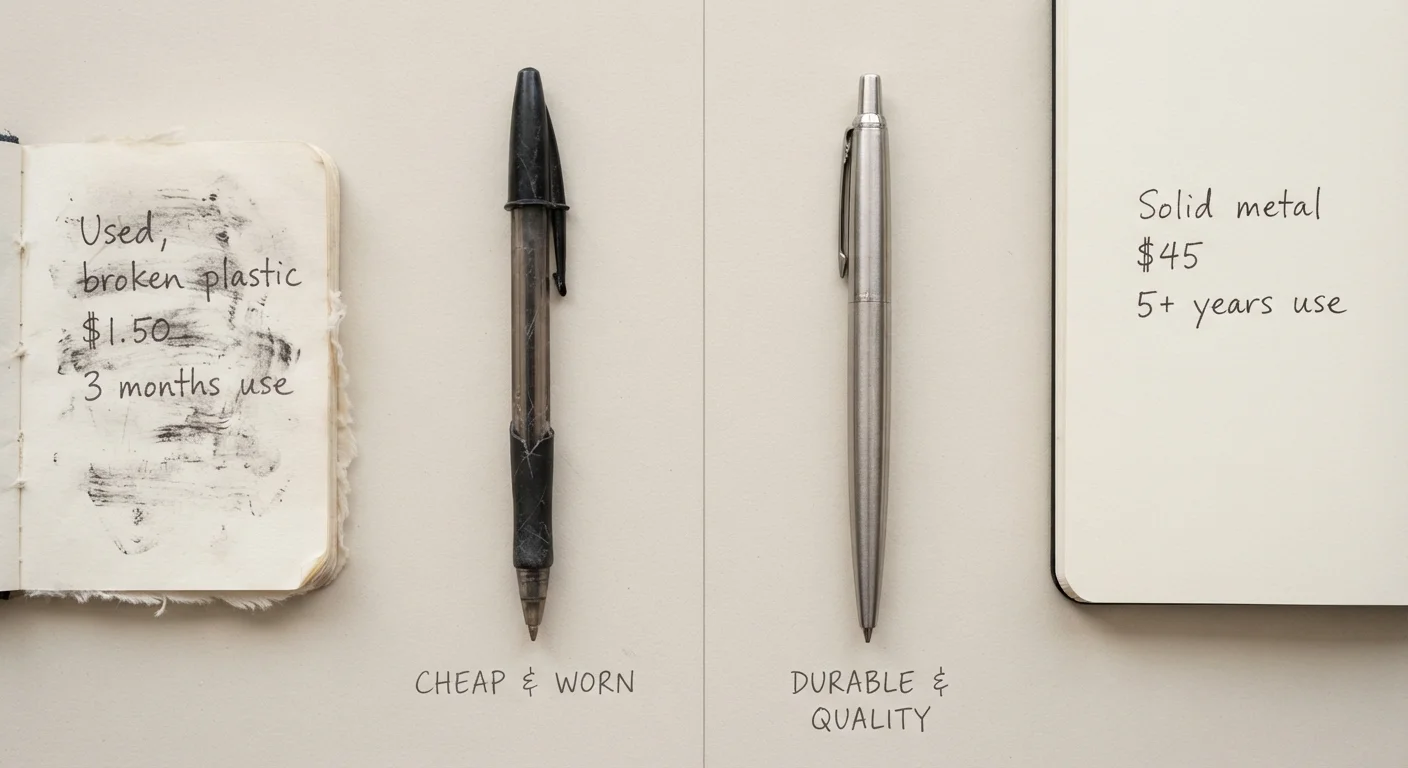
Photo credit: FindersGroove.com | Discover Important Information
In this article
Learn the difference between price and value, and why paying more upfront can sometimes save you money in the long run.
Key Takeaways
- Price is what you pay; value accounts for durability, performance, and total lifetime cost.
- The cheapest option often incurs hidden costs through frequent replacement or poor performance.
- Evaluating cost-per-use is a practical way to compare purchases across price points.
- Higher price does not automatically mean higher value - marketing and brand premium exist.
- Intentional spending means matching purchase quality to how heavily and how long you'll use something.
The Problem With Optimizing for Price Alone
When money feels tight, the instinct to grab the lowest-priced option is understandable. But making price the sole criterion for a purchase decision is a trap that can quietly drain your wallet over time. A $15 pair of headphones that stops working in two months isn't a bargain - it's a $15 lesson in hidden costs.
Price is a number on a tag. Value is everything that number doesn't tell you: how long something lasts, how well it performs, how often you'll need to repair or replace it, and how much satisfaction it actually delivers. These are the factors that determine whether a purchase was genuinely worth making.
This distinction matters especially in categories you interact with daily - footwear, kitchen tools, electronics, or even food. The value-based shopping framework centers on aligning what you spend with what you actually get in return, rather than simply minimizing the upfront number.
~33%
US consumers who regret impulse buys
Survey data from the National Endowment for Financial Education indicates roughly a third of American adults have made impulse purchases they later regretted, many driven by low upfront price.
2-5x
Lifespan difference between quality tiers
Consumer durability research commonly finds that mid-to-high quality versions of everyday goods - footwear, cookware, tools - last two to five times longer than entry-level equivalents under comparable use conditions.
$1,497
Average annual US household spend on apparel
According to the U.S. Bureau of Labor Statistics Consumer Expenditure Survey, the average American household spends nearly $1,500 annually on clothing - a category where cost-per-use thinking can generate significant long-term savings.
How to Evaluate True Value Before You Buy
Shifting from a price mindset to a value mindset requires asking different questions before a purchase. Instead of "What's the lowest I can pay for this?" ask: "What do I need this to do, how often will I use it, and how long does it need to last?"
One of the most practical tools for this is cost-per-use: divide the item's price by the realistic number of uses over its lifetime. A $90 chef's knife used daily for five years works out to fractions of a cent per use. A $20 knife that dulls and needs replacing every six months adds up faster than it appears. Our cost-per-use guide walks through exactly how to run these numbers.
Beyond the math, consider:
- Reliability signals: Independent testing, user reviews with detailed long-term feedback, and material specifications are more informative than brand reputation or price positioning alone.
- Total ownership cost: Maintenance, accessories, consumables (like replacement filters or batteries), and repair availability all affect what you'll ultimately spend.
- Fit for purpose: A product doesn't need to be the most durable version if your use case is occasional. Match quality tier to actual demand - not aspiration.
Set a Use-Frequency Threshold Before You Buy
Before purchasing, estimate how many times per month you'll realistically use an item. If the answer is fewer than four times a month, the case for spending more on durability weakens significantly. Reserve quality investment for items that work hard and often - not aspirational purchases that may sit unused.
When Cheaper Actually Is the Smarter Choice
Value thinking doesn't mean defaulting to expensive. For items you'll use once or twice, store in a drawer, or that have short natural lifespans, paying more rarely pays off. A $4 kitchen sponge and a $15 kitchen sponge will both need replacing within weeks. The $4 option wins on value, not just price.
The same logic applies to trendy or fast-changing categories - fashion items tied to a specific season, tech accessories for a device you'll upgrade soon, or decor you expect to swap out. Spending heavily in these categories bets on a preference you may not hold six months from now. For a deeper look at when each approach makes sense, see buying once well vs. replacing cheaply.
The goal isn't to always spend more. It's to spend deliberately - with an accurate understanding of what a purchase will actually deliver relative to its price. That kind of intentional spending is also closely connected to mindful purchasing habits that reduce impulse decisions and buyer's remorse.
Price Signals and Marketing Noise
One complication: higher prices don't reliably signal higher quality. Pricing reflects many things - manufacturing costs, but also brand equity, marketing spend, retail location, and perceived exclusivity. A well-marketed item can command a significant premium over a functionally equivalent alternative, and that gap represents money you're spending on positioning, not performance.
This is particularly visible in categories like fashion and beauty, where brand identity is a core part of what's being sold. If you value that identity - and some people legitimately do - that's a personal value judgment. But it's worth separating what you're paying for brand from what you're paying for functional quality. Quality is harder to identify than price suggests - and the linked piece breaks down practical signals to look for beyond the label.
The clearest path through the noise is to define what you need a product to do, then evaluate whether evidence - not marketing copy - supports the claim that a given item will do it durably and well. That's the core discipline of price-vs.-value thinking, and it's a skill that compounds across every purchase category.
“The consumer who buys on price alone is most easily manipulated by price. The consumer who understands value buys on their own terms.”
— Consumer finance educators, General principle in financial literacy education
Frequently Asked Questions

Author
Smart Shopping Editorial Team
Smart Shopping Editorial Team is the collective byline for our editorial team and contributor network. Articles published under this byline or an editorial pen name are researched, written, and reviewed according to our editorial standards for clarity, consistency, and independence before publication.
View all articles →