
Value-Based Shopping: A Complete Guide to Spending With Purpose
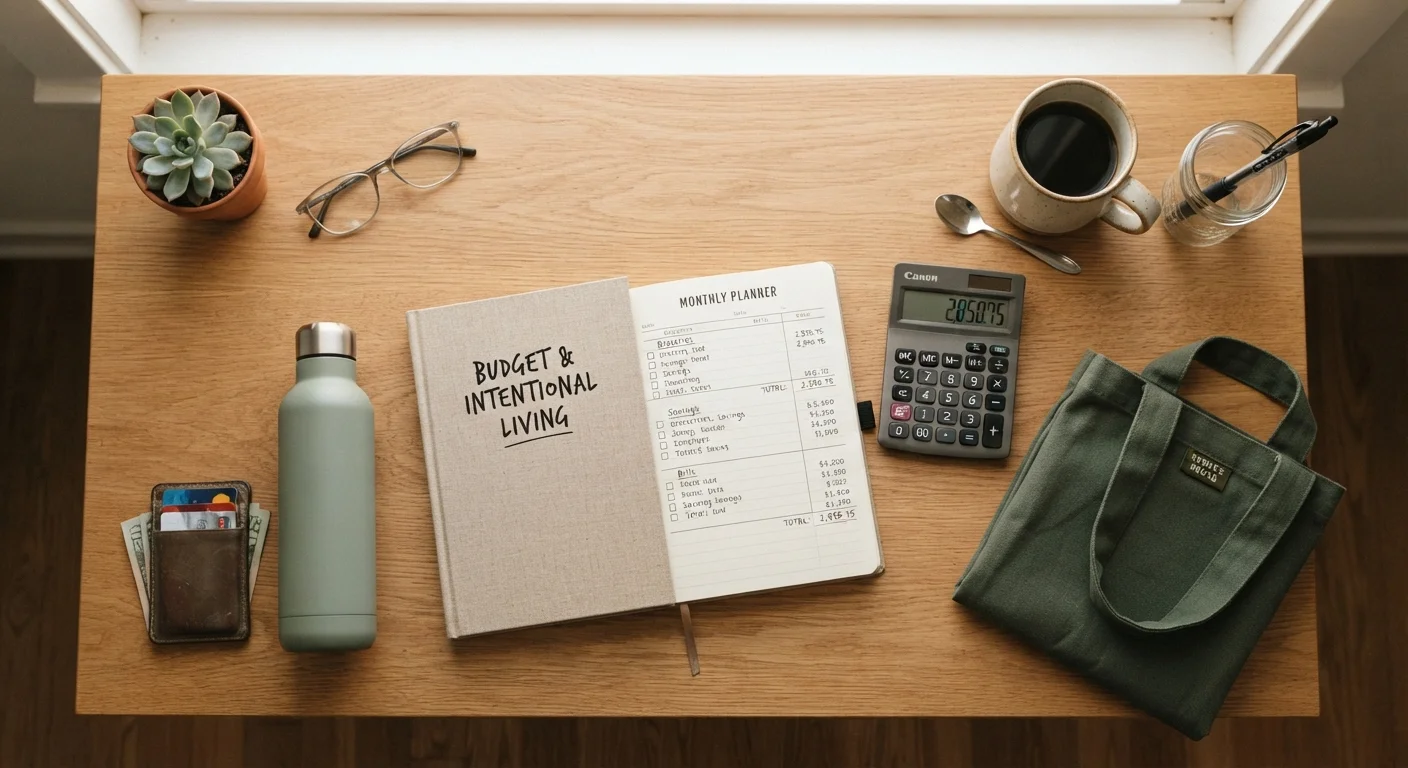
Photo credit: FindersGroove.com | Discover Important Information
In this article
From defining your priorities to evaluating every purchase category, this end-to-end guide covers how to shop with financial intention.
Key Takeaways
- Value-based shopping means measuring purchases against your own defined priorities, not marketing claims.
- Clarifying your values before you shop is more effective than willpower alone.
- Cost-per-use and lifecycle thinking reveal true worth better than sticker price.
- Intentional financial limits protect your priorities from creeping lifestyle inflation.
- Recognizing persuasion tactics - urgency, social proof, targeted ads - is a core shopping skill.
What Value-Based Shopping Actually Means
Value-based shopping is a decision-making framework: you measure every purchase against your stated priorities rather than reacting to price, trend, or convenience. It isn't frugality or minimalism by default - someone who values quality cooking gear and spends accordingly is practicing it just as genuinely as someone who buys almost nothing. The defining move is conscious alignment, not restraint for its own sake.
This stands in contrast to the default consumer mode, where purchase decisions are largely shaped by advertising, social comparison, and habit. For a fuller look at the mindset shift involved, see our introduction to intentional consumption.
70%
Consumers who report impulse buying regret
According to a survey by CreditCards.com, roughly 7 in 10 American adults say they've made an impulse purchase they later regretted.
3-5×
Cost-per-use advantage of durable goods
Consumer research consistently shows that higher-quality durable items can deliver 3-5 times the use-value of lower-cost equivalents replaced frequently.
47%
Adults without a defined household budget
Federal Reserve surveys on household economic wellbeing have found that close to half of US adults do not follow a formal budget, limiting spending intentionality.
Defining Your Personal Spending Priorities
Before evaluating any specific purchase, you need a reference point. Without articulated priorities, every impulse competes equally. A practical starting exercise: list five to ten things your spending actually reflects, then list five to ten things you want your life to reflect. Where those diverge is where value-based shopping does its real work.
Common priority categories include health and wellbeing, meaningful relationships and experiences, environmental impact, financial security, and creative or professional growth. None of these is objectively correct - what matters is that yours are chosen deliberately rather than inherited by default. Our companion guide on building a personal spending philosophy walks through this process in structured detail.
Write your top three spending priorities somewhere visible - a note on your phone, a sticky on your wallet - and check purchases against that list before finalizing. Physical or digital friction disrupts autopilot buying.
Behavioral research on decision-making consistently shows that brief prompts at the point of action are more effective than general intentions formed earlier.
Distinguish between values you hold and values you're performing for others. Purchases motivated by social visibility tend to deliver diminishing satisfaction faster than those tied to personal utility or genuine enjoyment.
Studies on hedonic adaptation show that experiential and functionally useful purchases sustain satisfaction longer than status-signaling acquisitions.
Evaluating Worth Before Every Purchase
Once you have priorities, you need an evaluation method. Three lenses are especially useful:
- Cost-per-use: Divide the price by a realistic estimate of how often you'll use the item. A $120 pan used three times weekly for four years costs far less per use than a $30 pan replaced annually.
- Lifecycle thinking: Consider where the product came from, how long it will last, and what happens when you're done with it. Our article on the full lifecycle of a purchase covers this dimension thoroughly.
- Opportunity cost: Every dollar spent is a dollar not directed elsewhere. Naming that trade-off explicitly - "buying this means less toward my travel fund" - makes preferences concrete rather than abstract.
Run a purchase through all three lenses before committing, especially for anything above a personally defined threshold amount.
Applying Value Thinking Across Purchase Categories
Value-based criteria vary somewhat by category, but the underlying logic stays consistent.
Everyday Consumables
For groceries, personal care, and household staples, the key question is whether a premium genuinely changes your experience or just your perception. Blind preference tests frequently show that branded and generic consumables perform identically in many categories - so spending more here often funds marketing, not quality.
Durables and Electronics
Longevity and repairability matter more than specs you'll rarely use. A device with documented repair support or replacement parts available extends its useful life - and its cost-per-use advantage - significantly.
Clothing and Fashion
Value here depends heavily on your actual lifestyle. A capsule of versatile, well-made pieces worn frequently outperforms a larger wardrobe of rarely-worn items on every financial and environmental measure.
Health and Wellness
Spending that supports consistent, sustainable habits - a gym membership you actually use, kitchen tools that make cooking easier - tends to be high-value by most priority frameworks. This is general information; any health-related purchases involving supplements or devices should be discussed with a qualified healthcare professional.
Apply a Category-Specific Value Test
Before buying in any new category, draft one sentence defining what 'good value' means there specifically. For clothing it might be cost-per-wear; for electronics it might be repairability. A category-specific definition stops you from applying the wrong lens - like judging a kitchen tool by brand prestige rather than how often you'll actually cook.
Setting and Protecting Intentional Financial Limits
Value clarity without budget structure is incomplete. Intentional financial limits aren't restrictions - they're allocations that reflect what you've decided matters. If 15% of discretionary income goes to experiences and 5% to clothing, that ratio embeds your priorities into the mechanics of your finances, removing the need for willpower at the point of sale.
A practical structure: after covering fixed obligations and savings, divide remaining discretionary income into named categories that map to your priorities. Review monthly, adjusting when circumstances change rather than abandoning the structure entirely. For a foundational approach to budgeting that supports this, see our complete budgeting guide.
This article provides general financial information for educational purposes and is not personalised financial advice. Consult a qualified financial professional for guidance suited to your circumstances.
Budget Structures Require Honest Numbers
Named spending categories only work if they're built on accurate income and fixed-expense figures. Overestimating discretionary room is among the most common reasons budgets collapse within weeks. Track actual spending for at least one month before building a priority-based allocation - the real numbers are almost always surprising.
Avoiding the Traps That Undermine Value-Based Decisions
Even well-intentioned shoppers face systematic pressures designed to override considered judgment. The most common:
- Artificial urgency: "Limited time" framing is a standard conversion tactic, not a reliable signal that a purchase is right for you.
- Personalised advertising: Platforms build detailed behavioral profiles to surface products timed to catch you in a receptive state. Understanding how this works - covered in our piece on navigating personalised advertising - makes the influence more visible and easier to resist.
- Greenwashing: Eco-friendly labels vary enormously in substance. Before paying a premium for a sustainability claim, check what it actually certifies. Our greenwashing guide explains what to look for.
- Social comparison: Purchases driven primarily by what peers own or display rarely survive a cost-per-use or priority-alignment check.
The simplest defensive habit: introduce a waiting period - 24 hours for smaller purchases, longer for significant ones - between impulse and transaction. Most urgency evaporates on its own.
Waiting Periods Work - Until They Don't
A 24-hour pause is a reliable pattern-breaker for most impulse purchases, but it can be gamed by your own future self if the underlying priority conflict isn't resolved. If the same category of purchase keeps returning after waiting periods, that's a signal to revisit your budget allocation or priority list - not to tighten willpower indefinitely.

Author
Smart Shopping Editorial Team
Smart Shopping Editorial Team is the collective byline for our editorial team and contributor network. Articles published under this byline or an editorial pen name are researched, written, and reviewed according to our editorial standards for clarity, consistency, and independence before publication.
View all articles →