
Mental Enrichment for Pets: What It Is and Why It's as Important as Exercise
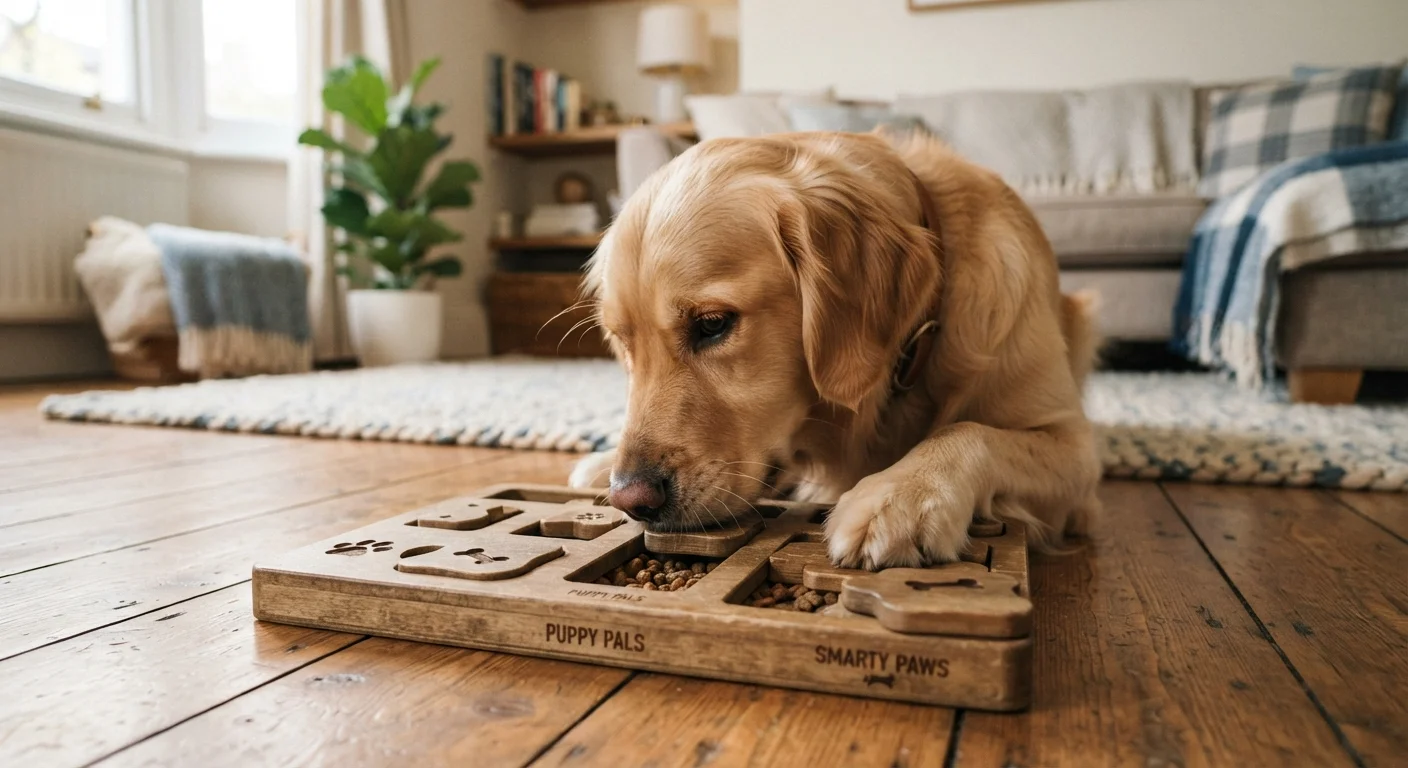
Photo credit: FindersGroove.com | Discover Important Information
In this article
Physical activity alone isn't enough to keep animals healthy. Learn how cognitive stimulation supports behaviour, reduces stress, and improves wellbeing.
Key Takeaways
- Mental enrichment meets cognitive and emotional needs that physical exercise cannot address on its own.
- Boredom and understimulation are common drivers of destructive or anxious pet behaviour.
- Enrichment activities can be simple, low-cost, and woven into everyday routines.
- Dogs, cats, rabbits, birds, and other pets all benefit from species-appropriate mental stimulation.
- Consistent enrichment supports calmer behaviour and a stronger bond between pet and owner.
Why Physical Exercise Alone Isn't Enough
A well-exercised pet isn't necessarily a mentally fulfilled one. Animals evolved to hunt, forage, navigate complex social dynamics, and respond to a constantly changing environment. When daily life consists of little more than meals and walks, a significant portion of their cognitive capacity goes unused - and that gap shows up in their behaviour.
Understimulation is one of the most commonly overlooked contributors to problem behaviours in domestic animals. Excessive barking, destructive chewing, repetitive pacing, and compulsive grooming are often the result of a brain with nowhere productive to direct its energy. These aren't signs of a "bad" pet - they're signs of an unmet need. Understanding this reframes enrichment not as a luxury, but as a core component of responsible animal care, on par with nutrition and veterinary visits.
Enrichment Needs Vary by Species and Individual
What counts as stimulating for one animal may be irrelevant or even stressful for another. A technique that works well for dogs may not translate directly to cats, rabbits, birds, or reptiles. Always tailor enrichment to your pet's species, age, and temperament - and introduce new activities gradually to gauge comfort and interest.
What Mental Enrichment Actually Looks Like
Enrichment doesn't require expensive equipment or elaborate setups. At its core, it means giving your pet opportunities to engage their senses, solve problems, and express species-typical behaviours in a safe environment. It can be broken into a few broad categories:
- Feeding enrichment: Hiding food in puzzle feeders, scattering kibble in grass, or using lick mats encourages natural foraging behaviour and slows eating.
- Sensory enrichment: Introducing novel smells (safe herbs, new objects from outside), sounds, or textures provides low-effort brain stimulation.
- Cognitive challenges: Puzzle toys, training sessions, and hide-and-seek games with treats require active problem-solving.
- Social enrichment: Structured interaction with humans, other pets, or carefully managed new environments builds social confidence and reduces fear responses.
- Environmental enrichment: Rearranging furniture, adding climbing structures for cats, or varying walking routes for dogs keeps surroundings novel and engaging.
Weaving these into a consistent daily routine makes enrichment sustainable rather than sporadic.
40%+
Dogs showing behaviour problems linked to boredom
Animal behaviour researchers consistently identify understimulation as a leading contributor to common problem behaviours in domestic dogs, including destructive chewing and excessive barking.
5-10 min
Minimum effective daily enrichment per session
Veterinary behaviourists note that even brief, focused enrichment sessions - repeated consistently - can produce measurable reductions in stress-related behaviour over time.
3x
Increase in positive social behaviour in enriched environments
Studies on shelter animals have shown that structured environmental enrichment significantly increases calm, social, and exploratory behaviour compared to standard housing conditions.
The Behavioural and Emotional Benefits
Research in animal behaviour consistently supports the link between cognitive engagement and emotional wellbeing. Enriched environments are associated with reduced cortisol levels (a stress hormone), lower rates of stereotypic or repetitive behaviours, and greater behavioural flexibility - meaning animals adapt more calmly to new situations.
For pet owners, these benefits translate into a calmer, more engaged companion who is less likely to develop anxiety-driven habits. If your pet already shows signs of stress, enrichment is one helpful layer of support - though it works best alongside a broader understanding of stress triggers and supportive strategies specific to your animal.
“An animal's behavioural needs are as real as its nutritional needs. Ignoring them doesn't make them go away - it just means they get expressed in ways owners find inconvenient or distressing.”
— Dr. Karen Overall, Veterinary behaviourist and author of works on clinical behavioural medicine in animals
Training sessions also double as enrichment. Positive reinforcement training challenges dogs to focus, learn associations, and earn rewards through effort - all of which engage the brain deeply and reinforce the human-animal bond simultaneously.
Making Enrichment Work for Your Pet
Matching enrichment to your specific animal matters. A border collie needs different challenges than a senior Labrador; a Bengal cat requires more intense stimulation than a laid-back domestic shorthair. Breed tendencies, age, health status, and individual personality all shape what enrichment looks like in practice.
Start by observing what naturally captures your pet's attention. Where do they sniff longest on walks? What textures do they investigate? These cues reveal their preferences and point toward enrichment formats they'll find genuinely engaging rather than stressful or boring.
Rotate Activities to Keep Things Novel
Pets habituate quickly to the same enrichment presented repeatedly. Rotating puzzle toys, varying walking routes, and introducing new scents periodically preserves the novelty that drives engagement. You don't need to buy more - cycling through what you already have is often sufficient.
A well-designed environment also plays a supporting role. Thoughtful setup - including safe spaces, visual access to the outdoors for cats, and appropriate hiding spots - forms the backdrop against which enrichment activities do their best work. Our guide to setting up a comfortable home environment covers this foundational layer in detail.
This article provides general educational information about pet care and is not a substitute for professional veterinary or animal behaviour advice. If your pet is displaying significant behavioural or emotional changes, consult a licensed veterinarian or certified animal behaviourist.
Frequently Asked Questions

Author
Pets & Animal Life Editorial Team
Pets & Animal Life Editorial Team is the collective byline for our editorial team and contributor network. Articles published under this byline or an editorial pen name are researched, written, and reviewed according to our editorial standards for clarity, consistency, and independence before publication.
View all articles →