
Tyre Pressure and Why Getting It Wrong Costs More Than You Think
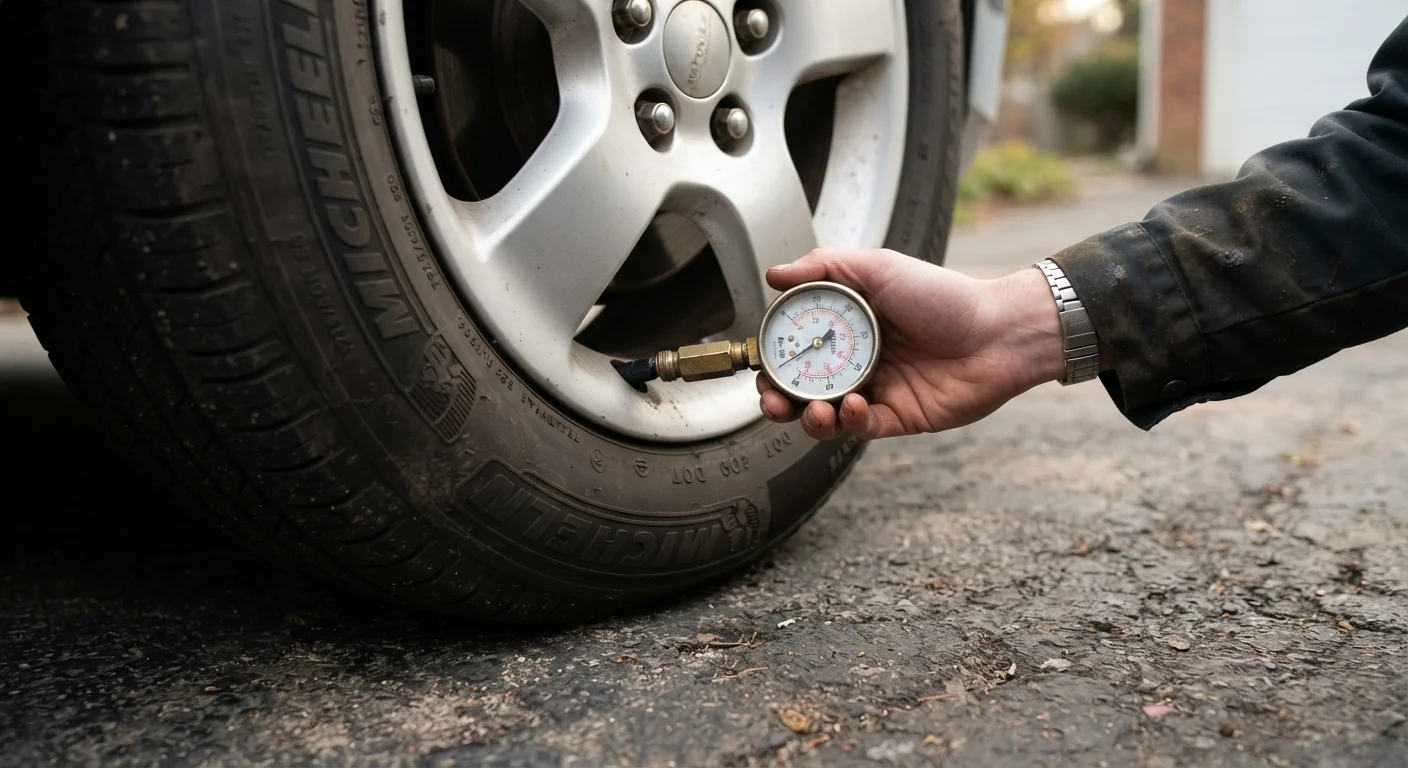
Photo credit: FindersGroove.com | Discover Important Information
In this article
Under- or over-inflated tyres affect fuel economy, handling, and tyre lifespan. Learn how pressure works and how to maintain it correctly.
Key Takeaways
- Your vehicle's correct tyre pressure is printed on a sticker inside the driver's door jamb, not on the tyre sidewall.
- Under-inflated tyres can reduce fuel economy by up to 3% for every 1 PSI drop across all four tyres.
- Over-inflation makes tyres more vulnerable to damage from road hazards and reduces braking grip.
- Tyre pressure drops naturally by about 1 PSI for every 10°F decrease in ambient temperature.
- Checking pressure monthly takes less than five minutes and costs nothing beyond a basic gauge.
What Tyre Pressure Actually Controls
Tyre pressure governs how your tyre's contact patch - the portion actually touching the road - behaves. At the right pressure, the contact patch is sized and shaped to give you predictable braking, cornering, and traction. Deviate in either direction and that patch distorts, creating performance and wear problems that compound over time.
Under-inflation spreads the contact patch, bowing the tyre's sidewalls and making the outer tread edges carry disproportionate load. Over-inflation rounds the tyre outward, concentrating wear on the centre strip and reducing the rubber actually gripping the road. Neither scenario is how the tyre was engineered to work.
These aren't abstract engineering concerns - they translate directly to money spent on fuel, replacement tyres, and occasionally repairs after a handling failure. As part of the ongoing costs of car ownership that catch new drivers off guard, tyre wear from poor pressure management is one of the most preventable.
~1 PSI
Pressure drop per 10°F temperature decrease
A widely cited guideline from tyre industry and automotive safety sources, explaining why winter drives often find tyres softer than expected.
Up to 3%
Fuel economy reduction from under-inflation
The US Department of Energy estimates that tyre under-inflation is a consistent contributor to avoidable fuel waste across the US vehicle fleet.
~20%
Potential reduction in tyre lifespan from chronic under-inflation
Tyre industry guidance suggests significant chronic under-inflation can cut usable tread life by roughly this proportion, accelerating replacement costs.
The Real Cost of Getting It Wrong
The US Department of Energy has noted that under-inflated tyres can reduce fuel economy by approximately 0.2% for every 1 PSI drop in pressure across all four tyres, with some estimates reaching up to 3% total impact when multiple tyres are significantly low. Over a year of daily driving, that fuel waste adds up to a meaningful dollar figure without the driver ever noticing why.
Tyre lifespan takes an even bigger hit. Industry guidance suggests that running tyres 20% below their recommended pressure can cut tread life by nearly the same proportion. Given that a full set of tyres represents a substantial out-of-pocket expense, maintaining correct pressure is one of the highest-return maintenance habits available to any driver.
Handling consequences are harder to quantify but potentially more serious. An under-inflated tyre generates excess heat, which can weaken the internal structure over time and increase the risk of a blowout at highway speeds. Over-inflated tyres transmit more road impact to the suspension and are more likely to be damaged by potholes or debris. Both scenarios interact with the everyday driving habits that quietly wear down your vehicle.
Set a Monthly Pressure Check Reminder
Pick a consistent date - the first of the month works well - and set a phone reminder. Checking pressure takes under five minutes and costs nothing if you use a gauge you already own. Doing it first thing in the morning before any driving gives you the most accurate cold reading.
How to Check and Correct Pressure Correctly
You need a tyre pressure gauge - either a basic pencil-style gauge or a digital model - and access to an air source. Most gas stations have air pumps, and many auto parts stores offer free air. The process itself is straightforward:
- Check cold. Park the car for at least three hours before measuring. Driving heats the air inside tyres, raising pressure temporarily and giving a falsely elevated reading.
- Find your target PSI. Look at the sticker on the inside of the driver's door jamb or consult your owner's manual. Ignore the number on the tyre sidewall - that's the tyre's maximum capacity, not your vehicle's recommendation.
- Remove the valve cap from each tyre, press the gauge firmly onto the valve stem, and read the result. A hiss means the seal wasn't tight - retry.
- Add or release air as needed. Most pump nozzles can add air directly. To release air, press the small pin inside the valve stem with a fingernail or pen cap.
- Replace valve caps. They prevent dirt from entering the valve and aren't just decorative.
For a broader view of how this fits into routine maintenance, see the practical guide to tyre pressure, tread depth, and when to replace.
Front and Rear Pressures May Differ
Many vehicles specify different pressures for front and rear tyres, particularly on performance vehicles or those with rear weight bias. Always check both axles separately against the door jamb sticker rather than assuming all four tyres share the same target PSI.
When Pressure Alone Isn't Enough
Correct pressure is one pillar of tyre health, but it works best alongside rotation and alignment. Uneven wear patterns you notice after inflating properly - feathering, one-sided wear, cupping - usually point to alignment or balance issues that pressure alone can't fix. The guide to tyre rotation, balancing, and alignment explains what each service does and when it's due.
It's also worth revisiting commonly held beliefs about car care. Many drivers assume that tyre pressure only matters when a warning light comes on - a misconception addressed in car ownership myths that keep costing people money. TPMS (Tyre Pressure Monitoring System) lights typically activate only when pressure has already dropped significantly below the safe threshold, meaning the damage is already being done before the warning appears.
Making pressure checks a monthly habit - calendared, habitual, and quick - is among the simplest ways to protect a significant investment. The gauge costs a few dollars, the time cost is under five minutes, and the payoff compounds across every tank of fuel and every mile of tread life.
Frequently Asked Questions

Author
Autos & Driving Editorial Team
Autos & Driving Editorial Team is the collective byline for our editorial team and contributor network. Articles published under this byline or an editorial pen name are researched, written, and reviewed according to our editorial standards for clarity, consistency, and independence before publication.
View all articles →