
Tyre Rotation, Balancing, and Alignment: How Each One Works
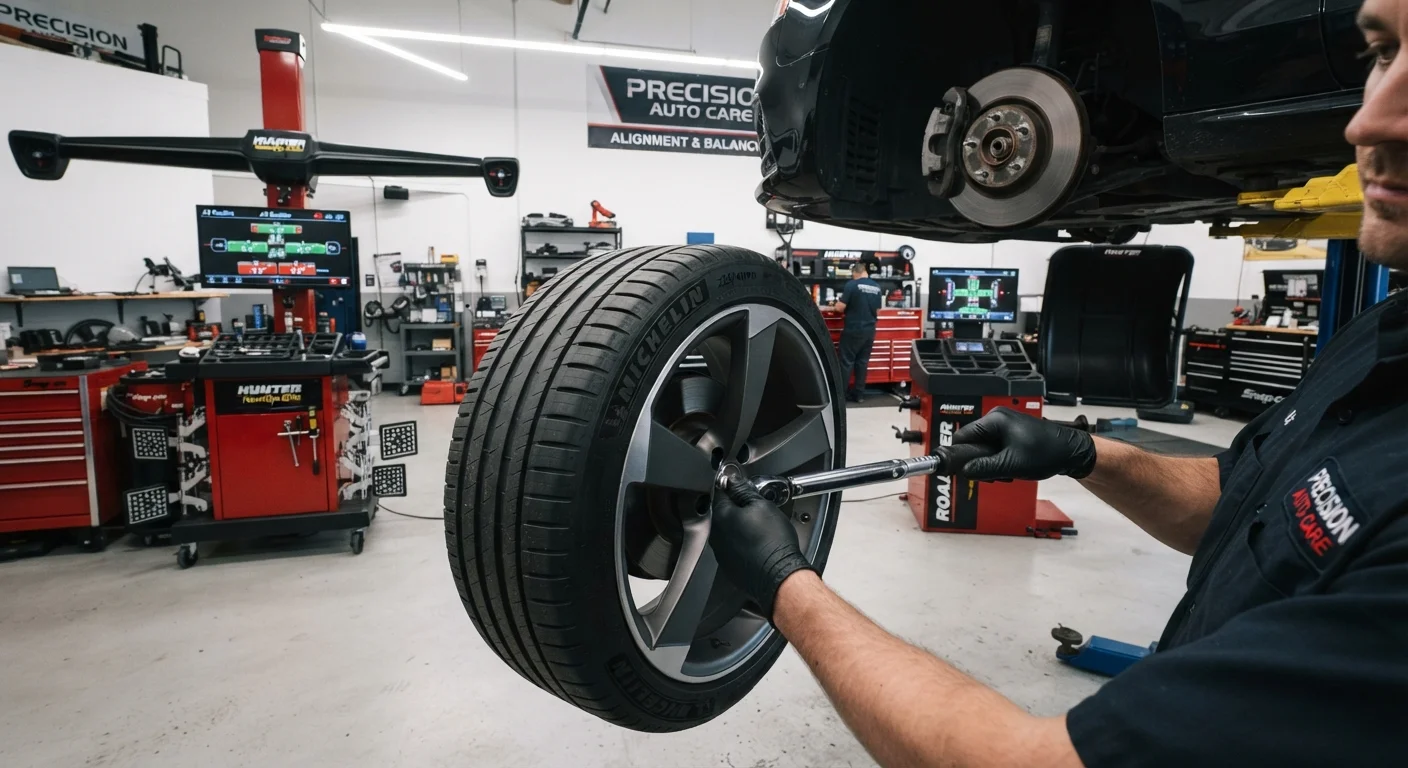
Photo credit: FindersGroove.com | Discover Important Information
These three services are often confused or bundled together. Learn what each does, how often it's needed, and the signs you're overdue.
What Each Service Actually Does
Three services. Three different jobs. Confusion between them is understandable - shops sometimes bundle them, and the names all involve wheels - but they address completely separate issues.
| Rotation interval | Every 5,000-7,500 miles (check your owner's manual) |
| Balancing interval | Every 12,000-15,000 miles or when vibration occurs |
| Alignment interval | Every 2 years or after any significant impact |
| Rotation patterns | Forward cross, rearward cross, X-pattern, side-to-side |
| Alignment angles adjusted | Camber, toe, and caster |
| Common trigger for balancing | Steering wheel vibration at highway speeds |
Tyre Rotation
Front tyres on a front-wheel-drive vehicle steer and drive, so they wear faster than the rear tyres. Rotation moves each tyre to a position where it experiences different forces, spreading wear evenly across all four. Common patterns include the forward cross (fronts go straight back, rears cross to front), the rearward cross (rear go straight forward, fronts cross to back), and the X-pattern for symmetrical tyres. Directional tyres - those with a one-way tread pattern - can only move front-to-back on the same side.
Wheel Balancing
A tyre and wheel assembly is never perfectly uniform. Minor weight differences cause the assembly to wobble as it spins, sending vibration up through the steering wheel and seat. A balancing machine spins the wheel, identifies heavy spots, and a technician attaches small adhesive or clip-on counterweights to compensate. This is a separate process from rotation - a tyre can be rotated without being balanced, and vice versa.
Wheel Alignment
Alignment is about geometry. The angles at which your tyres contact the road - camber (vertical tilt), toe (inward or outward pointing), and caster (steering axis angle) - gradually shift from road impacts, worn suspension components, and general use. A technician uses a laser or camera-based alignment rack to measure current angles against the manufacturer's specifications, then adjusts tie rods and other components to bring them back into spec. See our tyre pressure and tread depth guide for how alignment connects to tyre wear patterns.
Signs You're Overdue - and How Often to Act
Each service produces its own warning signs. Knowing which symptom points where saves you from guessing at the service counter.
Tyre Rotation
Moving each tyre to a different position on the vehicle (front to rear, side to side, or diagonally) to even out wear. Because driving forces differ at each wheel position, rotating tyres extends their usable life.
Wheel Balancing
The process of equalising the weight distribution around a mounted tyre-and-wheel assembly. A technician uses a balancing machine to detect imbalances and attaches small counterweights to correct them.
Wheel Alignment
Adjusting the angles at which your tyres contact the road - including camber, toe, and caster - so they sit perpendicular and parallel as the manufacturer intended. Misalignment causes uneven wear and pulling.
Camber
The inward or outward tilt of a tyre when viewed from the front of the car. Excessive camber causes the inner or outer tread edge to wear faster than the rest of the tyre.
Toe
Whether the fronts of the tyres point inward (toe-in) or outward (toe-out) relative to the vehicle's centreline. Incorrect toe is the most common cause of rapid, feathered tyre wear.
Runout
Any wobble or deviation in a tyre or wheel as it spins. Lateral runout is side-to-side movement; radial runout is up-and-down. Both contribute to vibration and uneven contact with the road.
Rotation: Every 5,000-7,500 Miles
Most vehicle manufacturers recommend rotating tyres at every oil change interval or roughly every 5,000-7,500 miles. The clearest sign you've waited too long: visible uneven wear between your front and rear tyres when you inspect the tread. Because uneven wear is cumulative, consistent rotation matters more than catching up after neglect. See our seasonal maintenance checklist for how to fold rotation into your broader car care rhythm.
Balancing: Every 12,000-15,000 Miles or After Impact
Watch for a steering wheel that vibrates at specific highway speeds (typically 55-70 mph) and smooths out above or below that range. Vibration felt more through the seat than the wheel often points to a rear-wheel imbalance. Any time you hit a significant pothole or curb, have the affected wheel checked - the impact can shift the counterweights or bend the wheel slightly.
Alignment: Every Two Years or After Any Hard Impact
Your vehicle needs an alignment check if: it pulls consistently to one side on a flat, straight road; the steering wheel sits off-centre when driving straight; or you notice rapid wear on just one edge of a tyre. A single hard kerb strike or pothole can throw alignment out of spec immediately. Skipping alignment checks is one of the most common ways drivers unknowingly destroy tyres ahead of schedule.
These Three Services Are Not Interchangeable
Rotation, balancing, and alignment are frequently lumped together in service packages, but each targets a completely different problem. Getting one done does not substitute for the others. Check your vehicle's owner's manual for the specific intervals recommended by the manufacturer, as they vary by drivetrain type (FWD, RWD, AWD) and tyre construction.
For newer drivers building out a full maintenance schedule, our beginner's car maintenance guide explains how to track service intervals without relying entirely on dashboard warnings.

Author
Autos & Driving Editorial Team
Autos & Driving Editorial Team is the collective byline for our editorial team and contributor network. Articles published under this byline or an editorial pen name are researched, written, and reviewed according to our editorial standards for clarity, consistency, and independence before publication.
View all articles →