
Manual vs. Automatic Transmission: What Driving Each Actually Teaches You
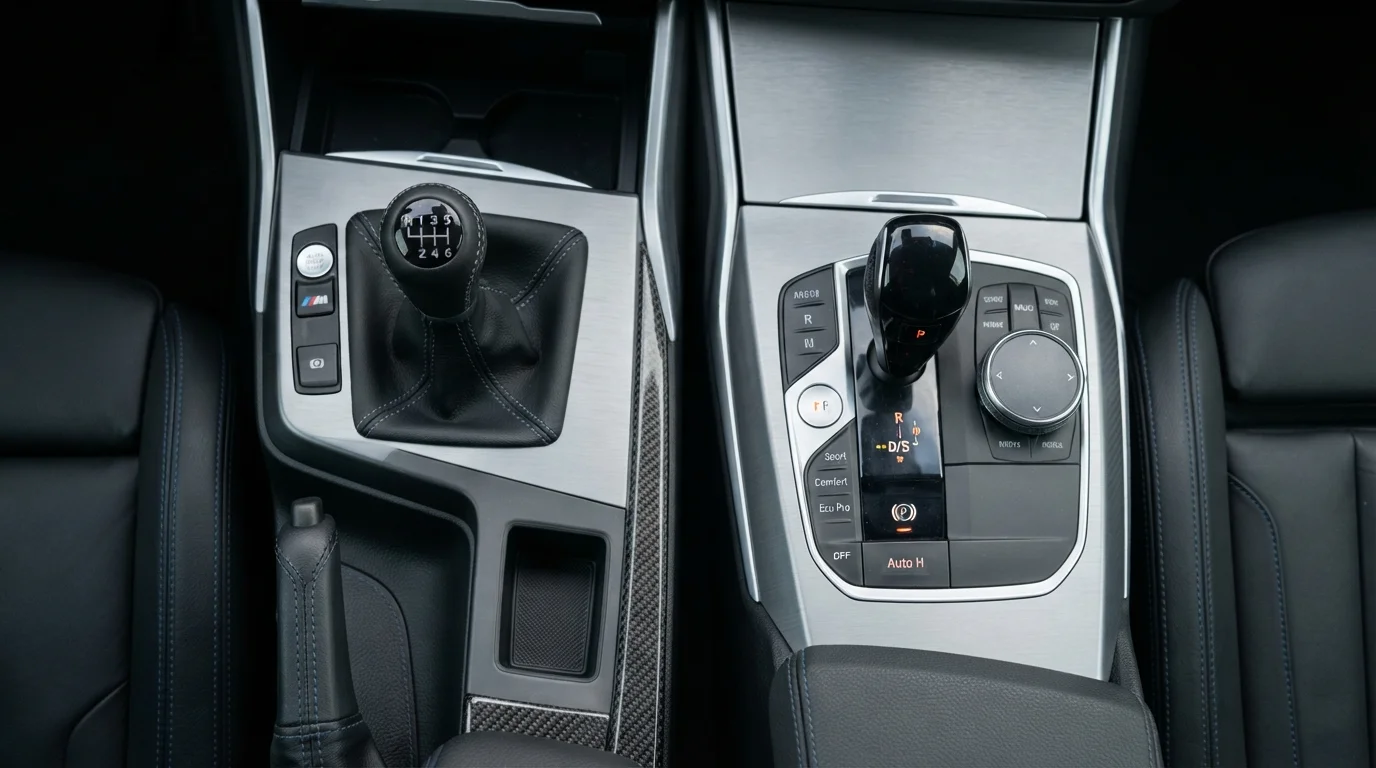
Photo credit: FindersGroove.com | Discover Important Information
In this article
Beyond preference, each transmission type shapes how drivers engage with the road. Explore the real trade-offs in skill and control.
Key Takeaways
- Manual transmissions demand more driver engagement, which can deepen situational awareness over time.
- Automatic transmissions lower the cognitive load of driving, freeing attention for traffic and navigation.
- Each transmission type involves distinct maintenance considerations and long-term cost patterns.
- Learning manual first gives drivers flexibility; automatic-only drivers may face limitations in some vehicles.
- Neither transmission is objectively safer - driving habits and attention levels matter far more.
What Each Transmission Actually Asks of You
A manual transmission - also called a stick shift or standard - requires the driver to operate a clutch pedal and select gears manually using a gear lever. An automatic handles gear changes on its own, using a hydraulic or electronic system to match engine speed to road conditions.
The mechanical difference is significant, but the more interesting gap is cognitive. Manual driving forces you to monitor engine RPM (revolutions per minute), anticipate load changes on hills, and coordinate three limbs simultaneously. That constant feedback loop trains drivers to think ahead rather than react. Automatic driving removes that layer, but it doesn't make you a passive operator - it redirects attention outward, toward traffic patterns, speed management, and road-reading.
Neither mode is inherently superior. They develop different instincts, and understanding those differences helps you become a more complete driver regardless of which you primarily use. For a broader look at developing proactive road habits, see our guide to defensive driving.
The Skills Manual Driving Builds
Learning to drive a manual transmission is genuinely difficult at first. Stalling in traffic, rolling back on hills, and grinding gears are nearly universal beginner experiences. But the struggle is instructive.
- Engine awareness: You learn to hear and feel when the engine is laboring or over-revving, which translates directly into better throttle control in any vehicle.
- Anticipatory thinking: Because downshifting or upshifting at the wrong moment is immediately noticeable, manual drivers tend to read traffic further ahead.
- Vehicle control on grades: Hill starts require precise clutch-throttle balance, a skill that builds genuine confidence in low-traction situations.
- Flexibility: A driver licensed on manual can operate virtually any vehicle they encounter - including older work trucks, international rentals, and certain emergency vehicles.
The trade-off is real cognitive cost, especially in stop-and-go traffic. Clutch fatigue is a genuine issue on long urban commutes, and habits like riding the clutch can quietly accelerate wear on your drivetrain.
Practice Hill Starts Early
If you're learning manual, prioritize hill starts in a low-traffic area before tackling busy roads. The clutch-throttle coordination required is the single hardest skill to develop under pressure. Getting comfortable with it in a controlled setting prevents the anxiety that causes many new manual drivers to stall in dangerous locations. Once it becomes muscle memory, your overall confidence behind the wheel improves noticeably.
The Skills Automatic Driving Develops
Automatic transmissions are sometimes dismissed as the "easier" option, but that framing misses the point. Removing gear management doesn't make driving passive - it simply changes where your mental bandwidth goes.
- Environmental scanning: Without clutch and gear management to monitor, drivers often develop stronger habits for reading intersections, pedestrian behavior, and merging traffic.
- Smooth throttle and brake control: Modern automatics respond precisely to pedal input, encouraging drivers to develop nuance rather than abrupt inputs.
- Confidence in complex environments: Urban environments with heavy signaling, lane changes, and pedestrians are genuinely easier to manage when gear selection is handled automatically.
This makes automatic driving well-suited to the kind of multi-variable situations covered in our city streets vs. highway driving breakdown. The limitation is narrower vehicle compatibility and, for some drivers, a reduced sense of mechanical connection to the car.
| Manual Transmission | Automatic Transmission | |
|---|---|---|
| Driver engagement level | High - active gear and clutch management | Lower - system handles gear changes |
| Learning curve | Steep initially, especially in traffic | Gentler; quicker to basic proficiency |
| Vehicle compatibility | Broader - most vehicles worldwide | Narrower - limited to auto-equipped vehicles |
| Urban driving comfort | More fatiguing in stop-and-go traffic | More comfortable in dense urban conditions |
| Maintenance complexity | Clutch wear tied to driver habit | More complex electronics; fluid service key |
| Mechanical skill developed | Engine RPM, torque feel, anticipation | Throttle refinement, environmental scanning |
Maintenance, Costs, and Long-Term Ownership
Transmission type has real implications for ownership costs, though the gap has narrowed as automatic technology has improved.
Manual transmissions have fewer electronically controlled components, and clutch replacement - while not cheap - is a well-understood, serviceable repair. However, clutch wear is directly tied to driver technique. Poor habits accelerate replacement timelines significantly.
Automatic transmissions require periodic fluid changes and are more complex to rebuild if they fail. Modern continuously variable transmissions (CVTs) and dual-clutch automatics have their own specific service intervals that vary by manufacturer - your owner's manual is the authoritative source for those details. As with any drivetrain component, following recommended service intervals is the most cost-effective approach.
Fuel efficiency differences between the two types have largely disappeared in modern vehicles - many current automatics match or exceed manual fuel economy figures, particularly with more gears and smarter shift programming.
This article is for general informational purposes only. For vehicle-specific maintenance guidance, consult a qualified mechanic or your vehicle's service documentation.

Author
Autos & Driving Editorial Team
Autos & Driving Editorial Team is the collective byline for our editorial team and contributor network. Articles published under this byline or an editorial pen name are researched, written, and reviewed according to our editorial standards for clarity, consistency, and independence before publication.
View all articles →