
Wired Earbuds vs Wireless Earbuds: The Trade-offs Nobody Talks About
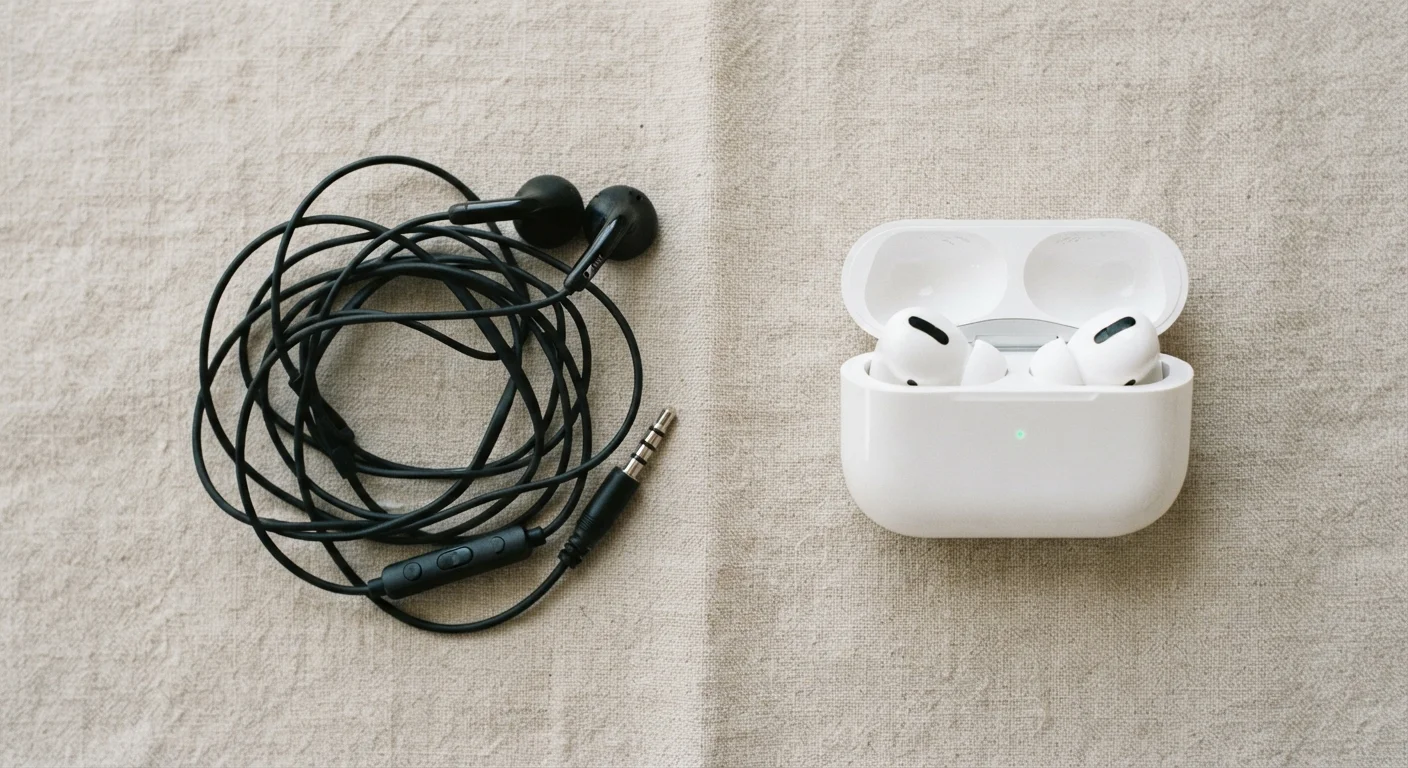
Photo credit: FindersGroove.com | Discover Important Information
In this article
Latency, battery drain, audio fidelity, and cost — a clear-eyed look at what you genuinely gain and lose when you go wireless.
Key Takeaways
- Wired earbuds deliver audio with zero latency and no battery dependency, making them reliable for focused listening and video work.
- Wireless earbuds use Bluetooth, which introduces a small but real audio delay that can affect video sync and gaming.
- Battery life is wireless earbuds' most significant practical constraint - earbuds typically offer 5-8 hours per charge.
- Wired earbuds are generally more affordable at equivalent audio quality levels, with no charging ecosystem to maintain.
- Wireless earbuds add convenience features like active noise cancellation and transparency mode that wired models rarely include.
- Neither option is universally superior - the right choice depends on your primary use cases and daily habits.
The Latency Question: Does Wireless Lag Matter?
Latency - the delay between a sound being sent and you hearing it - is where wired earbuds have an undeniable technical edge. A standard 3.5mm wired connection has near-zero latency, typically under 5 milliseconds. Bluetooth introduces delay that varies by codec: the common SBC codec can reach 150-220ms, while newer codecs like aptX Low Latency and LC3 (used in Bluetooth LE Audio) can bring this down to 40ms or less.
In practice, that difference matters most for specific tasks. Watching video with earbuds where the audio noticeably trails the visuals is genuinely distracting. Casual music listening, however, is largely unaffected - your brain doesn't have a reference point to detect absolute delay, only relative offset between audio and video.
Gamers are most affected. Even 80ms of audio lag changes how responsive a game feels. If real-time audio feedback matters to your workflow, wired remains the cleaner choice.
| Criterion | Wired Earbuds | Wireless Earbuds |
|---|---|---|
| Latency | Near-zero (<5ms) | 40-220ms depending on codec |
| Battery required | None | 5-8 hrs per charge |
| Audio compression | Uncompressed signal | Codec-dependent compression |
| Freedom of movement | Limited by cable length | Full freedom within ~10m |
| Noise cancellation | Rarely available | Common on mid/high tier |
| Durability over time | Cable wear is main failure point | Battery degradation over cycles |
| Typical price entry point | Lower for equivalent drivers | Higher due to added hardware |
| Setup complexity | Plug and play | Pairing and firmware required |
Battery Reality: The Hidden Cost of Going Wireless
Wireless earbuds require charging. That sentence sounds obvious until you've missed a call because one earbud died mid-afternoon, or realized your charging case itself is empty before a long flight.
Most wireless earbuds deliver 5-8 hours of playback per charge, with the case adding 2-4 additional charges. That's genuinely useful, but it introduces a new daily habit: remembering to charge. Wired earbuds require zero battery management - they draw power from the source device or none at all.
5-8 hrs
Typical wireless earbud playback per charge
Most consumer wireless earbuds on the market deliver between 5 and 8 hours of continuous playback before needing to return to the case.
300-500
Charge cycles before notable battery degradation
Lithium-ion batteries in wireless earbuds typically show significant capacity reduction after 300-500 full charge cycles, a standard characteristic of the battery chemistry.
~40ms
Latency floor with modern low-latency Bluetooth codecs
Codecs like aptX Low Latency and the newer LC3 standard can reduce Bluetooth audio delay to around 40ms, compared to 150-220ms on older SBC connections.
There's also a longer-term consideration. Lithium-ion batteries degrade over charge cycles. After 300-500 full cycles, most wireless earbuds will hold noticeably less charge than when new - a lifespan concern that simply doesn't apply to wired models. This connects to a broader point about price versus long-term value that's easy to overlook at the point of purchase.
Audio Fidelity and What Actually Affects Sound Quality
Bluetooth audio compression is real. When audio is transmitted wirelessly, it's encoded, transmitted, and decoded - a process that can introduce artifacts, particularly at lower bitrates. High-quality codecs like aptX HD or LDAC reduce this significantly, but they require both the earbuds and the source device to support the same codec, which isn't always guaranteed.
Wired connections transmit uncompressed audio, which is a measurable advantage on paper. In everyday listening conditions, however, most people won't notice the difference between a good Bluetooth codec and a wired connection - especially with compressed streaming audio (like standard Spotify streams) as the source. The audio quality floor for wireless has risen considerably in recent years.
Driver quality, ear tip fit, and the acoustic design of the earbud shell have a larger practical impact on what you hear than wired versus wireless alone. A well-designed wireless earbud will outperform a poorly designed wired one every time.
Codec Compatibility Is a Two-Way Street
A wireless earbud advertising LDAC or aptX HD support only delivers those higher-quality audio streams if the source device - your phone or laptop - also supports the same codec. iPhone users, for example, are limited to AAC over Bluetooth regardless of what codecs the earbuds support. Before assuming you'll get the best possible wireless audio, check what your source device actually outputs.
Convenience Features and the Ecosystem Trade-off
Wireless earbuds have quietly accumulated features that wired earbuds simply can't replicate: active noise cancellation, transparency (hear-through) modes, touch controls, automatic ear-detection, and voice assistant integration. For many users, these features define the daily experience more than raw audio specs do.
That said, every added feature is also a potential point of failure. Firmware updates can introduce bugs. Touch controls can misfire in rain. Pairing can occasionally stutter when switching between devices. Wired earbuds, by contrast, are remarkably simple: plug in, listen, unplug.
There's also a wireless protocol consideration worth noting. Bluetooth operates in the 2.4GHz band, which means it shares spectrum with Wi-Fi and other devices. In dense environments - crowded transit, apartment buildings - connection stability can occasionally degrade. If you're curious how wireless protocols interact in device-dense environments, our overview of wireless protocols behind smart devices covers the underlying dynamics. Wired connections are immune to this entirely.
Ultimately, choosing between wired and wireless earbuds is less about which is objectively better and more about which trade-offs fit your actual life. Think about where you use earbuds most, whether charging discipline is realistic for you, and whether the feature set of wireless genuinely adds value to your routine - or just adds complexity.

Author
Tech & Gadgets Editorial Team
Tech & Gadgets Editorial Team is the collective byline for our editorial team and contributor network. Articles published under this byline or an editorial pen name are researched, written, and reviewed according to our editorial standards for clarity, consistency, and independence before publication.
View all articles →