
Fitness Trackers and Sleep Data: What the Numbers Can and Cannot Tell You
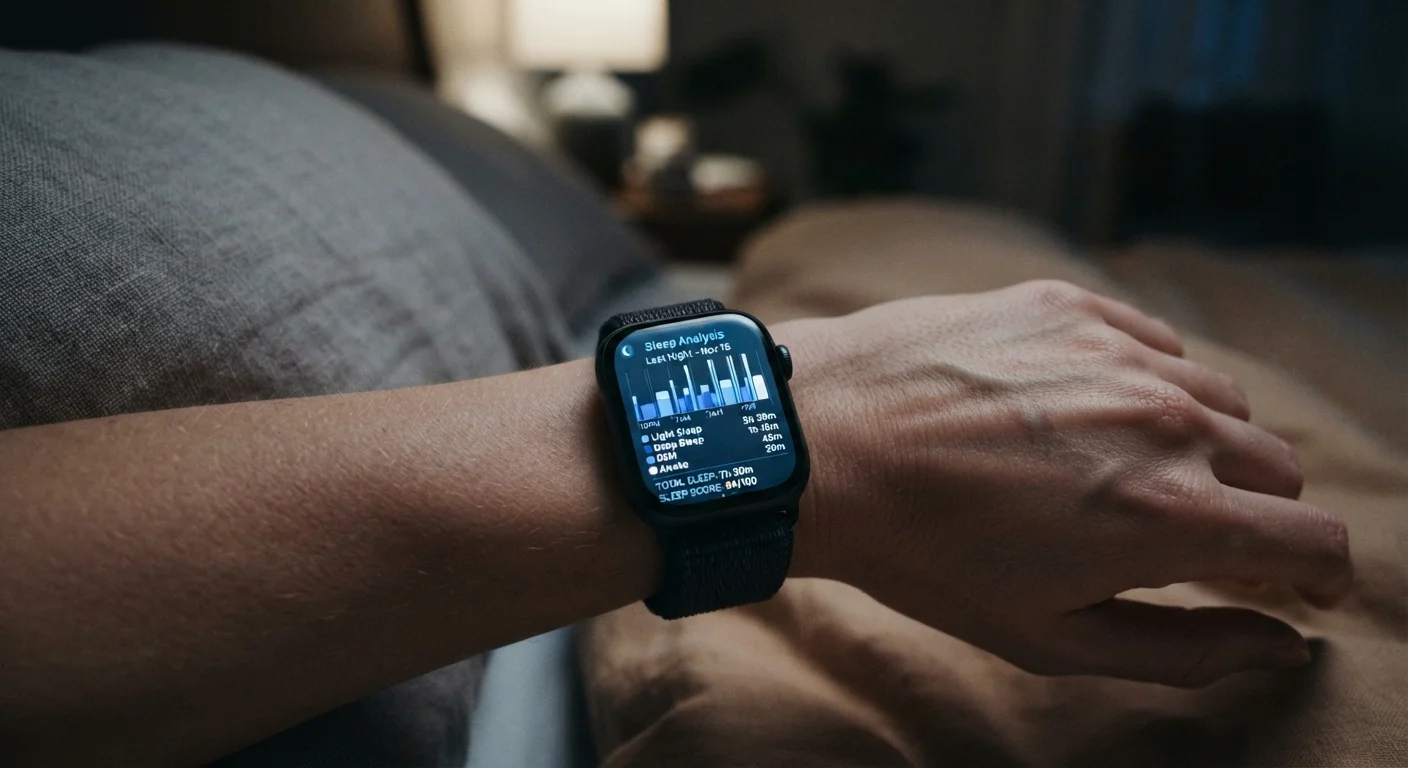
Photo credit: FindersGroove.com | Discover Important Information
In this article
Wrist-based sleep tracking is convenient but limited. Understand what metrics are reliable, which are estimated, and how to use the data wisely.
Key Takeaways
- Wrist-based trackers estimate sleep stages using movement and heart rate, not direct brain activity measurement.
- Total sleep duration is the most reliable metric consumer devices provide; sleep stage breakdowns are far less accurate.
- Obsessing over tracker data can itself disrupt sleep quality - a pattern researchers call orthosomnia.
- Trackers are most useful as long-term trend tools, not precise nightly diagnostic instruments.
- No consumer wearable replaces a clinical sleep study for diagnosing sleep disorders.
How Consumer Sleep Tracking Actually Works
When your fitness tracker claims you got 47 minutes of deep sleep last Tuesday, it didn't measure your brain. It measured your wrist. Understanding that distinction is the starting point for using sleep data intelligently.
Consumer wearables primarily rely on two signals: accelerometry (detecting movement) and photoplethysmography (PPG - the optical heart rate sensor that reads blood flow through your skin). Some devices also incorporate skin temperature sensors or SpO₂ (blood oxygen) readers to refine estimates. Algorithms then translate these signals into sleep metrics using models trained on larger population datasets.
The gold standard for sleep analysis, by contrast, is polysomnography - a clinical sleep study that directly records brain wave activity (EEG), eye movement, and muscle tone. Consumer devices cannot replicate this. They infer sleep architecture from indirect physiological proxies, which introduces meaningful uncertainty at the individual level.
That's not a design flaw so much as a physical limitation. Still, knowing what a tracker is actually sensing helps you read its output with appropriate skepticism - and still find it genuinely useful. For a parallel on how raw numbers can mislead without context, see our look at how screen-time metrics work.
Common Myths About Sleep Tracker Data
Fitness tracker marketing tends to present sleep scores and stage breakdowns with a precision the underlying technology doesn't fully support. Here's what the evidence actually says about the most widespread misconceptions.
Myth
My tracker accurately identifies how much time I spend in deep sleep and REM sleep each night.
Fact
Sleep stage classification by consumer wearables is estimated and carries significant error rates at the individual level; total sleep time is far more reliable.
Multiple peer-reviewed studies comparing consumer wearables to polysomnography have found that while devices perform reasonably well at distinguishing sleep from wakefulness, their ability to correctly classify specific sleep stages - particularly slow-wave (deep) sleep versus light sleep - is considerably weaker. A 2020 analysis published in Nature and Science of Sleep found substantial variability in stage-detection accuracy across devices. Your tracker's REM percentage on a given night should be read as a rough estimate, not a clinical measurement.
Myth
A high sleep score from my tracker means I'm fully recovered and ready to perform at my best.
Fact
Sleep scores are proprietary algorithms that weight metrics differently across brands; no score has been validated as a reliable predictor of next-day performance.
Each wearable manufacturer develops its own sleep score formula, and those formulas are not publicly disclosed or independently validated against objective performance measures. Two trackers worn simultaneously on the same wrist can produce noticeably different scores for the same night. Treat a sleep score as one rough summary of movement and heart rate patterns - not a calibrated wellness readout.
Myth
If my tracker says I slept eight hours, I definitely got enough rest.
Fact
Sleep duration and sleep quality are related but distinct. A tracker logging eight hours doesn't confirm those hours were restorative.
A device primarily detects stillness and reduced heart rate, which correlates with sleep - but lying still while awake, or sleeping lightly due to disrupted breathing, can produce duration numbers that look fine on paper. Self-reported measures of how you actually feel upon waking remain a useful complement to device data, not something to dismiss in favor of it.
Myth
Tracking my sleep every night will help me sleep better.
Fact
For some people, daily engagement with sleep data increases anxiety and paradoxically worsens sleep - a phenomenon researchers call orthosomnia.
The term orthosomnia - coined by sleep researchers to describe a preoccupation with achieving perfect tracker data - highlights a real risk of consumer sleep monitoring. When people prioritize hitting a device's target over listening to their own body cues, it can introduce performance anxiety around sleep itself. Research published in the Journal of Clinical Sleep Medicine documented cases in which patients' clinical sleep complaints were directly tied to fixating on wearable data. Awareness is useful; obsession is counterproductive.
Myth
My fitness tracker can detect sleep apnea.
Fact
Some devices include SpO₂ monitoring that may flag irregular oxygen patterns, but consumer trackers are not approved diagnostic tools for sleep apnea or any other sleep disorder.
Sleep apnea diagnosis requires clinical assessment, including the measurement of breathing cessations and their physiological effects. While blood oxygen dips visible in tracker data might prompt a useful conversation with a doctor, a wearable cannot confirm, quantify, or rule out a sleep disorder. If snoring, gasping episodes, or excessive daytime fatigue are concerns, discuss them directly with a healthcare provider rather than relying on device output. For context on how consumer tech metrics can both illuminate and mislead, see our overview of the pros and cons of app-based tracking.
~78%
Sleep vs. wake detection accuracy
A 2019 review in Sleep Medicine Reviews found consumer wearables correctly identified sleep versus wakefulness roughly 78% of the time on average, with much lower accuracy for individual sleep stages.
~1 in 3
U.S. adults report regularly insufficient sleep
The CDC has reported that approximately one-third of U.S. adults sleep fewer than the recommended seven hours per night on average.
Using Sleep Data Without Letting It Use You
The most practical approach treats your tracker as a trend logger, not a nightly report card. Look at patterns across weeks: Are you consistently getting under seven hours on worknights? Does your resting heart rate spike after late-night screen time? Those directional signals are where wearable data earns its keep.
Resist the urge to optimize each individual night's score. Checking your sleep data the moment you wake up and feeling anxious about a low deep-sleep percentage is, ironically, a stress response that can worsen sleep over subsequent nights. If you notice that reviewing your data is making you more anxious rather than less, consider switching to weekly reviews only.
When Tracker Anxiety Becomes the Problem
If reviewing your nightly sleep data has become a source of stress rather than useful insight, it may be doing more harm than good. Consider moving to weekly trend reviews or taking a short break from monitoring altogether. Sleep quality is influenced by psychological state, and preoccupation with metrics can feed the very problem you're trying to solve.
If you suspect a genuine sleep disorder - persistent insomnia, frequent waking, loud snoring, or excessive daytime sleepiness - your tracker data can be a useful conversation starter with a clinician, but it is not a diagnosis. A qualified healthcare professional can order the appropriate assessments. Device data alone should never replace that evaluation.
For related reading on tech behaviors that affect sleep quality more broadly, explore our piece on tech habits that quietly undermine your sleep and the evidence behind blue light and sleep disruption.
This article is for general informational purposes only and is not medical advice. If you have concerns about your sleep health, consult a qualified healthcare professional.

Author
Tech & Gadgets Editorial Team
Tech & Gadgets Editorial Team is the collective byline for our editorial team and contributor network. Articles published under this byline or an editorial pen name are researched, written, and reviewed according to our editorial standards for clarity, consistency, and independence before publication.
View all articles →