
The Pros and Cons of App-Based Screen Time Tracking
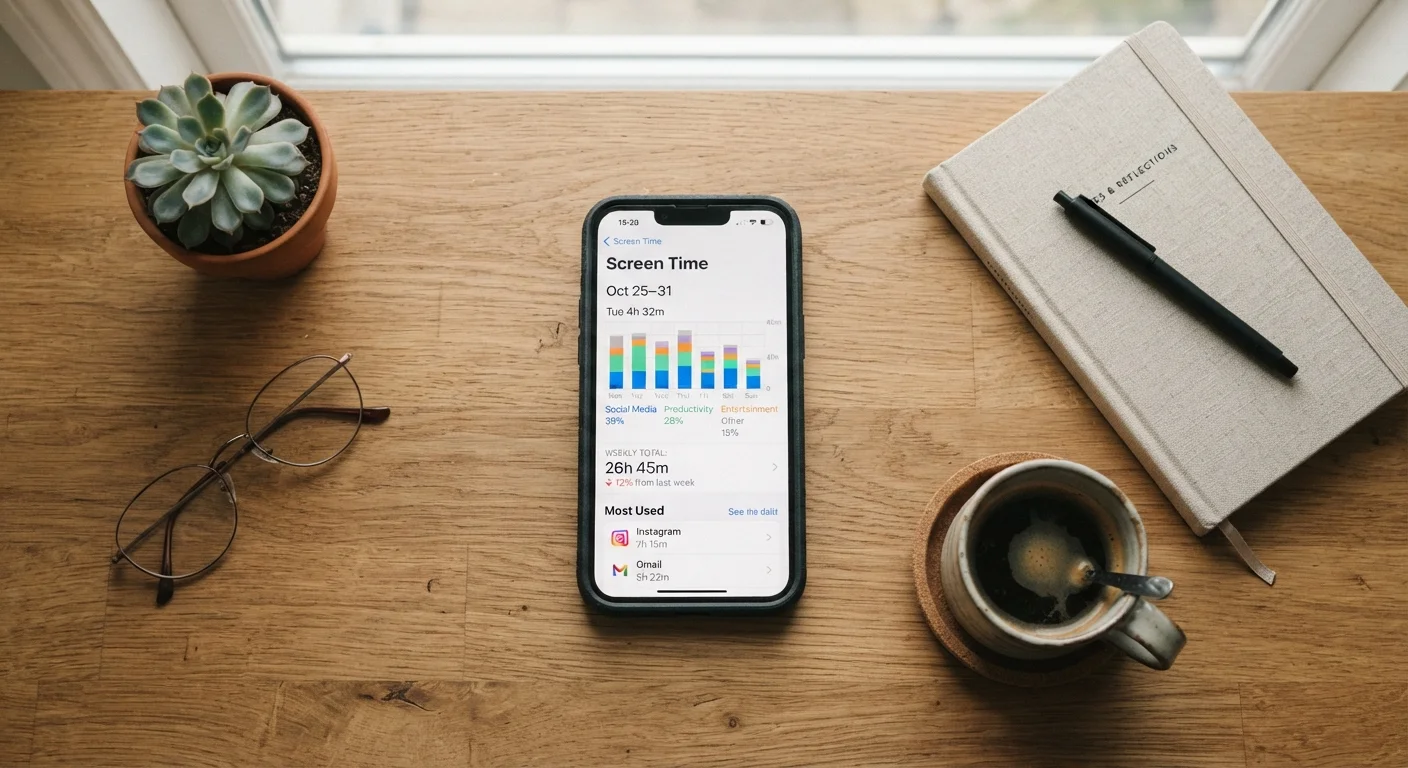
Photo credit: FindersGroove.com | Discover Important Information
In this article
Built-in screen time tools promise self-awareness, but they come with real limitations. A balanced look at what tracking does and doesn't deliver.
Key Takeaways
- App-based screen time tracking surfaces usage patterns that most people genuinely underestimate.
- Data awareness is a starting point, not a solution - behavior change still requires intentional effort.
- Built-in trackers often misclassify how time is spent, treating all app use as equivalent.
- Limits and downtime schedules can be bypassed, reducing their reliability as true guardrails.
- Tracking works best as one tool in a broader approach to digital wellness, not a standalone fix.
Creates genuine awareness of underestimated usage
Most people believe they use their phones less than they actually do. A concrete weekly total - broken down by app - often produces a meaningful moment of recognition that self-reporting alone cannot.
Low friction to start using
Because these tools are built into the operating system, there's no app to download, account to create, or setup process to navigate. The data is available by default, which removes a real adoption barrier.
Can reinforce intentional scheduling habits
Downtime features and app timers, when used thoughtfully, can help anchor existing intentions - for instance, keeping social apps off-limits during work hours for someone already motivated to focus.
Weekly summaries support gradual behavior reflection
A consistent weekly digest creates a rhythm of review that, over time, can reveal trends - gradual increases in usage around stressful periods, for example - that single-day snapshots would miss.
Treats all screen time as equivalent
A tracker cannot distinguish between a video call with a family member and forty minutes of passive feed scrolling - both register as app time. This limits the data's usefulness for understanding quality of use.
App limits are easily and frequently bypassed
Most systems present an override prompt when a limit is reached, requiring only a single tap to dismiss. For users relying on these limits as hard guardrails, this effectively renders them optional.
Only covers one device in a multi-screen life
Phone-based tracking has no visibility into time spent on laptops, tablets, or televisions. Users who shift usage across devices may see phone numbers drop without any genuine reduction in total screen time.
Can generate anxiety without actionable direction
For some users, seeing high usage totals produces stress or shame without providing any guidance on what to change or how. Data without a framework for interpretation can be counterproductive.
Passive monitoring rarely produces lasting change
Research on self-monitoring tools in behavioral contexts consistently shows that awareness alone is insufficient - change requires specific intentions, concrete strategies, and environmental adjustments beyond the tracker itself.
What App-Based Screen Time Tracking Actually Does
Most major mobile operating systems now ship with built-in screen time dashboards. These tools log how long you spend in each app, track how often you pick up your device, and can send weekly usage summaries. Some let you set daily app limits or schedule "downtime" windows where certain categories are blocked.
The appeal is real: before these tools existed, most people had no reliable way to audit their own device habits. Behavioral research consistently shows that people underestimate their phone use - often by a significant margin. Seeing a concrete number can be genuinely clarifying, especially when it conflicts with your self-perception.
For a broader look at how raw numbers translate (or fail to translate) into meaningful insight, see how researchers distinguish passive scrolling from purposeful use.
Creates genuine awareness of underestimated usage
Most people believe they use their phones less than they actually do. A concrete weekly total - broken down by app - often produces a meaningful moment of recognition that self-reporting alone cannot.
Low friction to start using
Because these tools are built into the operating system, there's no app to download, account to create, or setup process to navigate. The data is available by default, which removes a real adoption barrier.
Can reinforce intentional scheduling habits
Downtime features and app timers, when used thoughtfully, can help anchor existing intentions - for instance, keeping social apps off-limits during work hours for someone already motivated to focus.
Weekly summaries support gradual behavior reflection
A consistent weekly digest creates a rhythm of review that, over time, can reveal trends - gradual increases in usage around stressful periods, for example - that single-day snapshots would miss.
Where the Data Falls Short
The limitations of screen time tracking are structural, not just cosmetic. The biggest problem is that these tools count time spent, not how that time was used. Twenty minutes reading a long-form article and twenty minutes scrolling a social feed register identically. This flattening of context means the numbers can mislead as easily as they inform.
Limits are also soft in practice. Most systems allow users to override scheduled restrictions with a tap - which means someone who lacks the impulse control to step away from an app is also the person most likely to override the block. For families monitoring children's use, this is a more significant issue than it is for self-monitoring adults.
There's also the question of cross-device blind spots. A screen time tool on your phone has no visibility into laptop, tablet, or smart TV usage - giving you a partial picture that may feel more complete than it actually is.
Treats all screen time as equivalent
A tracker cannot distinguish between a video call with a family member and forty minutes of passive feed scrolling - both register as app time. This limits the data's usefulness for understanding quality of use.
App limits are easily and frequently bypassed
Most systems present an override prompt when a limit is reached, requiring only a single tap to dismiss. For users relying on these limits as hard guardrails, this effectively renders them optional.
Only covers one device in a multi-screen life
Phone-based tracking has no visibility into time spent on laptops, tablets, or televisions. Users who shift usage across devices may see phone numbers drop without any genuine reduction in total screen time.
Can generate anxiety without actionable direction
For some users, seeing high usage totals produces stress or shame without providing any guidance on what to change or how. Data without a framework for interpretation can be counterproductive.
Passive monitoring rarely produces lasting change
Research on self-monitoring tools in behavioral contexts consistently shows that awareness alone is insufficient - change requires specific intentions, concrete strategies, and environmental adjustments beyond the tracker itself.
The Psychological Dimension
Tracking your behavior changes it - a principle from psychology often called the observer effect. For some people, the weekly summary creates enough friction to prompt reflection and genuine adjustment. For others, it produces either anxiety about numbers or a kind of performative optimization (avoiding an app not because it's harmful, but because it inflates the stat).
There's also a risk that the tool becomes a substitute for deeper self-examination. Watching a number go down can feel like progress even when underlying habits and motivations haven't changed. This mirrors a dynamic observed in other tracking contexts - see how budgeting apps can obscure the habits and emotions driving overspending.
Tracking Is a Starting Point, Not a Solution
Screen time data tells you what happened - it doesn't explain why, and it doesn't prescribe what to do next. The most productive way to use these tools is as a conversation-starter with yourself about your intentions and whether your habits reflect them. If the numbers trouble you, the next step is examining the context behind them, not just trying to reduce the total.
If you want a structured way to move from raw data to real habit assessment, a self-check for healthier device habits offers a practical starting framework.
Getting More From the Tools You Already Have
Screen time data becomes more useful when you treat it as a prompt for questions rather than a verdict. When you see your weekly summary, ask what the high-usage apps actually delivered: Did they reduce stress, maintain a relationship, or support a creative project? Or did you open them out of boredom and feel worse afterward?
Similarly, the tracking function of these tools is more reliable than the restriction function. Using the data to identify two or three specific usage patterns worth changing - and then intervening through environmental design (charging your phone outside the bedroom, removing an app from the home screen) - tends to be more durable than relying on in-app limits.
3-4 hrs
Average daily smartphone use among US adults
Industry analytics firms tracking aggregate mobile usage patterns have reported average daily smartphone screen time in the range of three to four hours for US adults, though individual variation is substantial.
~50%
Degree to which people underestimate phone use
Studies examining self-reported versus device-logged usage have found that people tend to underestimate their actual phone use by roughly half, highlighting why external tracking can be valuable.
Screen time tracking sits in the same category as other self-monitoring tools covered across everyday devices - genuinely useful when paired with clear intentions, but limited when treated as a solution in itself. Much like fitness trackers and sleep data, the value depends on understanding what the numbers can and cannot actually tell you.

Author
Tech & Gadgets Editorial Team
Tech & Gadgets Editorial Team is the collective byline for our editorial team and contributor network. Articles published under this byline or an editorial pen name are researched, written, and reviewed according to our editorial standards for clarity, consistency, and independence before publication.
View all articles →