
Minimal Routines vs Elaborate Regimens: What the Evidence Suggests
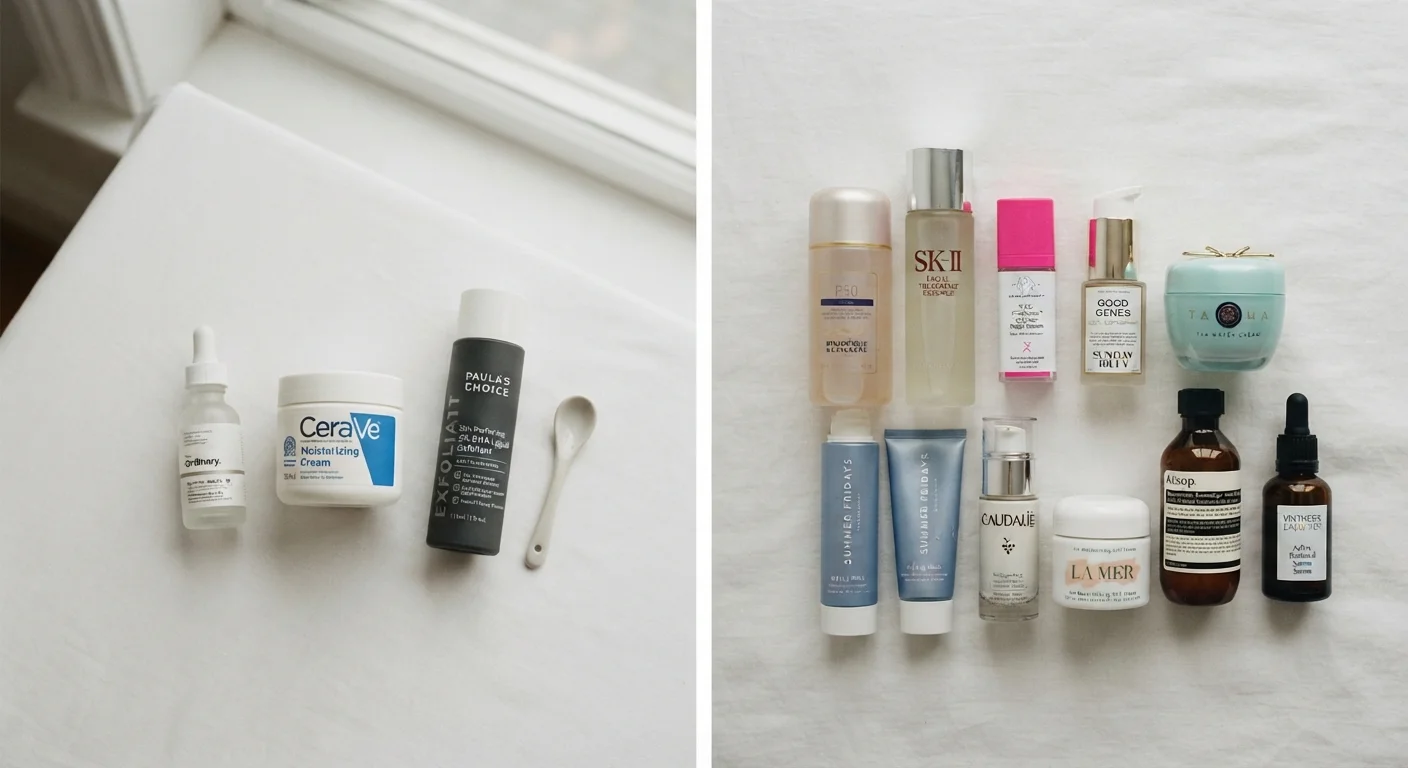
Photo credit: FindersGroove.com | Discover Important Information
In this article
Is a 10-step routine better than a 3-step one? A look at what complexity adds — and where it stops helping.
Key Takeaways
- Consistency with a few well-chosen steps often outperforms a complex routine applied inconsistently.
- Skin barrier health is a core goal of any routine; over-layering can disrupt it.
- Elaborate regimens add real value only when each step has a clear, non-duplicated purpose.
- A minimal routine reduces decision fatigue and increases the chance you'll actually stick with it.
- The best routine complexity is the one that matches your lifestyle, skin concerns, and schedule.
The Core Question: Does Complexity Actually Help?
The skincare industry has done a masterful job convincing us that more steps equal more results. But dermatological research tells a more nuanced story. The skin barrier - the outermost layer responsible for keeping moisture in and irritants out - functions best when it isn't overwhelmed. Studies suggest that applying too many active ingredients simultaneously can compromise this barrier, leading to redness, sensitivity, and breakouts rather than improvement.
That doesn't mean elaborate routines are inherently bad. It means every step needs a job to do. A 10-step routine where three products share the same function and two actives counteract each other isn't sophisticated - it's redundant. Want to understand what each step is actually contributing? See what each skincare step actually does before adding anything new.
What Minimal Routines Do Well
A stripped-back routine - think cleanser, moisturizer, and SPF in the morning; cleanser and a targeted treatment at night - removes a surprising number of variables. Fewer products mean fewer potential irritants, a lower chance of ingredient conflicts, and a simpler diagnostic process if your skin reacts to something.
Crucially, minimal routines are far easier to maintain. Research across behavior-change disciplines consistently finds that habit formation is more fragile when the behavior feels burdensome. Doing three reliable steps every night for six months will almost certainly produce better results than enthusiastically attempting nine steps for three weeks before abandoning the effort. Consistency is a core skincare principle that no product can replace.
Start Simple, Then Build Intentionally
Before adding a new step, ask yourself: what specific concern is this addressing, and does anything I already use cover it? If you can't answer clearly, the step probably isn't earning its place. Give any new addition at least four to six weeks before evaluating its impact - skin change is slow, and patience is part of the process.
If you're starting fresh, a minimal routine also gives your skin a useful baseline. You'll know exactly what's working - and what isn't - before layering in additional steps.
Where Elaborate Regimens Earn Their Steps
Multi-step routines are genuinely useful when addressing several distinct, well-defined concerns at once - say, uneven tone, textural roughness, and early signs of sun damage. A dermatologist-guided regimen might layer a gentle exfoliant, a vitamin C serum, and a retinoid at separate times of day with good reason: each targets a different biological mechanism.
The key phrase there is well-defined. Elaborate routines backed by intention - where you understand what each product is doing and why it's separate from the others - can deliver results that a three-step routine simply can't replicate. If your skin concerns are complex, that extra effort may be worthwhile. Just build up gradually. Starting with the basics and scaling up is nearly always smarter than launching with a full 10-step stack.
| Minimal Routine (3-5 Steps) | Elaborate Regimen (7-12 Steps) | |
|---|---|---|
| Barrier disruption risk | Lower - fewer potential irritants | Higher if actives overlap or conflict |
| Ease of consistency | High - quick and low-effort | Lower - requires time and discipline |
| Diagnostic clarity | Easy to isolate what's working | Harder to pinpoint reactions |
| Targeting multiple concerns | Limited by fewer active steps | Strong when each step is purposeful |
| Cost over time | Generally lower | Potentially significant |
| Best suited for | Beginners, sensitive skin, busy lifestyles | Specific multi-concern goals, enthusiasts |
The Psychology of the Routine Itself
Here's an angle the product conversation often misses: your routine isn't just a delivery system for actives. It's a daily ritual with real psychological value. A calming, intentional skincare moment - even if it's just three steps - can serve as a grounding self-care practice, much like the habits explored in our article on building a daily mental wellness routine.
Conversely, an elaborate regimen that feels stressful, expensive, or time-consuming can work against your wellbeing even if the products themselves are excellent. Decision fatigue is real: when your routine requires sustained mental effort to execute correctly, it becomes another source of daily pressure rather than relief.
~60%
Adults who abandon new skincare routines within a month
Behavioral research broadly suggests that routines perceived as burdensome have significantly lower long-term adherence rates across health and wellness habits.
3-5 steps
Range many dermatologists consider a functional core routine
Many board-certified dermatologists publicly recommend focusing on cleanser, moisturizer, and SPF as the non-negotiable foundation before adding targeted treatments.
The takeaway is practical: calibrate your routine's complexity to your life, not to an idealized version of it. A routine you can do half-asleep at 10 PM is more valuable than one you can only manage on your best days.
This article is for general informational and educational purposes only and is not a substitute for professional dermatological advice. If you have specific skin concerns or conditions, consult a qualified healthcare provider.

Author
Style & Beauty Editorial Team
Style & Beauty Editorial Team is the collective byline for our editorial team and contributor network. Articles published under this byline or an editorial pen name are researched, written, and reviewed according to our editorial standards for clarity, consistency, and independence before publication.
View all articles →