
Crate Training: What It Is, How It Works, and When It Helps
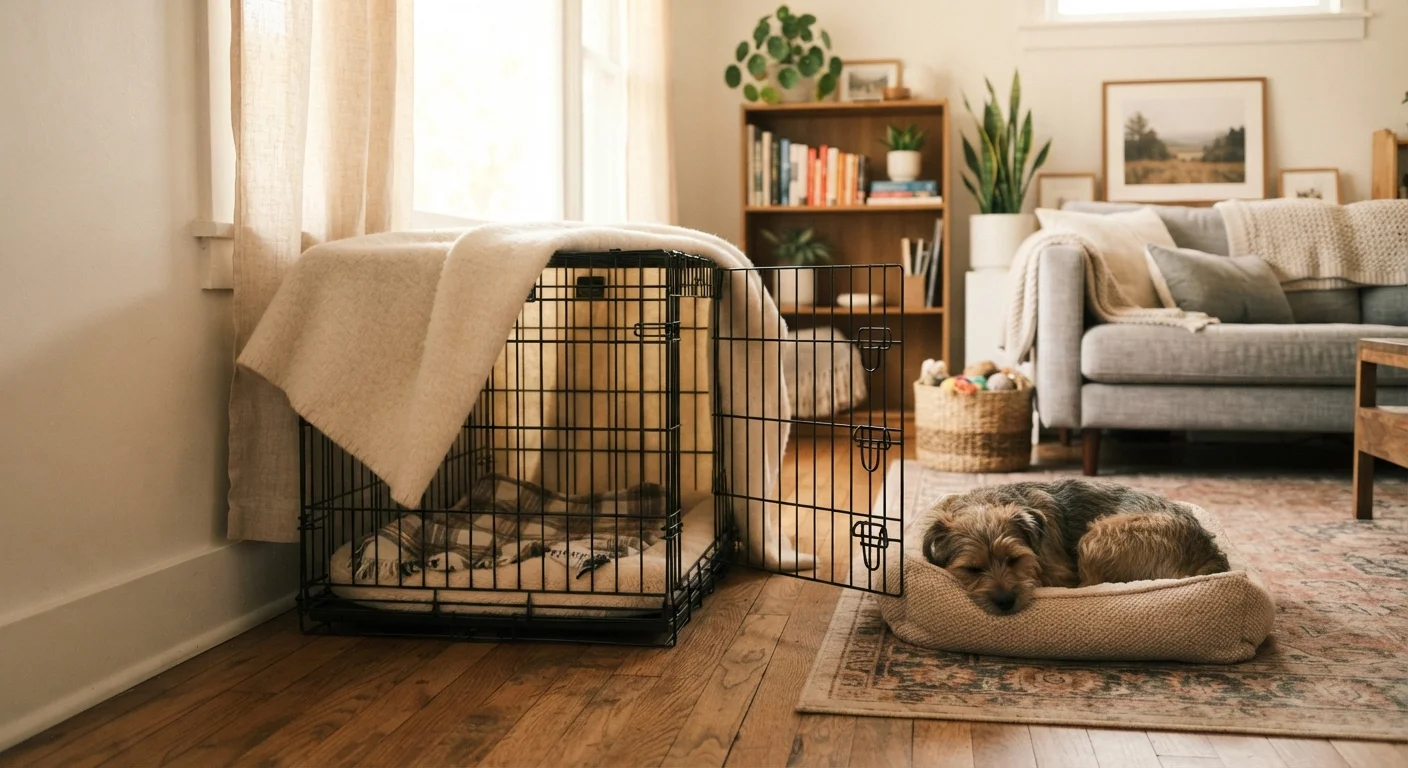
Photo credit: FindersGroove.com | Discover Important Information
In this article
Crate training is often misunderstood. This guide explains the purpose behind it, the right way to introduce a crate, and the signs it's working.
Key Takeaways
- A crate mimics a den-like space, meeting dogs' natural instinct for a secure retreat.
- Forcing or rushing crate introduction causes anxiety - gradual acclimation is essential.
- Crates should never be used as punishment; association with safety is the goal.
- Puppies need frequent breaks; adult dogs can manage longer crate periods with proper conditioning.
- Signs of successful crate training include voluntary entry and calm, quiet resting behavior.
What Crate Training Actually Is - and Isn't
Crate training is the process of teaching a dog to see an enclosed space as a safe, comfortable retreat - not a cage or a consequence. Dogs are den animals by nature, and a well-introduced crate meets an instinct for sheltered, bounded spaces. Done correctly, many dogs voluntarily seek out their crates for rest and downtime.
What crate training is not: a substitute for exercise, socialization, or companionship. It's one tool in a broader care approach. The goal is voluntary comfort, not containment. Understanding this distinction matters because the two approaches produce very different dogs - one confident, one anxious.
Crates serve practical purposes too: they support creating a safe home environment for new pets, help with housetraining (dogs instinctively avoid soiling their sleeping space), manage unsupervised access during the adjustment period, and provide a calm space during travel or veterinary recovery.
Make the Crate Part of the Room
Position the crate in a shared living area rather than an isolated room, especially during early training. Dogs are social animals and feel more secure when they can see and hear household activity. Once your dog is comfortable, you can gradually move it to a quieter spot if needed.
Getting Started: Tools and Setup
Before beginning, gather what you'll need and think through the placement of the crate in your home.
What you will need
Dog Crate
Provides the enclosed, den-like space central to the training process - wire, plastic, and soft-sided options each suit different dogs and situations.
Soft Bedding
Makes the crate interior comfortable and familiar, helping your dog associate the space with rest and security.
High-Value Treats
Used to reward voluntary entry and calm behavior inside the crate, reinforcing positive associations.
Chew Toy or Stuffed Food Toy
Gives your dog a safe, engaging activity during crate time, extending comfort and reducing boredom.
Crate material matters less than size and placement. Wire crates offer good ventilation and visibility; plastic crates feel more enclosed and den-like for anxious dogs; soft-sided crates suit calm, already-trained dogs primarily. Choose based on your dog's temperament and your practical needs.
Step-by-Step: How to Introduce and Use a Crate
Successful crate training is built on slow, consistent, reward-based steps. Rushing any stage tends to create setbacks that take longer to undo than the time saved. Use the same principles outlined in positive reinforcement training for dogs - reward what you want, ignore what you don't, and let your dog set the pace.
Choose and Set Up the Right Crate
Select a crate that allows your dog to stand up fully, turn around comfortably, and lie on their side. A crate that is too large can reduce the sense of security - and may encourage a puppy to use one corner as a bathroom. Place soft bedding inside and position the crate in a quiet but inhabited room so your dog doesn't feel isolated.
Introduce the Crate With the Door Open
Allow your dog to explore the crate freely with the door open and no pressure to enter. Toss a few treats near the entrance, then gradually move treats further inside over several sessions. Never push or lure your dog inside forcefully - let curiosity do the work. This phase may take one day or several, depending on the individual dog.
Begin Feeding Meals Near, Then Inside, the Crate
Once your dog enters willingly, start placing their food bowl just inside the crate entrance. Over successive meals, move the bowl progressively further toward the back. Eating inside the crate builds a strong, repeated positive association with the space - this is one of the most effective conditioning tools available.
Close the Door for Short Periods
Once your dog eats comfortably with the door open, gently close it while they finish their meal. Open it immediately when they finish. Gradually extend the time the door remains closed - first by a minute or two, then longer. Stay nearby during this phase so your dog doesn't associate the closed door with abandonment.
Extend Crate Time and Practice Brief Absences
Work up to keeping your dog in the crate for 10-30 minutes while you're home but in another room. Once that's comfortable, begin short departures. Vary the length of your absences so your dog doesn't learn to predict your return and become anxious in anticipation. Keep arrivals and departures calm and low-key - excitement amplifies anxiety.
Use the Crate Overnight
For puppies, place the crate in or near your bedroom so nighttime whining can be addressed promptly - young dogs often need a bathroom break during the night. For adult dogs already comfortable with the crate during the day, overnight use is usually a smooth transition. Avoid immediately releasing your dog if they whine; wait for a brief quiet pause first to avoid reinforcing the behavior.
Never Use the Crate as Punishment
Sending your dog to the crate after bad behavior creates a negative association that undermines the entire training process. The crate must always feel like a safe, neutral, or positive space. If your dog begins avoiding the crate or shows signs of distress when near it, slow down your introduction process significantly.
How to Know It's Working
Successful crate training has clear, observable signs. Your dog should enter the crate voluntarily - sometimes retreating there without being prompted. Inside, they should settle relatively quickly, without prolonged vocalization or anxious pacing. Housetraining accidents inside the crate should be rare or absent once your dog is old enough to hold their bladder reliably.
Progress is rarely linear. A dog who does well for a week may regress after a change in routine - a move, a new pet, or a schedule shift. That's normal. Return to an earlier stage of the introduction process rather than pushing through. Dogs who are going through their critical development window may also respond differently; see our guide on socialisation windows in puppy development for context on why timing shapes behavior so significantly.
Watch for Signs of Distress
Prolonged whining, destructive behavior inside the crate, or attempts to escape are signs the process is moving too fast. Puppies should not be crated for more than a few hours at a stretch - their bladders and emotional development have real limits. If severe anxiety persists, consult your veterinarian or a certified animal behaviorist.
This article is for general informational and educational purposes only. If your dog displays severe or persistent anxiety, destructive behavior, or any signs of distress, consult a licensed veterinarian or certified professional animal trainer for guidance tailored to your pet's specific needs.

Author
Pets & Animal Life Editorial Team
Pets & Animal Life Editorial Team is the collective byline for our editorial team and contributor network. Articles published under this byline or an editorial pen name are researched, written, and reviewed according to our editorial standards for clarity, consistency, and independence before publication.
View all articles →