
The Difference Between Saving and Investing (And Why It Matters at Every Income Level)
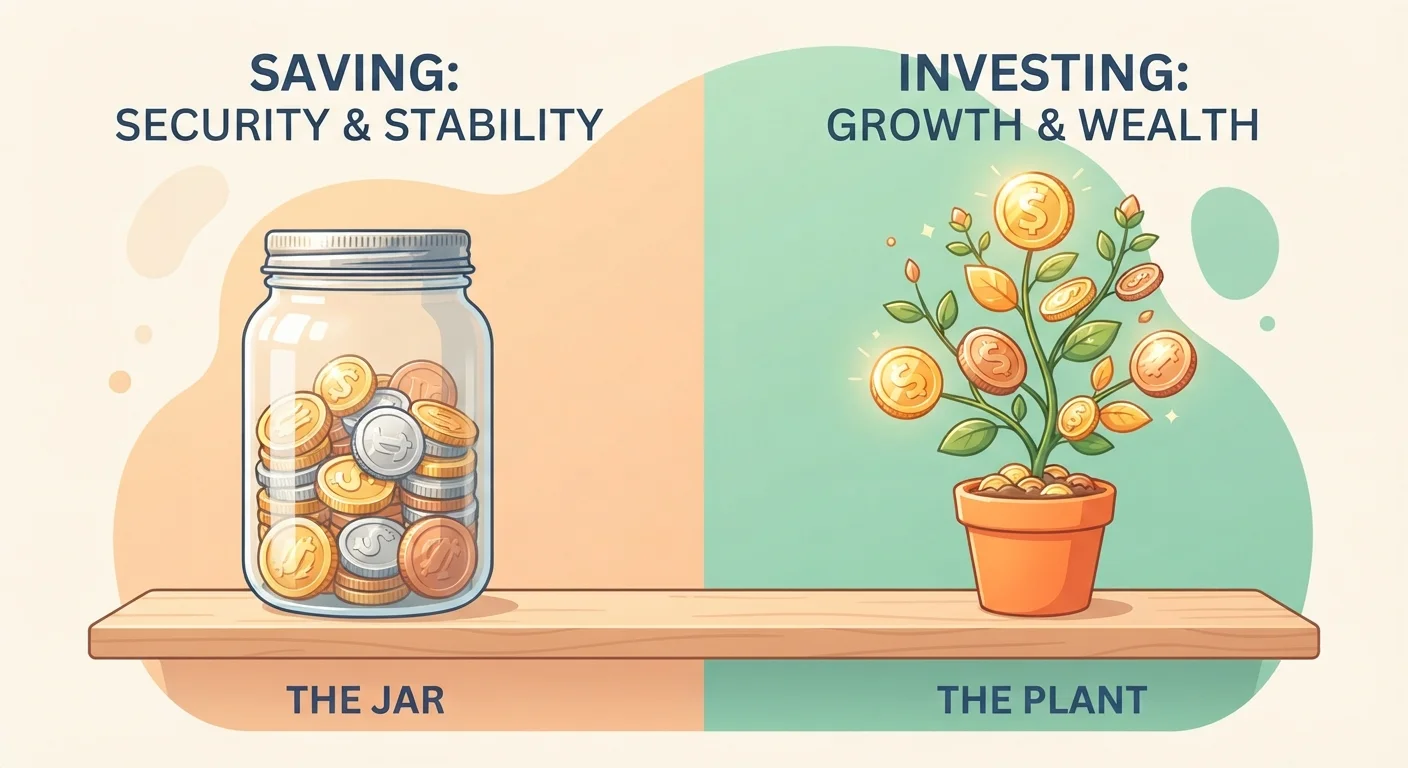
Photo credit: FindersGroove.com | Discover Important Information
In this article
Saving and investing serve different purposes. Learn how each works, when to use them, and why the distinction shapes long-term financial health.
Key Takeaways
- Saving protects money and keeps it accessible; investing grows money over time but carries risk.
- An emergency fund - typically 3-6 months of expenses - should generally be in savings, not investments.
- Even small, consistent investments benefit from compound growth over long time horizons.
- Income level doesn't determine whether you save or invest - your timeline and goals do.
- The two strategies work best together, not as an either/or choice.
Two Different Tools for Two Different Jobs
Saving and investing are frequently mentioned together, but they solve different problems. Confusing them - or defaulting to one at the expense of the other - is one of the most common financial missteps young adults make.
Saving is about preservation and access. When you deposit money into a savings account or money market account, you're prioritizing stability. The dollar amount doesn't shrink, and you can reach those funds quickly when you need them. The trade-off is modest returns - savings accounts earn interest, but typically not enough to significantly grow your wealth.
Investing is about growth over time. When you put money into assets like stocks, index funds, or bonds, you're accepting short-term uncertainty in exchange for the potential for higher long-term returns. Markets fluctuate - investments can lose value, sometimes significantly - but over long periods, diversified investments have historically outpaced inflation and savings rates. For a plain-language breakdown of key terms in both categories, see our glossary for new savers.
57%
Americans with less than $1,000 in savings
According to a survey by Bankrate, a significant share of U.S. adults lack a basic cash cushion, underscoring the foundational role of savings before investing.
3-6 months
Recommended emergency fund size
The Consumer Financial Protection Bureau (CFPB) broadly endorses a 3-6 month emergency fund as a baseline for financial resilience before prioritizing investment growth.
~10%
Average annual S&P 500 return (historical)
Broad U.S. stock market indices have historically returned roughly 10% annually before inflation - though past performance does not predict future results, and individual returns vary significantly.
When to Save and When to Invest
The decision isn't permanent - most people do both simultaneously, allocating money based on timeline and purpose.
Use savings for:
- Emergency funds (unexpected job loss, medical bills, car repairs)
- Goals within 1-3 years (a vacation, a security deposit, a major purchase)
- Everyday cash flow management
Use investing for:
- Retirement (decades away)
- Long-term wealth building (5+ year horizon)
- Goals where growth matters more than certainty
The key variable is time horizon. If you might need the money within two years, market volatility is a real threat - a downturn could force you to sell at a loss. If your timeline is 10 or 20 years out, short-term market swings matter far less. This is why the conventional guidance is to build an emergency fund before investing substantially - a topic explored in depth in our piece on sequencing savings and investments.
A Simple Starting Framework
If you're unsure where to begin, try this sequence: first, build a small starter emergency fund ($500-$1,000); next, contribute enough to any employer retirement plan to capture matching contributions if available; then, grow your emergency fund to 3-6 months of expenses. From there, additional investing can expand. This isn't a universal prescription - your situation may differ - but it's a logical order for many beginners.
Why This Matters Regardless of Income
A persistent myth is that saving and investing are only relevant once you earn a comfortable salary. In reality, the habits matter more than the amounts - and the earlier you start, the more powerful compound growth becomes.
Compound growth means your returns generate their own returns over time. Someone who invests a modest amount consistently in their 20s can accumulate significantly more than someone who invests larger amounts starting in their 40s, because of the additional years of compounding. This isn't a guarantee of specific outcomes - markets fluctuate - but it illustrates why delay is costly.
Low income doesn't eliminate the value of saving, either. Even a small cash buffer changes your financial resilience. As this article explains, waiting for a higher income to start saving tends to backfire - spending typically rises with income, and the habit never forms. For practical strategies to stretch every dollar, explore our budgeting basics hub.
The Risk Dimension: What Each Strategy Exposes You To
Every financial decision involves trade-offs, and being honest about risk is essential.
Savings risk: Your cash balance stays stable in nominal terms, but inflation erodes purchasing power. Keeping too much in low-yield savings long-term means your money quietly loses buying power year over year.
Investment risk: Market value fluctuates. You could invest $5,000 and see it drop to $3,500 before it recovers - or it may not fully recover on your timeline. Diversification helps manage (but does not eliminate) this risk. Understanding what diversification actually protects against is an important step before putting money into the market.
Neither risk is inherently bad - they're just different. The goal is to align your tools with your situation: savings for near-term needs, investments for long-term growth, and enough clarity about your own finances to know which is which.
“The best time to start saving and investing is as early as possible - not because the amounts are large, but because the habit and the time horizon are what ultimately do the heavy lifting.”
— Melissa Sotudeh, Certified Financial Planner and Director of Advisory Services, Halpern Financial
This article is for general informational purposes only and does not constitute personalized financial, investment, or tax advice. Consult a qualified financial adviser before making decisions about your own financial situation.
Frequently Asked Questions

Author
Money & Finance Editorial Team
Money & Finance Editorial Team is the collective byline for our editorial team and contributor network. Articles published under this byline or an editorial pen name are researched, written, and reviewed according to our editorial standards for clarity, consistency, and independence before publication.
View all articles →