
Emergency Fund First, Investments Second - or Is It?
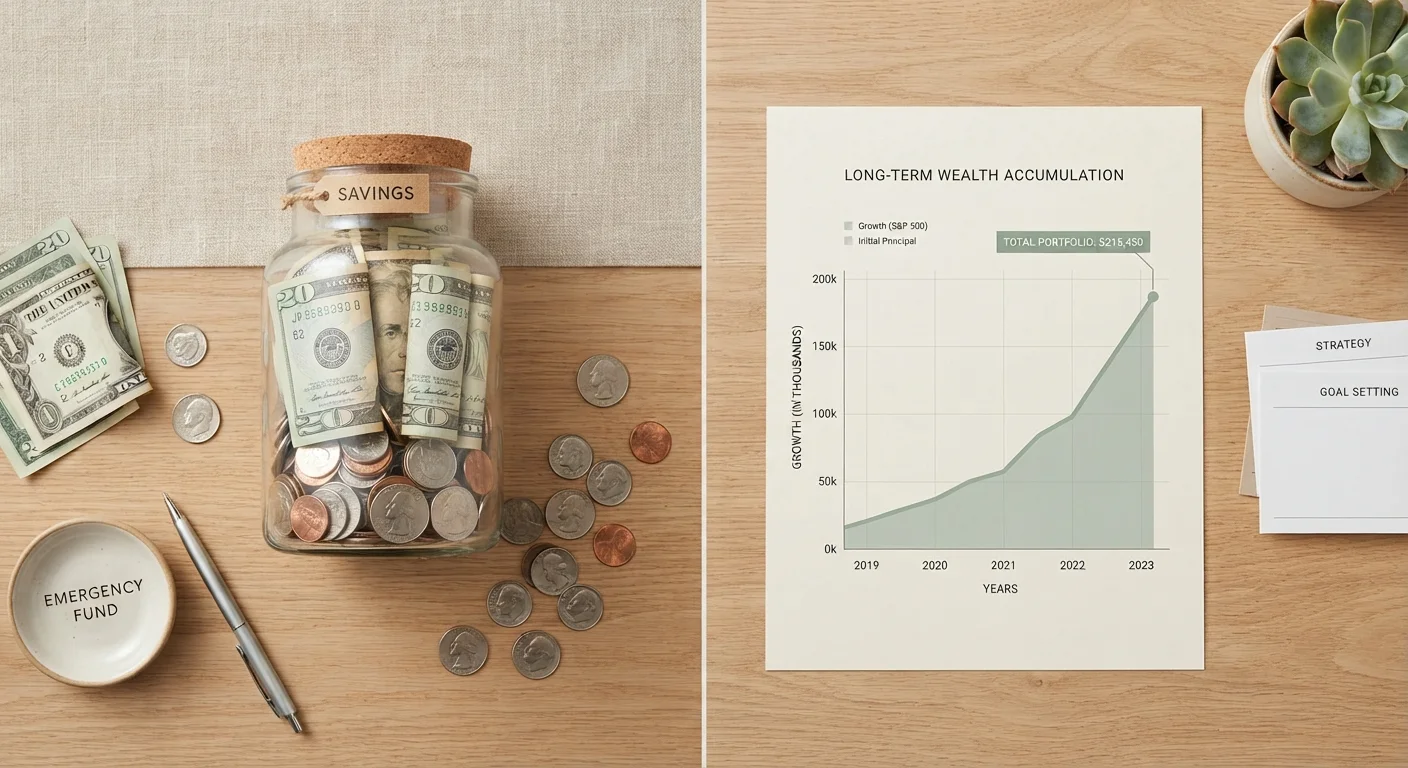
Photo credit: FindersGroove.com | Discover Important Information
In this article
Should you build an emergency fund before investing? Explore the reasoning behind common financial advice and when the order might reasonably shift.
Key Takeaways
- A fully funded emergency fund (3-6 months of expenses) provides a financial buffer that prevents investment liquidation during crises.
- Delaying all investing until your fund is complete means potentially missing months or years of compound growth.
- The two goals aren't always mutually exclusive - splitting contributions between both is a legitimate approach for many people.
- Employer-matched retirement contributions may justify investing even before your fund is fully built.
- Your income stability, existing debt, and personal risk tolerance all shape which priority makes most sense for you.
Why This Question Matters More Than It Seems
Conventional personal finance guidance has long held a clear order: build your emergency fund first, then invest. It's tidy advice, and for good reason - but it can also lead people to delay investing for years while they wait to hit an arbitrary savings threshold. The real answer is more nuanced than a simple sequence.
To understand the trade-offs, it helps to first be clear on what each goal actually accomplishes. Saving and investing serve genuinely different purposes - an emergency fund is about liquidity and protection, while investing is about long-term wealth building. Treating them as competing priorities misses the point that they protect against completely different risks.
This article doesn't prescribe a universal answer - your situation is your own. Instead, it maps out the reasoning behind each approach so you can make an informed, context-appropriate decision.
The Case for Emergency Fund First
The primary argument for building your emergency fund before investing is protection from forced liquidation. If you invest before you have a cash cushion, a job loss or medical bill could force you to sell investments - potentially at a loss - to cover immediate expenses. That outcome undermines the very purpose of investing.
Financial educators and bodies like the Consumer Financial Protection Bureau (CFPB) broadly recommend holding three to six months of essential living expenses in a liquid, accessible account. This reserve acts as a buffer that lets your investments remain untouched through life's disruptions.
~57%
Americans unprepared for a $1,000 emergency
A Bankrate survey found that a majority of U.S. adults could not cover a $1,000 unexpected expense from savings alone.
3-6 months
Recommended emergency fund coverage
The CFPB and most mainstream financial guidance recommends holding three to six months of essential living expenses in liquid savings.
There's also a behavioral argument. People who skip the emergency fund and invest first often end up raiding those investments early - triggering taxes, penalties (in the case of retirement accounts), and interrupted compounding. A fund in place removes the temptation and the necessity.
For anyone with variable income, recent job instability, or no existing savings, the case for prioritizing the emergency fund is strongest. The foundation needs to be stable before you build on top of it. See the investment readiness checklist for a structured way to assess whether your foundation qualifies.
The Case for Investing Earlier Than You Think
The argument for starting to invest before your emergency fund is fully funded centers on one powerful concept: compounding. The earlier dollars are invested, the longer they have to grow - and even modest early contributions can outpace larger contributions made years later, depending on returns over time.
The most concrete example of this is employer-matched retirement contributions. If your employer matches a percentage of your 401(k) contribution and you're not contributing enough to capture the full match, you're leaving compensation on the table. Most financial educators treat capturing the full match as a near-universal priority, even before completing an emergency fund.
| Criterion | Emergency Fund First | Invest Early |
|---|---|---|
| Primary purpose | Liquidity and downside protection | Long-term wealth accumulation |
| Risk if skipped | Forced debt or investment liquidation | Lost compounding time and employer match |
| Ideal income profile | Variable or recently changed income | Stable, predictable employment |
| High-interest debt present? | Address debt + small fund first | Less urgent if debt is low-rate |
| Employer match available? | Capture match regardless | Capture match regardless |
| Time horizon benefit | Immediate protection | Decades of potential compounding |
There's also the opportunity cost of delay. Someone who waits two years to start investing while building their fund misses two years of potential compound growth. For a young adult in their 20s, that gap compounds over decades. Getting started with investing doesn't require a perfect financial foundation - it requires a reasonable one.
The pay yourself first principle is relevant here too: automating small contributions to both savings and investments simultaneously is a workable middle path for many people with stable income.
When Doing Both at Once Makes Sense
For many young adults, the either/or framing is a false choice. Splitting contributions - say, directing 60% of available savings toward your emergency fund and 40% toward a retirement account - lets you make progress on both goals simultaneously.
This parallel approach tends to work best when you already have some savings (even one to two months of expenses), have stable employment, and are not carrying high-interest debt that's actively eroding your financial position. If high-rate debt is present, addressing that alongside a small starter fund often takes precedence over either goal. Understanding how risk and return interact can also help you calibrate how aggressively to invest during this transitional phase.
The Employer Match Exception
Nearly all financial educators treat capturing an employer 401(k) match as a special case. Because a match represents an immediate return on contribution - often 50 to 100 cents per dollar up to a limit - foregoing it to build an emergency fund can cost more in the long run. If your employer offers a match, contributing at least enough to capture it fully is generally considered a sound step regardless of where your emergency fund stands.
The key is to avoid using "building my emergency fund" as an indefinite reason to postpone all investing. Set a concrete target, track progress in your budget - the foundation of personal budgeting is a good place to start - and revisit the balance as your financial picture changes.
This article is for general informational and educational purposes only and does not constitute personalized financial, investment, or tax advice. Individual circumstances vary. Consult a qualified financial professional before making decisions about your specific situation.

Author
Money & Finance Editorial Team
Money & Finance Editorial Team is the collective byline for our editorial team and contributor network. Articles published under this byline or an editorial pen name are researched, written, and reviewed according to our editorial standards for clarity, consistency, and independence before publication.
View all articles →