
Secured Credit Cards and Credit-Builder Loans: Understanding the Difference
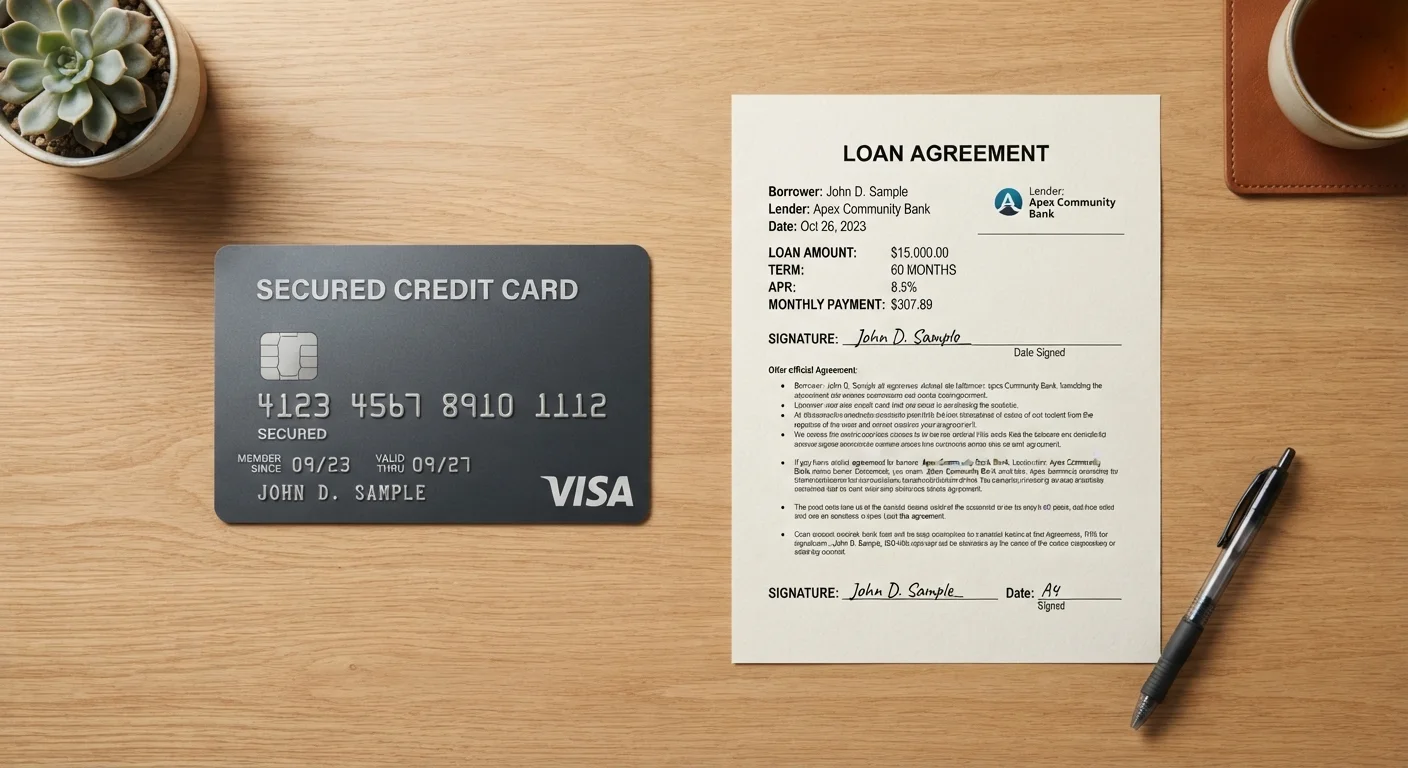
Photo credit: FindersGroove.com | Discover Important Information
In this article
Both tools help establish credit, but they work differently. Here's how to understand what sets them apart before deciding which fits your situation.
Key Takeaways
- Secured credit cards require an upfront cash deposit that becomes your credit limit.
- Credit-builder loans hold the loan funds in a locked account until you've finished paying.
- Both tools report to major credit bureaus and can meaningfully improve your credit profile.
- Secured cards affect credit utilization; credit-builder loans do not - a key structural difference.
- Your spending habits and financial discipline should guide which tool fits your situation.
How Each Tool Actually Works
Both a secured credit card and a credit-builder loan are designed to help people with thin or no credit history establish a track record with lenders. But their mechanics are fundamentally different, and understanding that difference matters before you apply for either.
Secured credit cards work like standard credit cards with one key distinction: you deposit cash upfront - typically ranging from $200 to $500 - and that deposit becomes your credit limit. You then use the card for purchases, receive a monthly statement, and make payments. Your payment behavior is reported to the three major credit bureaus (Equifax, Experian, and TransUnion), building your credit history over time. If you default, the issuer keeps your deposit.
Credit-builder loans work in reverse. Instead of receiving funds upfront, the lender holds the loan amount in a locked savings account. You make fixed monthly payments over a set term - often 12 to 24 months - and once you've paid in full, you receive the accumulated funds. The Consumer Financial Protection Bureau (CFPB) notes that these products are specifically designed to help people build or repair credit through consistent payment behavior.
For a deeper look at how your payment history and other factors feed into your credit profile, see Credit Scores Decoded.
| Criterion | Secured Credit Card | Credit-Builder Loan |
|---|---|---|
| Upfront requirement | Cash deposit (becomes credit limit) | No deposit; monthly payments required |
| When you access funds | Immediately, as a credit line | At loan completion |
| Product type | Revolving credit | Installment loan |
| Affects credit utilization | Yes | No |
| Risk of interest charges | Yes, if balance carried | Minimal; fixed payments only |
| Savings component | No | Yes - lump sum at end of term |
| Reports to credit bureaus | Yes | Yes |
Key Differences That Affect Your Credit Profile
The structural differences between these two tools translate into real distinctions in how they shape your credit score.
Credit utilization - the percentage of your available revolving credit that you're using - is a significant scoring factor. Secured credit cards create a revolving credit line, so how much of your limit you carry as a balance directly affects this ratio. Keeping utilization below 30% is a commonly cited guideline. Credit-builder loans are installment products, not revolving lines, so they don't affect utilization at all. This matters if your score is sensitive to that metric.
Both tools build payment history, which the CFPB identifies as one of the most influential factors in credit scoring models. Consistent, on-time payments on either product contribute positively to your record.
One more distinction: with a secured card, you risk accumulating interest-bearing debt if you carry a balance month to month. With a credit-builder loan, the payment amount is fixed - there's no way to overspend. If managing a revolving balance feels uncertain, that fixed structure may be a safer starting point.
35%
Weight of payment history in FICO scores
According to FICO, payment history is the single largest factor in calculating your credit score, making consistent on-time payments the most impactful habit to develop.
~45M
Americans with no scoreable credit file
The Consumer Financial Protection Bureau has estimated that tens of millions of U.S. adults lack a sufficient credit history to generate a mainstream credit score.
For more on how revolving balances interact with your score, credit utilization explained goes deeper on the ratio that quietly shapes your number.
Which Fits Your Situation?
Neither tool is universally better - the right fit depends on your habits, goals, and access to upfront cash.
If you can set aside $200-$500 for a deposit and trust yourself to pay the balance in full each month, a secured card offers flexibility and immediate access to a credit line. Used responsibly, many people graduate to an unsecured card after 12 to 18 months of on-time payments.
If you don't have a deposit readily available, or prefer a hands-off structure where you simply make a fixed monthly payment, a credit-builder loan may be more aligned with your situation. The added benefit of receiving a lump sum at the end can serve as a small emergency fund or savings foundation - connecting credit-building to the broader goal of financial stability. You can explore that connection further in Building Credit from Zero.
Some people use both simultaneously to diversify their credit mix - one of the factors scoring models consider. However, applying for multiple new accounts at once generates hard inquiries and introduces complexity. Starting with one, proving consistent behavior, then adding the second is a more measured approach.
For a broader view of how credit and debt interact over time, Debt, Credit, and Financial Wellbeing covers the full landscape.
This article is for general informational and educational purposes only and does not constitute personalized financial or credit advice. Consult a qualified financial professional for guidance specific to your circumstances.

Author
Money & Finance Editorial Team
Money & Finance Editorial Team is the collective byline for our editorial team and contributor network. Articles published under this byline or an editorial pen name are researched, written, and reviewed according to our editorial standards for clarity, consistency, and independence before publication.
View all articles →