
Subscription Traps: How Free Trials Turn Into Recurring Charges
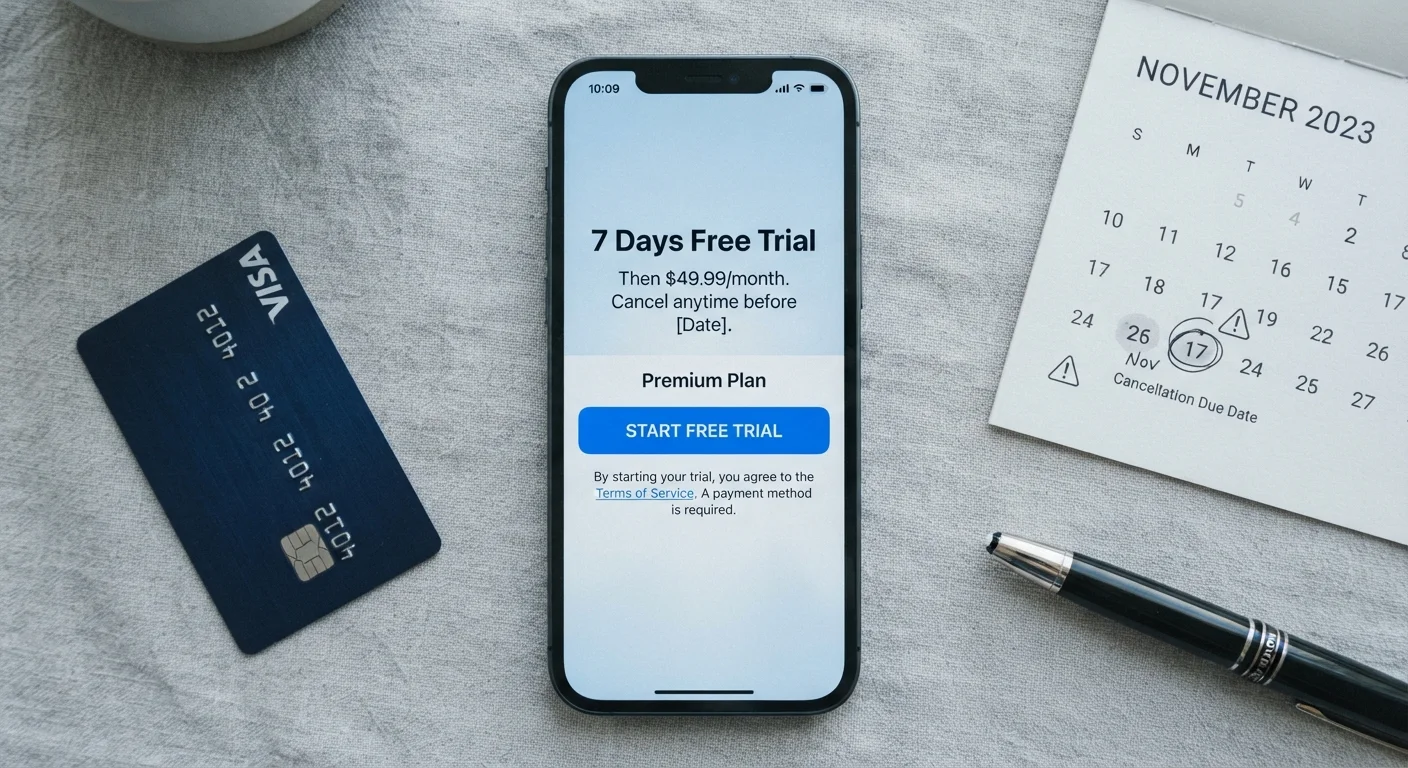
Photo credit: FindersGroove.com | Discover Important Information
In this article
Free trials rely on inertia and friction to convert into paid plans. Learn the mechanics and how to protect yourself.
Key Takeaways
- Free trials require a credit card specifically so a charge can fire automatically if you don't cancel.
- Cancellation flows are often deliberately long or confusing - a recognized dark pattern.
- Most people underestimate how many active subscriptions they carry at any given time.
- Setting a calendar reminder before the trial ends is the single highest-impact protective step.
- Consumer protection law requires auto-renewal terms to be clearly disclosed, giving you recourse if they aren't.
The Mechanics Behind the Model
When a company offers a free trial, the goal is almost never charity. The business logic is straightforward: acquire your payment details, provide a window of free access, then convert you to a paying customer through inaction rather than a deliberate purchase decision. This is called a negative option arrangement - you are charged unless you take action to stop it.
The trial countdown is designed to feel generous while working against you. A 30-day window sounds like plenty of time, but companies know engagement drops after the first few days. By the time the deadline arrives, many users have either forgotten the trial exists or feel they haven't used the service enough to bother canceling - and that ambivalence is enough to keep the charge processing.
This dynamic is part of a broader category of intentional design manipulation built into digital products specifically to reduce user control over spending.
2.4x
How much consumers underestimate subscription spending
Studies on subscription awareness consistently show consumers significantly undercount their active subscriptions and monthly spend.
$273/mo
Average estimated US household subscription spend
C+R Research surveys have estimated average monthly subscription expenditure among US households exceeds $270, across streaming, apps, and services.
72%
Trials that convert due to inaction, not intent
Industry data indicates the majority of free-to-paid conversions occur because users simply forget to cancel rather than making an active decision to subscribe.
How Friction and Forgetfulness Work Together
Subscription traps have two engines: cognitive friction and time pressure. Cognitive friction is built into cancellation flows - multi-step processes, 'pause instead of cancel' offers, confirmation screens that ask you to justify your decision, and retention offers designed to introduce doubt. Each additional step is a calculated bet that some percentage of users will give up.
Time pressure compounds this. Trials often end without a reminder email, or send one so close to the deadline (24 hours) that acting in time is genuinely difficult. Some bury renewal dates in transactional emails, making them hard to surface through a normal inbox search.
The result: even attentive consumers accumulate charges. Research consistently shows people significantly underestimate their active subscription count, which is one reason subscription creep is one of the most common hidden budget drains for young adults.
Set Your Cancellation Reminder Before You Finish Signing Up
The best time to schedule a cancellation reminder is the moment you complete a free trial sign-up - before you close the tab. Set it 3 days before the trial ends so you have time to act. Waiting until you remember is exactly what the business model is counting on.
Practical Defenses You Can Use Today
The most effective defense is structural, not willpower-based. When you sign up for any trial, immediately open your calendar and set a reminder 3 days before the trial ends - not on the last day. This buffer gives you time to actually cancel, rather than scrambling on the deadline.
For higher-risk signups, consider using a virtual card number (offered by many major card issuers) or a prepaid card with a limited balance. If the trial converts and a charge attempts to clear, it simply fails - no dispute needed.
Before entering payment details, locate the cancellation policy. If the path to cancel requires a phone call during specific hours, factor that friction into your decision. Services that make cancellation genuinely difficult are often worth skipping entirely. These same principles apply to the broader category of checkout and sign-up traps that catch careful buyers off guard.
Finally, do a quarterly audit of your bank and card statements. Filter for small recurring amounts - $4.99, $9.99, $12.99 - and verify each one is a service you actively use and value. This practice also surfaces annual renewals that arrive quietly. For a structured approach to catching these expenses, hidden costs that inflate your actual spending covers where to look systematically.
Your Rights and When to Push Back
Under FTC negative option marketing rules, companies are required to clearly and conspicuously disclose auto-renewal terms before you provide payment information. If a company hid renewal terms in fine print, failed to send any cancellation confirmation, or made cancellation unreasonably difficult, you have grounds to dispute the charge with your card issuer and potentially file a complaint with the FTC or your state attorney general's office.
When disputing, act quickly - most card issuers have a 60-day window from the statement date. Provide documentation: screenshots of the sign-up flow if you have them, or records showing the cancellation terms weren't clearly disclosed. Card issuers take these disputes seriously when there's evidence of deceptive structuring.
Understanding these traps also connects to deeper spending psychology. The reluctance to cancel something you've already paid for - even when you don't use it - can intersect with the sunk cost fallacy and why it keeps you spending, compounding the financial drain. Building mindful purchasing habits is the longer-term antidote to environments designed to exploit inattention.
This article is for general informational and educational purposes only and does not constitute legal or financial advice. For questions about a specific charge or dispute, consult your card issuer or a qualified consumer protection professional.
Frequently Asked Questions

Author
Smart Shopping Editorial Team
Smart Shopping Editorial Team is the collective byline for our editorial team and contributor network. Articles published under this byline or an editorial pen name are researched, written, and reviewed according to our editorial standards for clarity, consistency, and independence before publication.
View all articles →