
Envelope Budgeting in a Cashless World
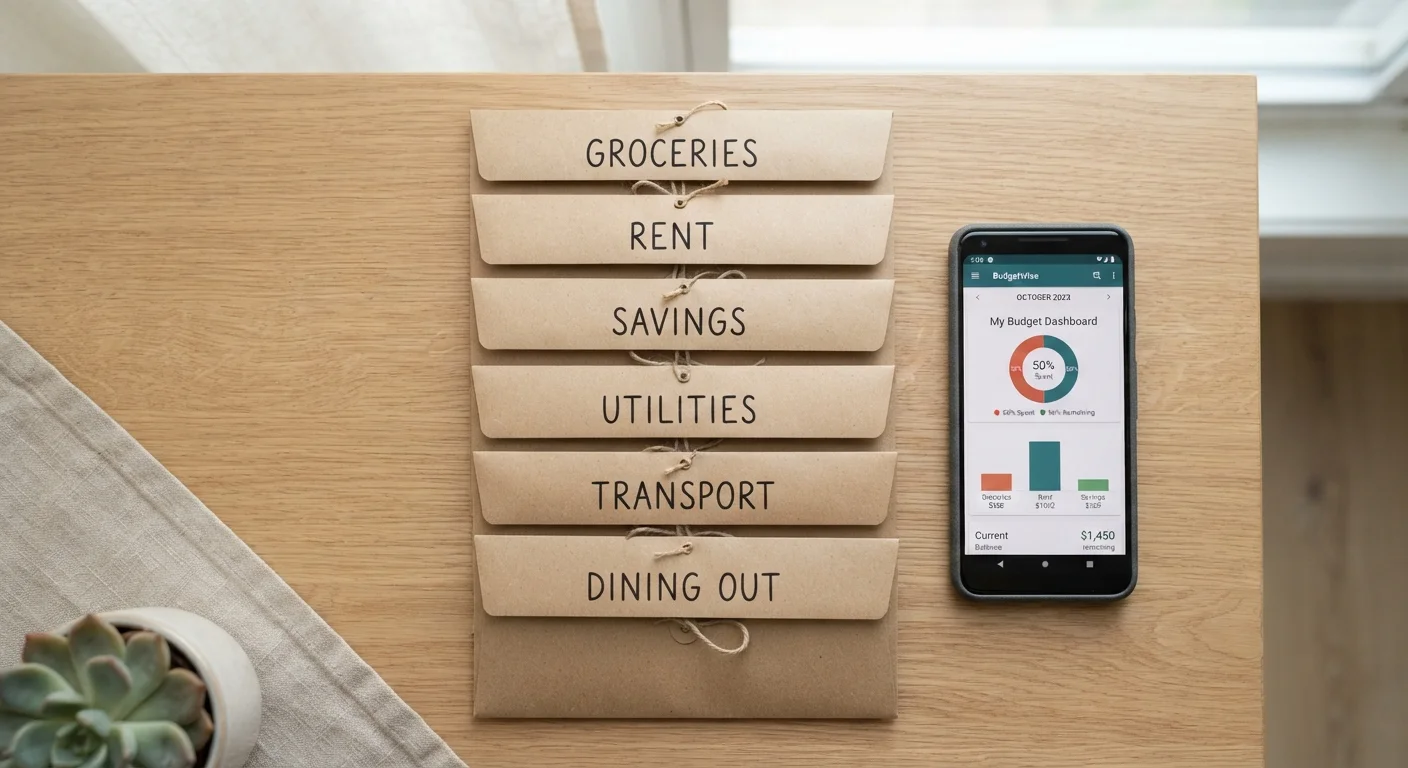
Photo credit: FindersGroove.com | Discover Important Information
In this article
The envelope method was built around physical cash, but its core logic still works digitally. Here's how the concept translates for modern spending.
Key Takeaways
- Envelope budgeting assigns every dollar to a specific spending category before the month begins.
- You don't need physical cash - digital sub-accounts or apps replicate the method effectively.
- The system works best when each category limit is treated as a firm boundary, not a suggestion.
- Regular weekly check-ins prevent overspending from compounding throughout the month.
- Combining envelope logic with self-awareness addresses the habits that drive budget drift.
What Envelope Budgeting Actually Is
The envelope method is one of the oldest personal finance frameworks: you divide your take-home pay into physical envelopes, each labeled for a spending category - groceries, gas, dining out, entertainment. When the envelope is empty, spending in that category stops until the next pay period. No overdrafts, no guessing, no rounding up in your head.
The discipline it enforces is psychological as much as mathematical. Physically handing over cash and watching an envelope thin out creates a feedback loop that card swiping simply doesn't replicate. But in a world where most transactions are digital - contactless payments, subscription billing, online shopping - carrying labeled envelopes of cash is impractical for most people.
What does translate is the underlying logic: pre-committing spending limits by category, in advance, and treating those limits as real constraints. That principle works just as well with bank sub-accounts and budgeting tools as it does with paper envelopes. If you're looking for broader budgeting context first, see our complete foundation guide to personal budgeting.
Start with Fewer Categories
If this is your first time budgeting this way, resist the urge to create 20 envelopes immediately. Start with five to seven core categories and add more as the system becomes habit. Complexity is the most common reason people abandon budgeting systems in the first month.
How to Build a Digital Envelope System
Setting up a digital version of this system takes under an hour the first time. The steps below walk through the full process - from mapping your categories to reviewing your results at month's end.
What you will need
Bank sub-accounts
Create named accounts for each spending category so funds are physically separated and visible.
Budgeting app with envelope support
Tracks spending against pre-assigned category limits and updates balances automatically as transactions clear.
Spreadsheet
A simple fallback for manually tracking allocations and remaining balances across all envelopes.
Calculate your monthly take-home income
Start with what actually lands in your account each month after taxes and deductions - not gross salary. If your income varies, use a conservative estimate based on your three lowest-earning months from the past year. Building your envelope amounts on money you're not certain to receive leads to shortfalls mid-month.
List your spending categories
Review two to three months of bank and credit card statements and group every expense into categories. Common envelopes include: housing, utilities, groceries, transportation, dining out, subscriptions, personal care, and entertainment. Keep categories specific enough to be meaningful but broad enough to be manageable - aim for eight to fifteen total.
Fixed expenses (rent, insurance premiums, loan payments) are predictable and should get their own envelopes. Variable expenses (groceries, gas, dining) are where the method provides the most behavioral value.
Assign dollar amounts to each category
Working from your income total, allocate a specific dollar amount to each category. The total of all envelopes must equal your take-home pay - no unallocated dollars, no spending on credit beyond what's accounted for. If allocations exceed income, reduce discretionary categories before touching fixed expenses or savings.
Don't forget irregular but predictable expenses: annual subscriptions, car registration, holiday gifts. Divide these by 12 and fund a dedicated envelope monthly so the cost doesn't arrive as a surprise. For a practical walkthrough of the full budgeting setup process, see building your first budget.
Set up your digital envelopes
You have two main options for implementing this digitally. The first is bank sub-accounts: many online banks allow you to create multiple savings or spending accounts within one profile, which you can name by category. Transfer the allocated amount into each sub-account at the start of the month and spend only from the relevant account. The second option is a budgeting app that supports envelope-style allocation - where you assign income to virtual envelopes and the app deducts spending against each category as transactions clear.
Either approach works. The key is that the category limit is visible and updated in near-real-time, not reconstructed from memory at the end of the month.
Do a weekly 10-minute check-in
Once a week - same day, same time - review every envelope balance against the days remaining in the month. This is the single most effective habit for preventing overspending from compounding. If a variable category is running low with two weeks to go, you have time to adjust behavior; if you discover it at month's end, the money is already gone.
This also aligns with the broader principles of building a budget that reflects your real life - staying aware of your actual patterns rather than defaulting to an aspirational number you set once and forgot.
Review and reset at month's end
When the month closes, note which envelopes ran dry early, which had money left over, and whether any emergency or miscellaneous funds were tapped. Use this data - not assumptions - to adjust next month's allocations. A budget that doesn't adapt to real behavior isn't a budget; it's a wish list.
Leftover funds in discretionary envelopes can roll over into savings or be redistributed, depending on your goals. Fixed-expense envelopes should reset at the same amount unless the underlying bill has changed.
Staying Honest When Limits Are Invisible
The biggest risk in a digital envelope system is that the friction disappears. With physical cash, an empty envelope is undeniable. With a number on a screen, it's easier to rationalize one more purchase or quietly shift funds between categories without acknowledging the trade-off.
A few habits help maintain the psychological weight of the original method. First, treat inter-category transfers as a conscious decision - note why you made it and what category absorbed the cost. Second, avoid checking balances only after spending; check before a purchase if you're near a limit. Third, recognize that apps alone aren't enough - as explored in when budgeting apps replace self-awareness, tools work best when paired with genuine reflection on spending behavior.
The envelope method is structurally similar to zero-based budgeting - both require every dollar to have a destination before the month begins. For a comparison of how it stacks up against percentage-based approaches, see zero-based vs. percentage-based budgeting.
Credit Cards Complicate the System
Envelope budgeting is harder to enforce if you're spending on credit cards across categories, since the cash doesn't leave your account at the moment of purchase. If you use credit cards, you'll need to manually deduct each transaction from the relevant digital envelope immediately - or reconcile daily - to maintain accuracy. The method works, but it requires more active tracking.

Author
Money & Finance Editorial Team
Money & Finance Editorial Team is the collective byline for our editorial team and contributor network. Articles published under this byline or an editorial pen name are researched, written, and reviewed according to our editorial standards for clarity, consistency, and independence before publication.
View all articles →