
Whole Foods vs. Processed Foods: What the Spectrum Really Looks Like
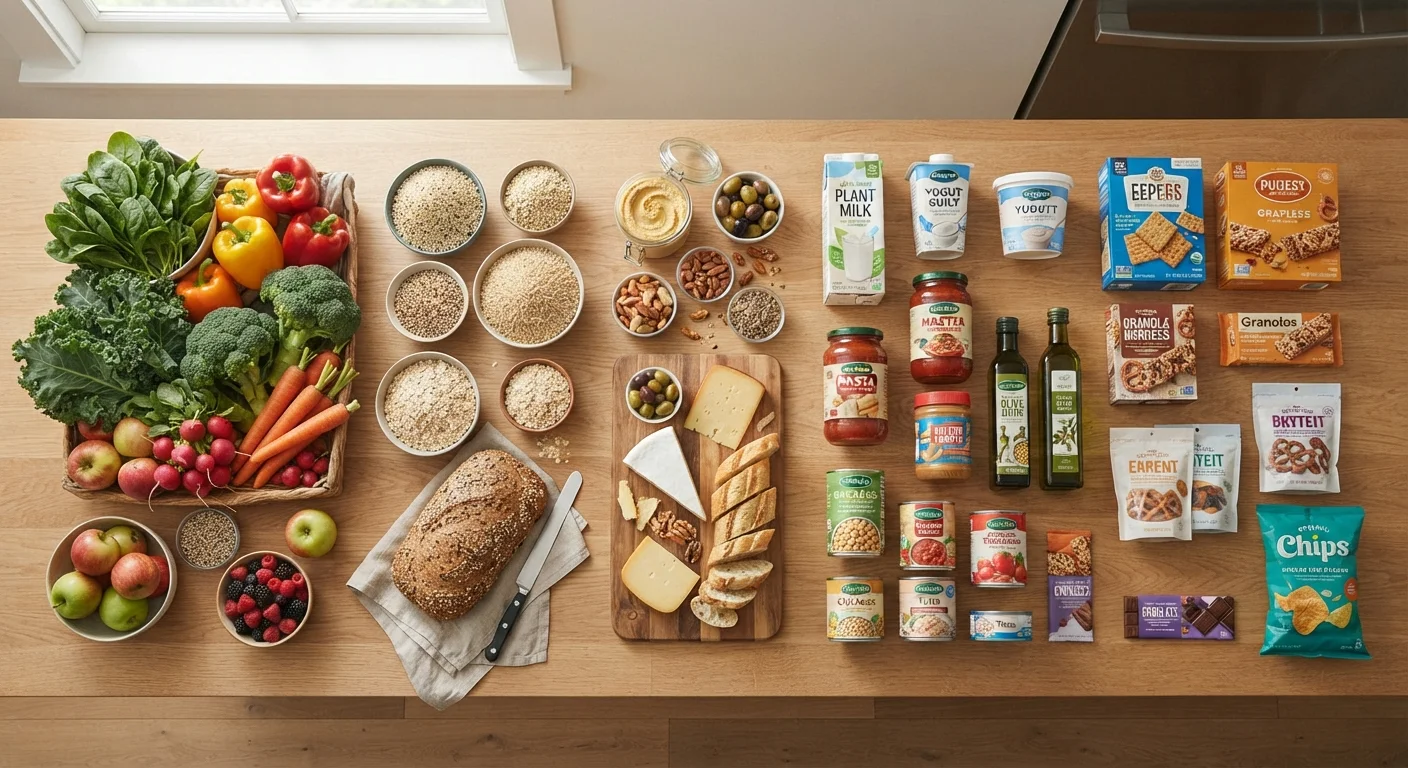
Photo credit: FindersGroove.com | Discover Important Information
In this article
Not all processed food is junk, and not all whole food is perfect. Explore how food processing exists on a spectrum and what it means for your diet.
Key Takeaways
- Food processing is a spectrum, not a simple good-versus-bad binary.
- Minimally processed foods like frozen vegetables and canned beans retain strong nutritional value.
- Ultra-processed foods - engineered for palatability - are the category most linked to health concerns.
- The NOVA classification system offers a practical framework for understanding food processing levels.
- Whole foods provide the most predictable nutritional density, but processed foods aren't universally harmful.
- A flexible, evidence-based approach beats rigid dietary rules for long-term healthy eating.
Why the Whole vs. Processed Debate Is More Complicated Than It Sounds
The phrase "eat whole foods, avoid processed foods" is everywhere - but it oversimplifies something genuinely nuanced. The reality is that virtually every food you eat has been processed in some way. Washing, cutting, cooking, freezing, fermenting - all of these are forms of processing. The real question isn't processed or not? It's how much, and to what end?
Nutrition researchers increasingly use the NOVA classification system, developed by researchers at the University of São Paulo, to describe food processing on four levels: unprocessed or minimally processed foods, processed culinary ingredients, processed foods, and ultra-processed foods. This framework helps move the conversation away from vague labels and toward something more actionable.
Understanding where foods sit on this spectrum - rather than sorting everything into "clean" or "bad" - can genuinely reduce the overwhelm many people feel around eating. For a deeper look at how to read the information on food packaging, decoding a nutrition label is a useful next step.
Breaking Down the Spectrum: Four Levels of Processing
Here's how the NOVA framework organizes food, and what each level actually means in your everyday life:
- Level 1 - Unprocessed or minimally processed: Fresh fruit, vegetables, plain meats, eggs, plain nuts, and plain legumes. These foods are either untouched or subject only to basic processes like drying, freezing, or pasteurization that don't substantially alter their nutritional character.
- Level 2 - Processed culinary ingredients: Olive oil, butter, flour, salt, and sugar. These aren't eaten alone but are used to prepare Level 1 foods. In moderate amounts, they're part of traditional diets worldwide.
- Level 3 - Processed foods: Canned tomatoes, canned tuna, cheese, plain bread, and smoked fish. These involve adding salt, sugar, or oil to preserve or enhance whole-food ingredients. Many retain significant nutritional value.
- Level 4 - Ultra-processed foods: Packaged snack cakes, sugary cereals, flavored chips, fast-food items, and many ready-to-eat meals. These are industrially formulated products, often designed for extreme palatability and long shelf life, frequently containing additives, emulsifiers, and artificial flavors not found in home kitchens.
The category generating the most concern in nutrition research is Level 4. Multiple large observational studies have associated high ultra-processed food consumption with increased risk of various chronic conditions - though researchers note these associations don't establish direct causation, and the field is still evolving.
| Criterion | Whole Foods | Processed Foods |
|---|---|---|
| Definition | Unaltered or minimally altered from natural state | Ranges from lightly preserved to industrially formulated |
| Nutrient Density | Generally high; fiber and micronutrients intact | Varies widely; ultra-processed often low |
| Additives & Ingredients | Few to none | Ranges from minimal (canned beans) to extensive (packaged snacks) |
| Convenience | Often requires preparation time | Typically faster and easier to use |
| Cost Accessibility | Fresh produce can be costly; staples vary | Many affordable options (canned, frozen, dried) |
| Research Concerns | Broadly supported as dietary foundation | Ultra-processed tier associated with health risks in observational studies |
| Examples | Apples, oats, eggs, plain yogurt, lentils | Frozen peas, canned tuna, packaged cookies, sugary cereals |
What the Research Actually Says - and What It Doesn't
It's worth being honest about the limits of nutrition science here. Much of what we know about ultra-processed foods comes from observational studies - research that tracks large populations over time and looks for associations between diet and health outcomes. These studies are valuable, but they can't prove that ultra-processed foods cause harm in isolation; other lifestyle factors often play a role.
That said, there are clear patterns worth taking seriously. Whole and minimally processed foods tend to be higher in fiber, micronutrients, and satiety-promoting compounds. Ultra-processed foods tend to be calorie-dense, lower in fiber, and engineered in ways that may make overeating easier. The psychology behind food choices also matters here - highly palatable ultra-processed products are often specifically designed to encourage repeated consumption.
~57%
Share of U.S. adult calories from ultra-processed foods
A study published in BMJ Open using National Health and Nutrition Examination Survey data estimated that ultra-processed foods account for more than half of daily caloric intake for many U.S. adults.
4 levels
Processing tiers in the NOVA classification system
Developed by researchers at the University of São Paulo, the NOVA framework is widely used in nutrition research to categorize foods by degree and purpose of processing.
Higher fiber
Key nutritional advantage of minimally processed diets
Research consistently links diets rich in whole and minimally processed foods with higher fiber intake, which is associated with improved digestive health and satiety.
None of this means a bag of chips is a health emergency. Context, frequency, and overall diet pattern matter far more than any single food choice. A diet built mostly on Level 1 and Level 3 foods, with room for Level 4 foods occasionally, reflects what the evidence broadly supports - without requiring perfection.
This article is for general informational and educational purposes only and is not a substitute for professional medical or nutritional advice. Please consult a qualified healthcare provider or registered dietitian for guidance specific to your health needs.

Author
Health & Wellness Editorial Team
Health & Wellness Editorial Team is the collective byline for our editorial team and contributor network. Articles published under this byline or an editorial pen name are researched, written, and reviewed according to our editorial standards for clarity, consistency, and independence before publication.
View all articles →