
Everything You Need to Know About Dietary Fibre
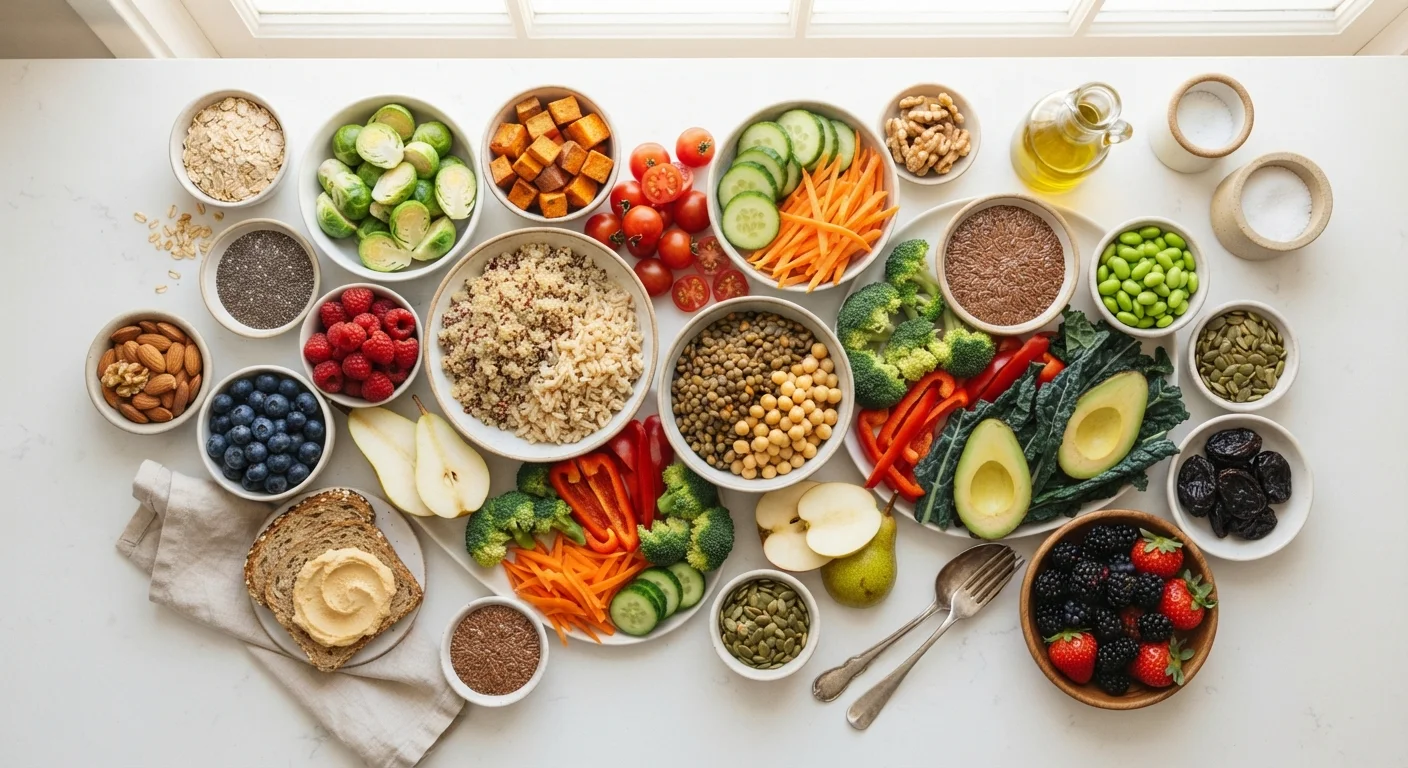
Photo credit: FindersGroove.com | Discover Important Information
In this article
Soluble vs insoluble, gut health, daily intake, food sources, and common gaps — a comprehensive, research-grounded guide to fibre in everyday eating.
Key Takeaways
- Dietary fibre is a type of carbohydrate found only in plant foods that your body cannot fully digest.
- Soluble and insoluble fibre serve different functions, and most whole foods contain both.
- Most US adults consume significantly less fibre than the recommended daily amount.
- Legumes, whole grains, vegetables, and fruits are the most effective fibre sources.
- Increasing fibre gradually - and alongside adequate water - prevents digestive discomfort.
- This article provides general nutrition education, not personalised medical or dietary advice.
What Dietary Fibre Actually Is
Dietary fibre is a category of carbohydrate found exclusively in plant foods - think vegetables, fruits, legumes, and whole grains. Unlike most carbohydrates, fibre resists digestion in the small intestine and passes largely intact into the large intestine, where it plays a range of important roles. If terms like carbohydrate or macronutrient feel fuzzy, our nutrition glossary covers the basics in plain language.
Fibre is sometimes labelled roughage or bulk - older terms that hint at its physical properties rather than its biological function. Modern nutrition science distinguishes it primarily by how it behaves in water, which leads us to the two main types.
Soluble vs. Insoluble Fibre: Why Both Matter
Soluble fibre dissolves in water to form a gel-like substance in your digestive tract. It is found in oats, barley, apples, citrus fruits, beans, and flaxseeds. This gel slows digestion, which helps moderate blood sugar spikes after meals and can support healthy cholesterol levels.
Insoluble fibre does not dissolve. It adds bulk to stool and helps material move through the digestive tract more efficiently. Whole wheat, bran, nuts, and most vegetables are good sources. This type is particularly associated with regularity and reducing constipation.
Most whole plant foods contain a mixture of both types, so fixating on one over the other is rarely necessary. Eating a varied plant-forward diet naturally provides both. If you want to understand how to read fibre content on packaging, our guide on decoding a nutrition label walks through every line.
When choosing packaged grain products, look for 'whole grain' as the first ingredient listed - not just 'wheat flour' or 'multigrain,' which may still be mostly refined.
Ingredient lists are ordered by weight, so the first item dominates the product. Many 'multigrain' foods contain only trace amounts of whole grains and minimal fibre.
Cooking and cooling legumes or potatoes before eating them increases their resistant starch content - a type of fibre that feeds beneficial gut bacteria particularly well.
Resistant starch forms when certain starchy foods are cooked and then cooled, as confirmed by food science research. It behaves similarly to soluble fibre in the gut.
What Fibre Does for Your Body
Fibre's effects stretch well beyond preventing constipation, though that alone would make it worth prioritising. Here is what the research broadly supports:
- Gut microbiome support: Certain soluble fibres act as prebiotics - food for beneficial gut bacteria. A well-fed microbiome is linked to immune function, mood regulation, and metabolic health, though this remains an active and evolving area of research.
- Blood sugar modulation: Slowing carbohydrate absorption helps prevent sharp post-meal blood sugar spikes, which matters for sustained energy and long-term metabolic health.
- Heart health: Soluble fibre - particularly from oats and legumes - is associated with modest reductions in LDL cholesterol in several well-designed studies.
- Satiety: High-fibre foods tend to be more filling per calorie, which can support a balanced relationship with hunger without resorting to restrictive eating.
95%
US adults not meeting fibre recommendations
According to data published in the American Journal of Lifestyle Medicine, fibre is described as a 'nutrient of public health concern' due to widespread under-consumption.
~17 g
Average daily fibre intake for US adults
National dietary surveys estimate average US adult fibre intake at roughly 17 grams per day - well below the recommended 25-38 g range.
10-15%
Reduced cardiovascular risk linked to high-fibre diets
A meta-analysis published in The Lancet found that higher dietary fibre intake was associated with meaningful reductions in risk of coronary heart disease and stroke.
This article is for general informational purposes only and is not a substitute for personalised medical or dietary advice. Speak with a registered dietitian or healthcare provider for guidance specific to your health needs.
How Much Fibre Do You Actually Need?
The Dietary Guidelines for Americans recommend approximately 25 grams per day for adult women and 38 grams per day for adult men, based on a 2,000 and 2,500 calorie diet respectively. Needs can vary by age, health status, and individual factors - consult a healthcare professional for personal guidance.
Don't Increase Fibre Too Quickly
Rapidly doubling or tripling fibre intake in a short period commonly causes bloating, gas, and abdominal discomfort. Aim to increase your intake by about 5 grams per week and drink plenty of water alongside. If you have a digestive condition such as IBS or Crohn's disease, speak with a gastroenterologist or registered dietitian before significantly changing your fibre intake, as needs and tolerances vary considerably.
Despite these recommendations, surveys consistently find that most US adults fall significantly short. The gap is real and widespread, but it is also very closeable with practical food choices - no supplements required in most cases.
Best Food Sources of Fibre
Whole foods are the most reliable and beneficial way to increase fibre intake. Here are some of the most fibre-dense options by category:
| Food | Serving | Approx. Fibre |
|---|---|---|
| Cooked lentils | ½ cup | ~8 g |
| Black beans (canned, drained) | ½ cup | ~7.5 g |
| Cooked split peas | ½ cup | ~8 g |
| Avocado | ½ medium | ~5 g |
| Oats (dry rolled) | ½ cup | ~4 g |
| Raspberries | ½ cup | ~4 g |
| Whole wheat bread | 1 slice | ~2 g |
| Broccoli (cooked) | ½ cup | ~2.5 g |
Values are approximate and can vary by preparation method. If you suspect your overall diet is missing key nutrients, our article on signs of nutritional gaps provides useful context for when to seek professional input.
Common Fibre Gaps and How to Close Them
The most common reason people under-consume fibre is a diet heavy in processed and refined foods - white bread, packaged snacks, fast food - that have had most of their plant structure removed. A few practical, sustainable shifts make a meaningful difference:
- Swap refined grains for whole grains - choose oats, brown rice, whole wheat bread, or quinoa instead of their white counterparts.
- Add legumes to familiar meals - stir chickpeas into a salad, blend white beans into a soup, or use lentils as a base for a sauce. These additions are low-effort and high-impact.
- Eat fruit whole rather than juiced - juicing removes the pulp, which contains the majority of the fibre.
- Increase intake gradually - jumping from a low-fibre diet to a very high-fibre one too quickly can cause bloating and gas. Slow, steady increases allow your gut to adjust.
- Stay hydrated - fibre needs water to move efficiently through the digestive tract. Without adequate fluid, increased fibre can worsen constipation rather than help it.
For a broader grounding in how different nutrients work together, Nutrition From Scratch is a good next read. And if you encounter conflicting claims about high-fibre or low-carb diets, our piece on persistent nutrition myths addresses many of them directly.
Build Fibre Into Meals You Already Enjoy
You don't need to overhaul your entire diet to close the fibre gap. Start by identifying two or three meals you eat most often and find one small swap in each - add beans to a taco, use whole grain pasta, or top yogurt with berries and oats. Small, consistent changes add up over time without creating the overwhelm that derails bigger dietary overhauls.

Author
Health & Wellness Editorial Team
Health & Wellness Editorial Team is the collective byline for our editorial team and contributor network. Articles published under this byline or an editorial pen name are researched, written, and reviewed according to our editorial standards for clarity, consistency, and independence before publication.
View all articles →