
Social Media and Self-Image: What the Research Actually Shows
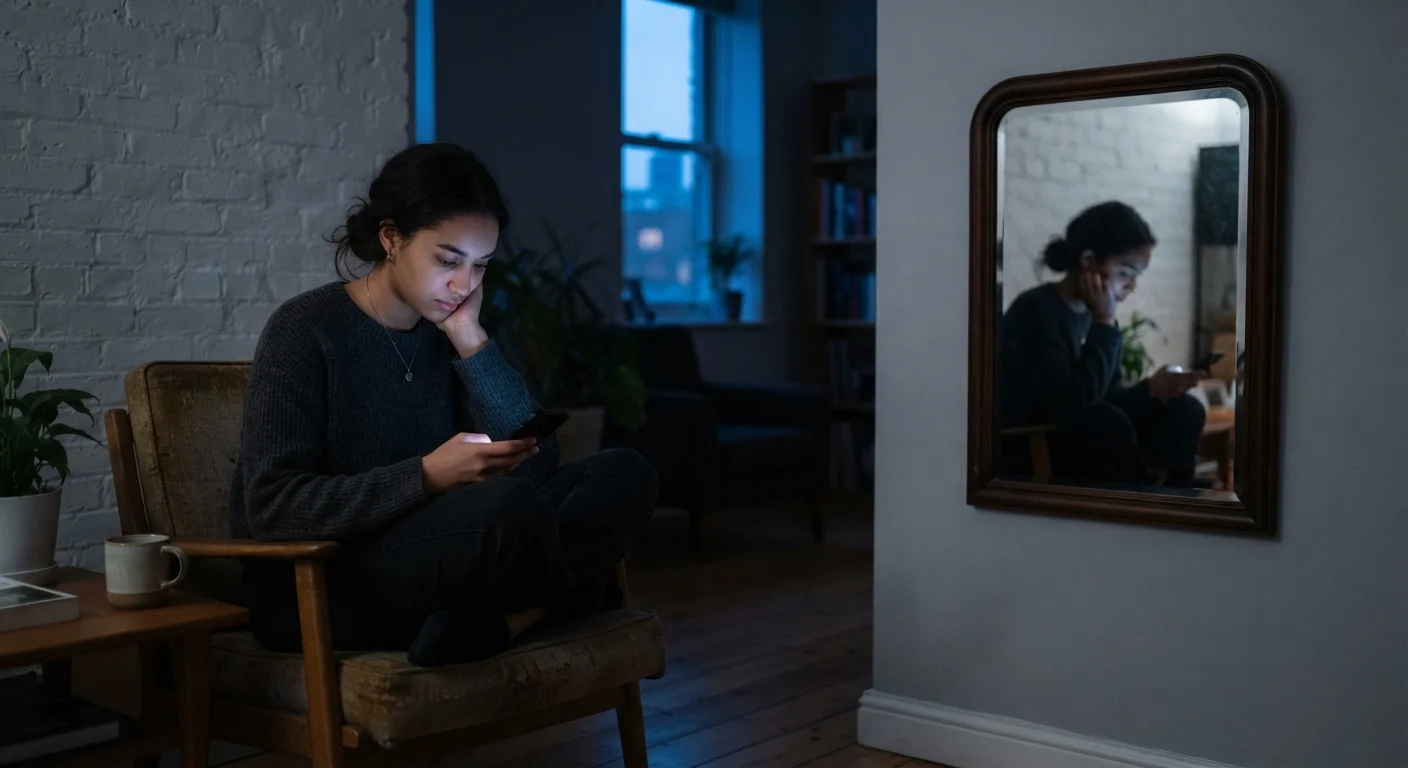
Photo credit: FindersGroove.com | Discover Important Information
The link between social media use and self-esteem is more nuanced than headlines suggest. A clear-eyed look at the evidence so far.
Key Takeaways
- Social media's effect on self-image is heavily shaped by how you use it, not just how much.
- Passive scrolling is consistently linked to worse outcomes than active, social interaction online.
- Research shows meaningful variation by age, platform type, and individual vulnerability.
- A complete platform ban is not automatically more effective than intentional, structured use.
- Consulting a mental health professional is appropriate when social media use feels distressing.
Why the Headlines Keep Getting This Wrong
Every few months, a new study makes the rounds claiming social media is either destroying a generation's self-esteem or that concerns are wildly overblown. Both framings sell, and both oversimplify. The actual body of research is messier - and considerably more useful once you understand what it's really measuring.
Most public discourse collapses very different behaviors into a single category: "using social media." Researchers have spent the last decade trying to untangle that knot. What they've found is that the type of use matters enormously, and that individual factors - age, existing mental health, platform choice, and social context - mediate outcomes in ways a headline can't capture.
Understanding the nuance isn't just academic. It's the difference between making a change that actually helps and cutting yourself off from online communities that may be genuinely supportive. For a broader look at how these dynamics connect to mental health, see Social Media's Relationship with Mental Well-Being.
Myth
Social media is uniformly bad for self-esteem - everyone who uses it regularly is worse off.
Fact
The evidence shows significant variation based on usage type, platform, age, and individual circumstances. No blanket conclusion applies to all users.
Large-scale reviews of the literature - including meta-analyses covering tens of thousands of participants - find that effect sizes are often small to moderate, and that a meaningful portion of users report no negative impact or even positive effects. Online communities can provide validation, social support, and a sense of belonging, particularly for people who feel marginalized offline. The harm narrative is real for some populations, but it is not universal.
Myth
More time on social media always equals lower self-esteem.
Fact
Duration alone is a weak predictor. What you're doing during that time is a far stronger variable.
Research consistently distinguishes between passive use (scrolling, viewing without engaging) and active use (commenting, direct messaging, sharing personal content). Passive consumption is more reliably linked to unfavorable social comparisons and mood dips, while active, reciprocal interaction often shows neutral or modest positive associations. Two people spending identical time on a platform can have very different psychological outcomes depending on how they engage.
Myth
Deleting social media entirely is the most effective way to protect your self-image.
Fact
Complete abstinence doesn't consistently outperform intentional, structured use in the research - and it may remove genuine social benefits.
Studies examining social media breaks show short-term mood improvements for some participants, but these effects are not always sustained, and participants frequently report feeling more socially disconnected. For people whose primary social networks exist online - including those in rural areas, LGBTQ+ individuals, or people with limited local social options - removal can have real costs. A more evidence-informed approach focuses on reshaping how you use platforms, not necessarily eliminating them. Digital Detox: What It Means, What It Does, and Whether It Helps examines this evidence directly.
Myth
Social comparison on social media is always destructive.
Fact
Upward social comparison can motivate positive behavior change; its impact depends heavily on how the comparison is processed.
Social comparison theory - first developed by psychologist Leon Festinger in the 1950s - distinguishes between upward comparison (comparing yourself to those perceived as doing better) and downward comparison (to those doing worse). Neither is inherently harmful or helpful. Research on social media-mediated comparison suggests that whether upward comparison leads to inspiration or dejection depends on factors like perceived attainability of the standard and the individual's baseline self-efficacy. Platform design, which often surfaces aspirational content, tilts the experience - but individual interpretation still matters significantly.
Myth
The body image harms from social media affect everyone equally.
Fact
Vulnerability to body image effects varies significantly by age, pre-existing concerns, and content exposure patterns.
Research does show associations between exposure to idealized body content and body dissatisfaction, but these effects are stronger in individuals who already hold body image concerns, and in younger age groups. Platform-specific differences also emerge: image-heavy platforms show stronger body image associations than text-primary ones in several studies. This doesn't minimize real harms - it clarifies where interventions are most needed and who should pay closest attention to their own content diet.
What the Evidence Actually Supports
The most consistent finding across multiple large-scale studies is the passive vs. active use distinction. Passive consumption - scrolling feeds without interacting - is more reliably associated with social comparison and lower mood than actively commenting, messaging, or creating content. This isn't universal, but the pattern is robust enough that researchers treat it as a meaningful variable.
~40%
Studies finding small or no effect on well-being
A 2019 meta-analysis published in Psychological Bulletin found that roughly 40% of included studies reported negligible or statistically non-significant associations between social media use and well-being outcomes.
2x
Stronger effect for passive vs. active use
Multiple independent studies report that passive social media consumption is associated with roughly twice the self-esteem impact compared to active, interactive use, though effect sizes vary across samples.
Age is another key moderator. Adolescents, particularly those in early teenage years, show stronger associations between heavy social media use and negative self-perception than adults do. This tracks with what we know about identity formation: it's a more vulnerable process at 14 than at 24. That said, adults are not immune, especially when platforms are designed to surface idealized or aspirational content.
If you want a practical framework for evaluating your own usage patterns, Screen Time vs. Meaningful Use breaks down how researchers distinguish scrolling from genuinely purposeful engagement - and why raw hours are a poor proxy for impact.
When Research Gets Misrepresented
Many widely shared statistics about social media and self-esteem come from studies with small samples, self-reported data, or correlational designs - none of which establish causation. Before acting on a headline, check whether the study was peer-reviewed, what it actually measured, and whether the population studied resembles your own situation. Correlation between two variables does not mean one caused the other.
Finally, it's worth noting that self-image and self-esteem are distinct constructs. Self-image is how you perceive yourself; self-esteem is how you evaluate that perception. Social media research often conflates the two, which makes results harder to compare. When you read a study, check what it actually measured - and whether the sample size and methodology justify the conclusions being drawn from it.
This article is for informational purposes only and does not constitute medical or psychological advice. If social media use is affecting your mental health, please consult a qualified mental health professional.

Author
Tech & Gadgets Editorial Team
Tech & Gadgets Editorial Team is the collective byline for our editorial team and contributor network. Articles published under this byline or an editorial pen name are researched, written, and reviewed according to our editorial standards for clarity, consistency, and independence before publication.
View all articles →