
Where Your Money Actually Goes Each Month
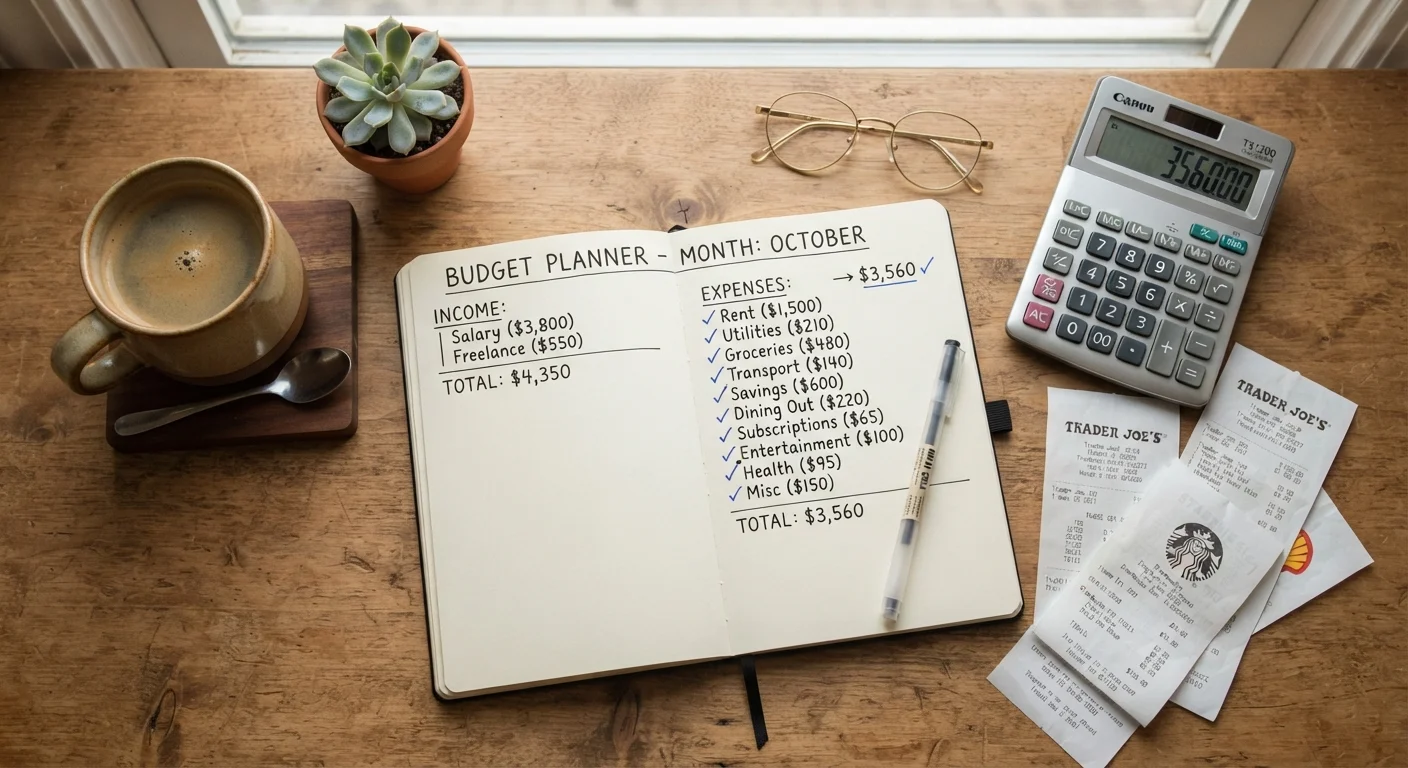
Photo credit: FindersGroove.com | Discover Important Information
In this article
Most people are surprised when they track their spending for the first time. Here's how to map your monthly cash flow honestly and clearly.
Key Takeaways
- Most people underestimate discretionary spending by 20-30% before they start tracking.
- Expenses fall into three buckets: fixed, variable, and periodic - each needs a different management strategy.
- Subscriptions and small recurring charges are the most commonly overlooked spending category.
- Tracking for even one month provides enough data to make meaningful adjustments.
- Honest cash flow mapping is the foundation of any effective budget.
Why Most People Are Surprised by Their Own Spending
Ask someone to estimate their monthly spending, and their guess is usually off - often by hundreds of dollars. This isn't carelessness; it's a predictable gap between how we think we spend and what actually happens across 30 days of real decisions.
The culprits are almost always the same: subscription creep, irregular expenses treated as one-offs, and the cumulative weight of small purchases that never feel significant alone. A streaming service here, a dinner out there, an annual fee that hits unexpectedly - none of these loom large individually, but together they can quietly absorb a significant portion of take-home pay.
Before you can build a workable budget, you need an honest picture of current reality. That means mapping your cash flow - not what you plan to spend, but what you actually do.
Tracking Is Not the Same as Budgeting
Tracking records what happened; budgeting plans what will happen. Both are necessary, but they're different steps. Start with tracking to establish your baseline, then use that information to create a forward-looking spending plan. Skipping the tracking phase often means budgeting against inaccurate assumptions.
The Three Types of Expenses in Your Budget
Every dollar leaving your account belongs to one of three categories:
- Fixed expenses stay the same each month - rent, loan payments, insurance premiums. These are predictable and often non-negotiable in the short term.
- Variable expenses fluctuate based on your choices - groceries, gas, dining out, entertainment. These offer the most immediate opportunity for adjustment.
- Periodic expenses don't occur every month but are entirely predictable - car registration, annual subscriptions, holiday gifts, seasonal clothing. People most often forget to account for these, then experience them as financial shocks.
Most budgeting advice focuses heavily on fixed and variable spending while ignoring periodic costs. The fix is simple: add up all your annual irregular expenses, divide by 12, and treat that figure as a monthly line item.
~30%
Spending underestimated before tracking
Behavioral finance research consistently finds people underestimate discretionary spending by roughly 20-30% when asked to estimate before reviewing actual records.
$219/mo
Average US subscription spend per consumer
A 2022 survey by C+R Research found that Americans spend an average of $219 per month on subscription services, often more than they self-report.
60%
Adults without a detailed monthly budget
According to NFCC (National Foundation for Credit Counseling) consumer surveys, approximately 60% of US adults do not track spending against a formal monthly budget.
How to Actually Map Where Your Money Goes
Start with your last two bank and credit card statements. Go line by line and assign each transaction to a category. Common categories include housing, transportation, food (split between groceries and dining out), subscriptions, healthcare, personal care, entertainment, and savings or debt payments.
You don't need specialized software - a simple spreadsheet works. What matters is that you look at every transaction without editing or excusing any of them. The goal at this stage is description, not judgment.
Once you've categorized everything, add up each category total. Then compare your category totals to your after-tax income. The difference - what's left after all spending - is your net monthly cash flow. If it's negative, you're spending more than you earn. If it's positive, you have room to direct intentionally toward savings or goals.
Start with One Month of Real Data
Don't try to build a budget from memory or estimates - pull actual statements first. One month of categorized real spending gives you a far more reliable baseline than any mental model. Once you have the data, patterns become obvious and priorities become easier to set.
From here, the natural next step is building a forward-looking plan. See how to turn this awareness into your first real budget for a practical walkthrough.
Turning Awareness Into Smarter Spending
Seeing your numbers clearly can feel uncomfortable. Resist the urge to justify or minimize - the data is giving you useful information, not a verdict on your character.
Identify two or three categories where spending surprised you. These are your highest-leverage adjustment points. You don't need to overhaul everything at once; redirecting even $100-$200 a month into savings or debt repayment compounds meaningfully over time.
Spending awareness also creates room for intentional spending - directing money toward what genuinely matters to you rather than defaulting to habit. If a category consistently exceeds what you'd consciously choose, that's a signal worth acting on. For a personalized approach to structuring these categories around your real life, building a budget that reflects your actual priorities offers a useful framework.
This article is for general informational and educational purposes only and does not constitute personalized financial advice. For guidance specific to your situation, consider consulting a licensed financial professional.
Frequently Asked Questions

Author
Money & Finance Editorial Team
Money & Finance Editorial Team is the collective byline for our editorial team and contributor network. Articles published under this byline or an editorial pen name are researched, written, and reviewed according to our editorial standards for clarity, consistency, and independence before publication.
View all articles →